A
tropical Rain Forest
in Arkansas?
In 1974 we made our first
trip to an Exotic Rainforest. That one was in Puerto Rico and from that moment I fell in love with the
rare
exotic plants that live in the rain forests of the world.
In 1979
Janice and I took our three children and moved to the island of Jamaica where we lived and
worked for almost
two years. To this day we miss all the
time we spent roaming around the
island as well as its people, food, incredible beaches and rain forests.
Following that I
fell into a fortunate string of
events while working as a photographer/writer for
Skin Diver Magazine. SDM allowed me to visit the Indian Ocean,
tropical Pacific, parts of Southeast Asia, the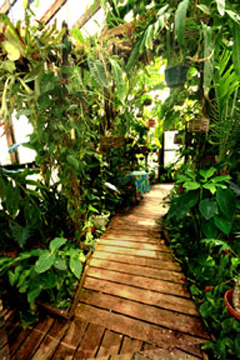 Red Sea and opened doors that eventually allowed me to create brochures and ads for hotels
and island governments.
Red Sea and opened doors that eventually allowed me to create brochures and ads for hotels
and island governments.
For many years I
was able to travel hundreds of times to
islands such as St. Lucia, St.
Vincent and the Grenadines, the U.S. Virgins Islands,
and the
Bahamas. I was fortunate to do work for, the Cancun Hotel Association, the Cayman Islands Tourist
Association, hotels and properties in South America, Central America as well
as other Caribbean
governments and hotels.
Needless to say, we have
tropical "blood" flowing in our veins.
The jungles and rain forests of South America, Central
America,
the Caribbean, S.E. Asia and the tropical Pacific are alive with a varied selection of unusual
and often rare plants. Regrettably, far too many are being destroyed and my grandchildren may never see one. By
doing nothing more than logging on to Google Earth you can see vast areas of
Brazil that have been almost totally stripped of forest!
Fortunately my work as a writer
as well as a commercial and
underwater photographer took me on journeys to many of these exotic destinations
so, at least in my memory, they will live forever. In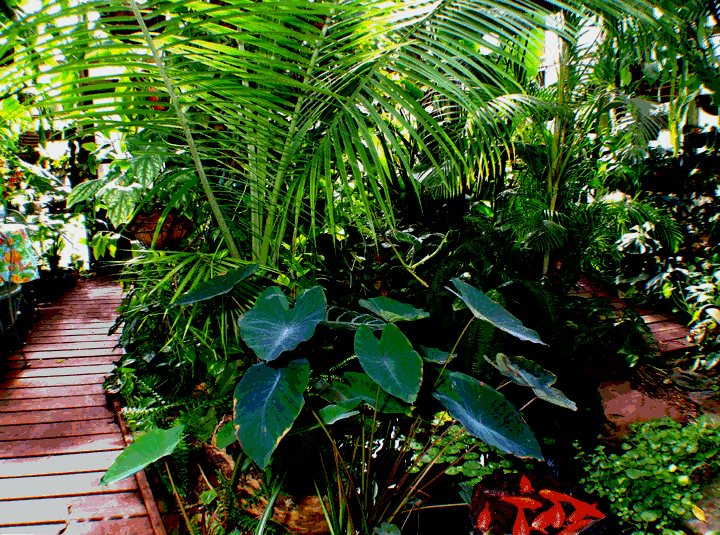 the years that followed
our first rain forest visit I was privileged to
make many flights to countries around the world that have living,
thriving rain forests. Part of the goal of this site is to introduce
you to their natural beauty as well as encourage you to visit, preserve
and protect them for your children to see as well.
the years that followed
our first rain forest visit I was privileged to
make many flights to countries around the world that have living,
thriving rain forests. Part of the goal of this site is to introduce
you to their natural beauty as well as encourage you to visit, preserve
and protect them for your children to see as well.
Although I retired
in 2001 I've photographed some of the jungles of tropical
nations such as Venezuela, Mexico, Belize, Columbia, Honduras, Ecuador,
and Malaysia. On my first visit to Singapore in 1986 I was
escorted by a representative of the government on a visit to the national
orchid collection
which houses the world's largest collection of orchid species.
Instantly my interest in these
beautiful
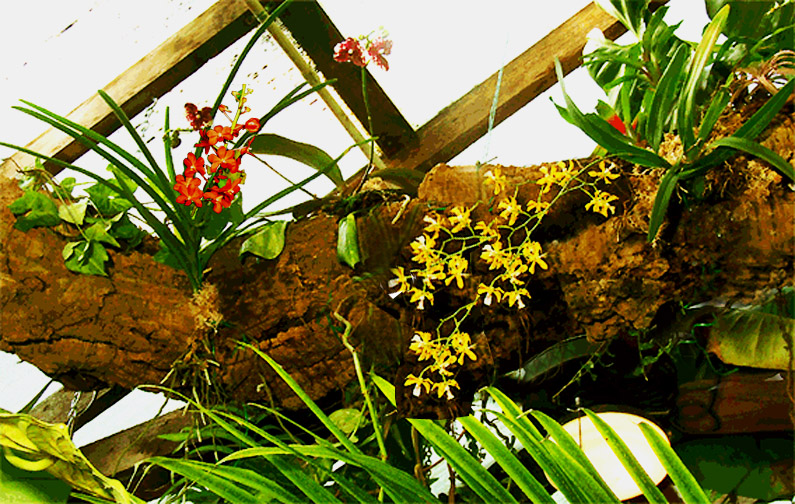
flowering plants with "tribe" names such as Oncidium,
Dendrobium
and Cattleya was ignited. Now we have hundreds of orchids
from Asia as well as South and Central America and the Caribbean living in our own
Exotic Rainforest.
Living in Miami, Florida
from 1980 to 2001 I had the
perfect location to house my collection of plant species. Everything lived in my yard,
and
my entire ½ acre was landscaped with three tropical ponds with flowering water
lilies and hundreds upon hundreds of
exotic aroids and other rare plants. So just before 2000 when my wife Janice began
to want to move closer to our grandchildren, adult children and her parents after 25 years
in Florida I was determined to move the entire collection and make rare tropical
plants accessible to folks who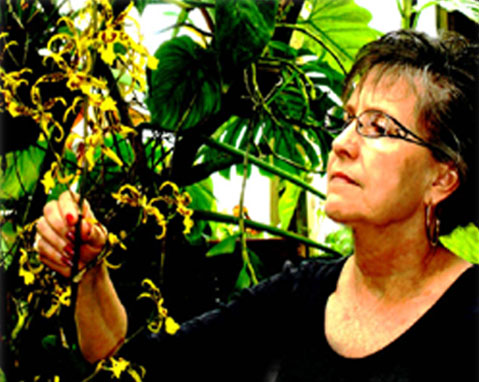 have never seen a rain forest. We
now own the only living rain forest in Arkansas and likely in most of the
central United States. We've hosted as many as 60 visitors on a single
weekend and people are often amazed such exotic plant species live in our
artificial rain forest behind our 119 year old home exactly the way they do in nature.
have never seen a rain forest. We
now own the only living rain forest in Arkansas and likely in most of the
central United States. We've hosted as many as 60 visitors on a single
weekend and people are often amazed such exotic plant species live in our
artificial rain forest behind our 119 year old home exactly the way they do in nature.
I began to draw plans for the Exotic Rainforest years before we moved and told my friend Tom White who owns Zone Ten
Nursery south of Miami I was going to build a "rain forest" in Arkansas
in 1999. He thought I had lost my mind.
I did have
reservations about leaving Florida but my only restriction
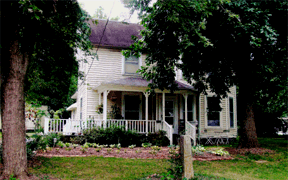 on the move was I
would take all my plants! So now in the
tiny rural community of
Siloam Springs in Northwest Arkansas right on the
border with Oklahoma and not far south of Missouri we own a flourishing rain forest!
on the move was I
would take all my plants! So now in the
tiny rural community of
Siloam Springs in Northwest Arkansas right on the
border with Oklahoma and not far south of Missouri we own a flourishing rain forest!
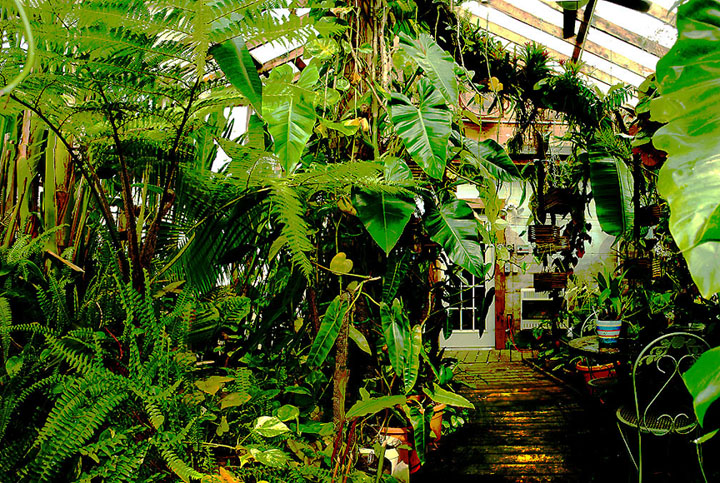
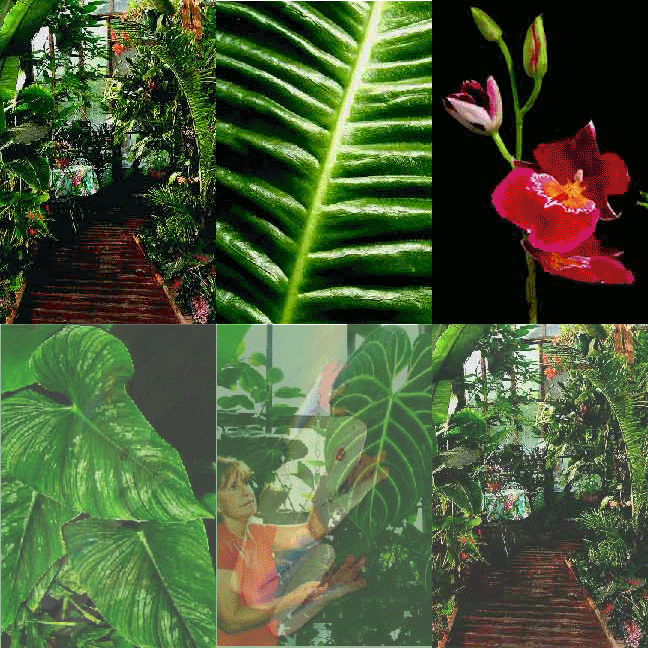
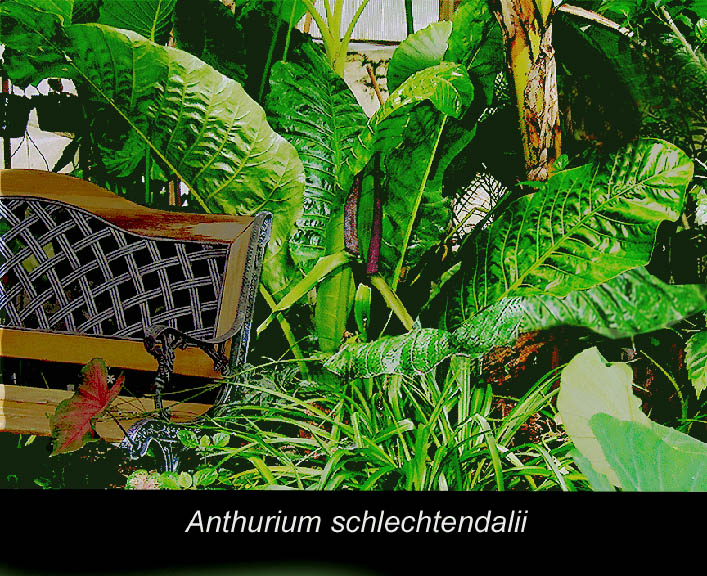
The Exotic Rainforest is not your typical "tropical plant collection and
is not a nursery". We don't sell plants. The Exotic
Rainforest is more like a small botanical garden open to the public .
One guest called it "Costa Rica under glass".
Unlike most plant collections
which live in pots
our collection resides
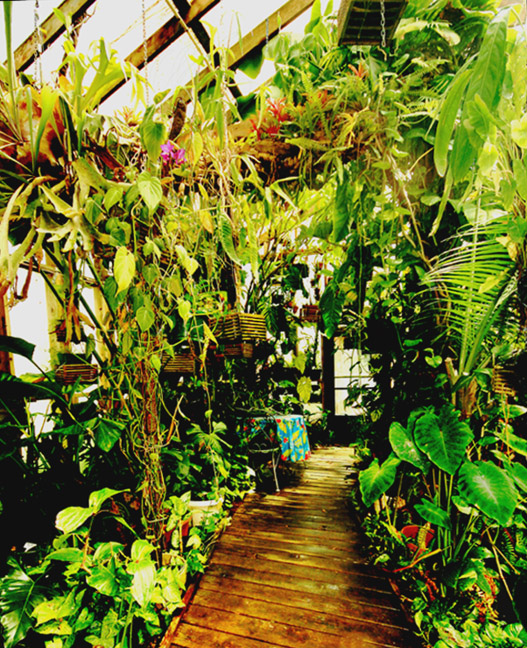
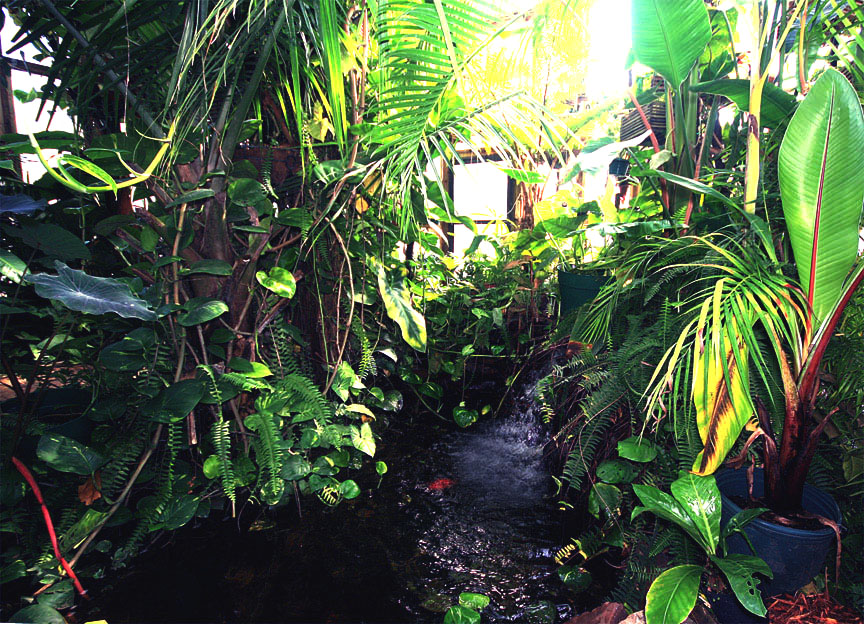
in an atrium designed to be as close as possible a true rain forest.
Just like it rains in any rain forest our plants are watered almost daily via an automatic system.
The entire building is designed to duplicate nature as closely as possible
and hopefully it gives everyone that enters the feeling of visiting the tropics.
Many of our specimens are planted in the ground which was specially prepared to be "tropical"
Our rarest specimens are in large pots with soil prepared to suit each
individual specimen.
Learn how we built the Exotic Rainforest here.
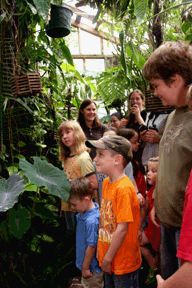
We love to share our plants
and gladly answer questions. We welcome anyone who wishes to visit. We also make the Exotic Rainforest available to educators as a teaching tool
and both public, private and home schoolers are welcome to visit the garden
as a field trip but due to size we must limit group size to approximately 20
people at one time. Please call before you visit.
As of mid 2009 there are many
plant species as well as over
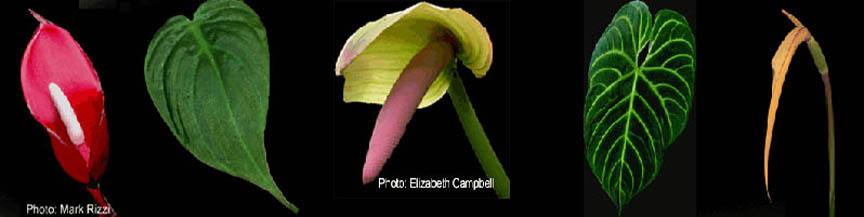
300 species of Araceae (uh-RAY-see ee) known as aroids in the collection. Our aroid
collection includes a full 10% of
all the nearly 2000 Anthurium
and
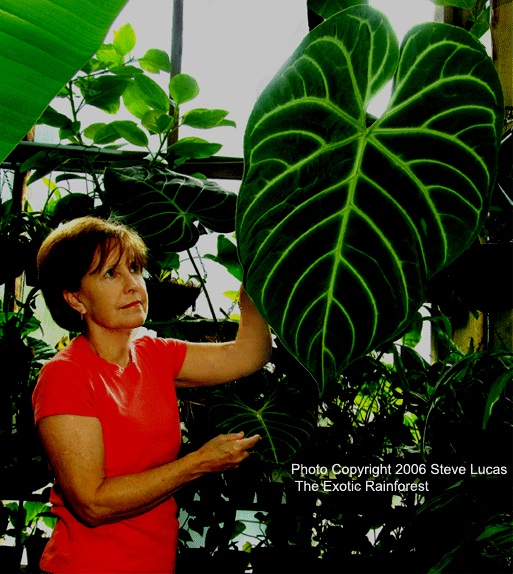 Philodendron species known to science. A
number of those were acquired through associations with
accredited botanical gardens and
we have the exact locations including GPS coordinates where they originated
in the rain forests of the world. Having acquired many rare plants we
also share specimens not in the collections of some public gardens with those
institutions. The collection even includes specimens which have never
been identified to science.
Philodendron species known to science. A
number of those were acquired through associations with
accredited botanical gardens and
we have the exact locations including GPS coordinates where they originated
in the rain forests of the world. Having acquired many rare plants we
also share specimens not in the collections of some public gardens with those
institutions. The collection even includes specimens which have never
been identified to science.
This site was created to give my
adult children Brad, Stephanie
and Kari as well as grand children
Jeff, Emma, Justin, Sophie, Ellie, Jordan, Hayes and Nash insight as to "what is what" in
the collection and where it originated in nature. I purposely
designed the site to give them a "note book" along with my photos they can
use to learn about my passion .
I know I won't be here to care for the plants forever
so I want the information to survive
along with the specimens.
Eventually every plant will end up in the collection of a public garden to
be enjoyed by all their visitors and it is my hope the information on this
site survives
along with the plants.
I attempt to verify all my facts botanically but I
am not
a botanist. I'm also certain I make errors so if you find one please
drop me a note and I'll research it further. I sometimes get email
telling me the name I used or some fact is in error. That's probable
since I'm not botanically trained but I always attempt to verify information from
a botanical source. Many of our pages are
actually proofed by botanists.
Hopefully
you will find the information of value.
The
information on this site would have never been possible without the constant
guidance,
assistance and input from a large number of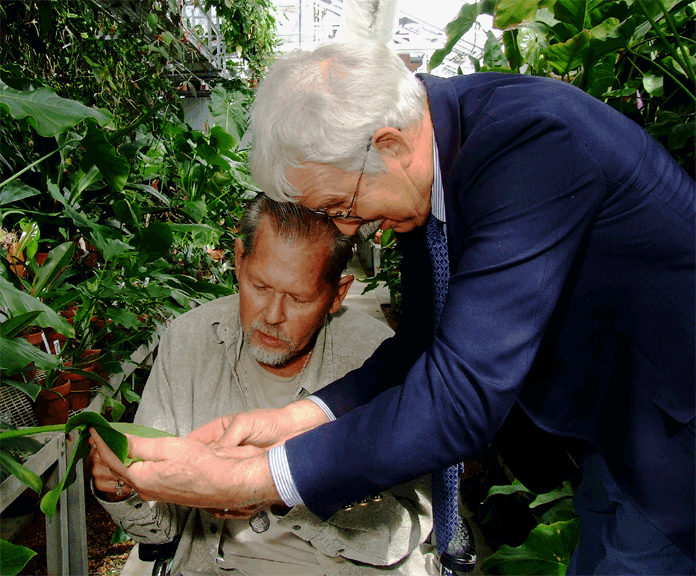 botanical scientists and plant
experts. I must thank my mentor world renowned aroid botanist Dr. Thomas B. Croat
Ph.D., P.A. Schulze Curator of Botany
of the Missouri
Botanical Garden in St. Louis who often allows us time in his office and
answers an incessant stream of questions. Dr. Croat has personally
collected more than 100,000 specimens in the tropics.
botanical scientists and plant
experts. I must thank my mentor world renowned aroid botanist Dr. Thomas B. Croat
Ph.D., P.A. Schulze Curator of Botany
of the Missouri
Botanical Garden in St. Louis who often allows us time in his office and
answers an incessant stream of questions. Dr. Croat has personally
collected more than 100,000 specimens in the tropics.
In addition my thanks to Dr,
Simon Mayo of the Royal Botanic Garden Kew in London, Dr. David Scherberich
of the
Jardin Botanique de la Ville de Lyon,
Parc de
la Tete d'Or, France, Dr. Eduardo
Gonçalveswho is the Curador Botânico
of Inhotim in Brazil,
Dr. Marcus A. Nadruz Coelho, Diretoria de Pesquisas, Instituto de
Pesquisas
Jardim Botanico do Rio de Janeiro (Rio
de Janeiro Botanical Garden)
in Brazil, Dr. Alistair Hay formerly of the
Sydney Botanic Gardens, Sydney,
Australia, aroid botanist Peter C. Boyce of Malaysia, Harry Luther at the
Marie Selby Botanical Gardens in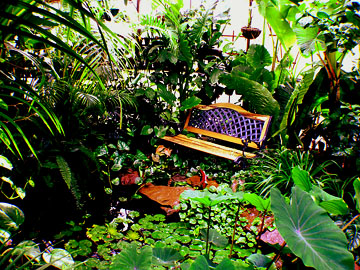 Sarasota, FL, 2008 International Aroid Society president Denis Rotolante
along with his son "Big Bill", 2009
International Aroid Society president Ron Weeks, International Aroid Society
founding member Tricia Frank, taxonomist Christopher Rogers, and many others.
Sarasota, FL, 2008 International Aroid Society president Denis Rotolante
along with his son "Big Bill", 2009
International Aroid Society president Ron Weeks, International Aroid Society
founding member Tricia Frank, taxonomist Christopher Rogers, and many others.
A special thanks to my close friends and aroid expert Julius Boos in West Palm
Beach as well as aroid, palm and cycad expert Leland Miyano in Hawaii.
Both are published authors and without Julius' and Leland's assistance many
of the pages on this site would not have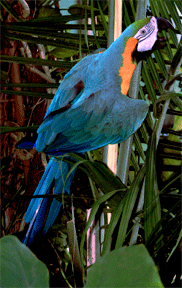 been created.
All of these individuals freely answer my requests for scientifically
accurate information as well as photographs. Some even donate their
time to proof the information on the site. With their input and help the Exotic Rainforest
website achieved its 1,500,000th hit in mid
September, 2010 after just over fourf years on the internet, a goal
we never conceived possible when the site went on-line on December
6, 2005.
In addition to all the species
shown on this site there are well over
100
plant species in the Exotic Rainforest collection not
photographed and
described. We attempt to add new specimen pages to the site frequently.
With the assistance of
all the botanists and experts mentioned above I
always attempt to verify
my facts before putting the pages on the
internet. You will
normally find the scientific sources
credited
on the appropriate page but should you find an error
please
do let us know.
If
you are visiting or live near Northwest Arkansas and love exotic plants as
much as we do you are always welcome to visit.
There
is no charge to see the garden and
Wizard the macaw will be glad to see you, and so will we!
By the way, if any of you know Tom
and Linda White
or visit their Zone Ten Nursery and Garden in Miami will you please pass along this message?
"Tom.
I built the Exotic Rainforest exactly the way I told you I would. You
wouldn't believe what can be done if you set your mind to it!"
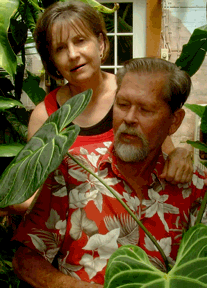
Steve and
Janice Lucas
Creators and curators of
The Exotic Rainforest
Siloam Springs, Arkansas
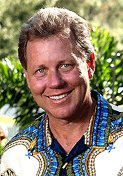 A kind word from
radio's
A kind word from
radio's
Garden Rebel, Robert
Vincent Sims
"As
a national garden radio show host I have to research thousands of sites.
By far the Exotic Rainforest has the most interesting information and
the best photography I have ever seen. I have all ready told all of my
friends about the Exotic Rainforest and will continue to let all of my
listeners know about this site. Steve's dedication for accuracy is
impressive, he is a master researcher and I consider it the best private
site I have ever seen."
You can listen to the Garden Rebel on the world wide web at
www.wdbo.com
live on Sunday mornings. You can
also hear Vince's nationally syndicated show on any of the Radio America
Network stations every Sunday
morning from 10:00 - 12:00 Eastern time. Be sure to call in, he loves
making new friends!
Take the Rainforest
Tour now?
This website is intended to be a
source of information!
We do not sell plants or maintain any form of price list.
 LINKS:
Didn't find what you need? Links to rare tropical collectors,
botanical gardens, ecotours, and plant sources.
MAPS AND DIRECTIONS
to the Exotic Rainforest
* The background sounds of the
Exotic Rainforest Private Botanical Garden are professionally recorded and used with the permission of
Andrew Skeoch & Sarah Koschak's Listening Earth. You can listen to samples
and CD's of many different rainforest sounds on their
website:
http://www.listeningearth.com.au/

 Go
ahead and ask! The IAS
is on Facebook
Go
ahead and ask! The IAS
is on Facebook