
Aroids and other genera in the Collection
Take the Tour Now?
Orchids
The
Exotic Rainforest
The images on this website are copyright protected. Please contact us before any reuse.
Within our collection we have many species of Anthurium
and 70 plus species of Philodendron.
If you are seeking other photos,
click this link:
Since the story of our Exotic Rainforest appeared in the April/May, 2007 Issue of Birds and Blooms Magazine I've
received an unbelievable number of requests for additional information since it appears many people wish to do what we have done! If you need additional information how to accomplish building your own "rain forest", feel free to ask. After you read the piece if you still have questions forward your questions via email. Our address is at the conclusion of this article.
If you are within driving distance you are welcome to see our Exotic Rainforest for yourself.
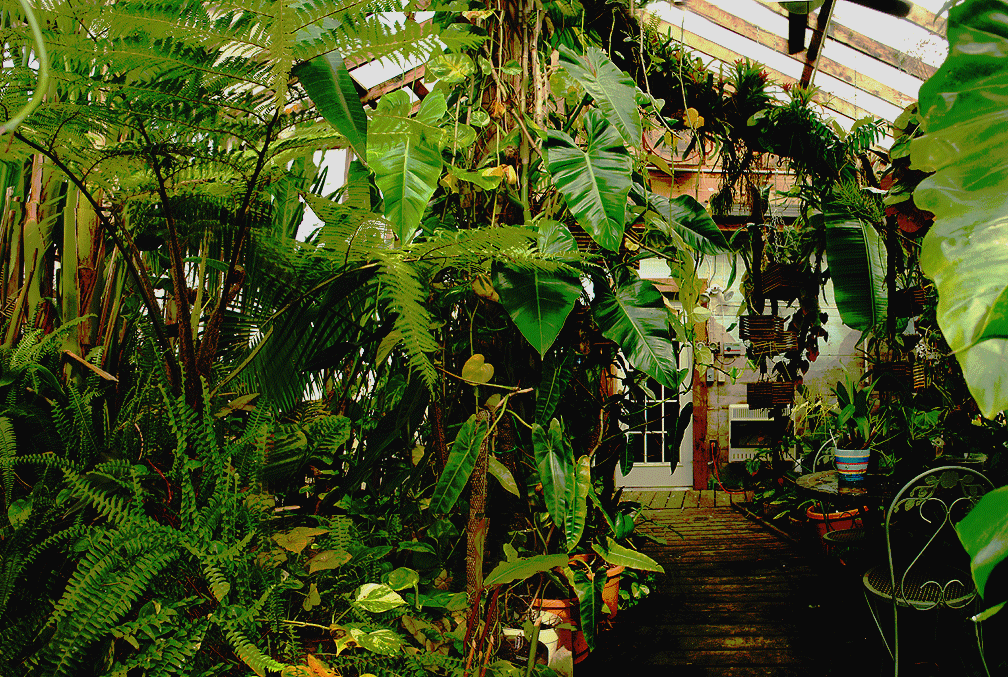
Before you read how we built the Exotic Rainforest, take the tour and see what is inside!
 In
1999 I told my friend Tom White who is a botanist for the State of
Florida I was going to build a rain forest under glass once
we moved to Arkansas. He and his wife Linda own Zone Ten
Nursery in Homestead, FL. Tom just laughed!
In
1999 I told my friend Tom White who is a botanist for the State of
Florida I was going to build a rain forest under glass once
we moved to Arkansas. He and his wife Linda own Zone Ten
Nursery in Homestead, FL. Tom just laughed!
I enjoy being told
"that can't be done" and always consider it a challenge.
If
you ask Janice, my wife of over forty years, you'll learn I'm more than a little bull
headed. She has put up with my wild whims for a very long time
but even this outlandish idea was one she thought I might never
achieve.
In 1976 I had announced I wanted to be an underwater photographer for Skin Diver Magazine. At the time I barely knew how to scuba dive and had recently purchased my first 35mm camera. Three years later I published my first article in the pages of Skin Diver and over the next 8 years published another 200 articles on their pages. Three years after I told Tom I was going to build my own rain forest our Exotic Rainforest began to flourish.
In the summer of 2006 I received an
email asking for complete instructions on the process we
used to construct
our rain forest atrium and over the next few months I was asked question almost every
week. This article is the answer I forwarded after those folks
first
asked but it has been updated many times.
 It
really isn't difficult but it does require a lot of planning.
It
really isn't difficult but it does require a lot of planning.
If you're going to build a rain forest atrium and you're not in Florida, Southern California or a similar temperate climate the first consideration is how are you going to keep the plants warm year round? Tropical plants aren't known as being "tropical" without a good reason! They love warm, humid conditions and the slightest freeze will turn most to pure mush. Some can't tolerate temperatures that are even moderately cold so anyone wanting to build a "rain forest" must learn how these beautiful specimens live and grow in nature. Unless you duplicate their natural conditions your chances of success are nill. If you read many of the pages on this site you'll find I frequently tell you where the plant grows in nature, at what elevation it grows, if it lives up in a tree or in the soil, and many other tidbits that many people consider useless. That information is hardly "useless". If you read carefully you can figure out what makes a plant flourish and my goal was to make all of them not only live but grow just like they do in nature.
The first major factor became how do we build a building that will duplicate the tropics but do it in northwest Arkansas? Arkansas is in the center of the U.S. where the weather isn't terribly cold but we were moving to an area of the Ozark Mountains that had one of the highest elevations in this part of the country. The winter temperatures can easily drop well below freezing for weeks at a time so the building had to keep the plants warm and humid but also give them all the light they needed to develop, grow and reproduce. The major problem was to build such a building cost money and our budget was shall we say "limited".
There are many companies who build "sun rooms", and that type of structure may work for you. In our case, the cost of having one built would have exceeded $70,000 US dollars and we wanted to build our Exotic Rainforest for about 40% that cost using professional labor for the structure but those costs were in 2002 dollars and all the improvements to the building are not included. We managed to build it within budget by using a great deal of volunteer labor. The value of our adult plants would now easily equal the original cost of the structure.
I searched for a long time for what I considered to be the best thermal protective material. At the end of that search I now strongly suggest you consider using a really good thermal material since it does get cold in most parts of the United States. Far too cold for most tropical plant species. Glass just won't do the job efficiently. It is heavy, easily broken, and looses heat quickly. Many tropical plants do not appreciate temperatures below 55 degrees (some not that low) so you will need to provide them lots of thermal protection to keep them happy, flowering and growing. So the first thing I had to find was a material that would do the job, would not break the bank, and would last a very long time while withstanding hail storms. We have hail storms in the spring!
 After
a great deal of research I found and chose GE Lexan Thermoclear™. There are a lot of materials out there
including Lexan corrugated material. but I'm convinced the multi-walled Thermoclear™ is the best value.
Experience has proven it works great. Mine is double walled
and is around 1/4 inch thick. It works quite well but I now wish I
had used the triple wall version. I spend enough each month in the middle of winter to heat a 600 square foot atrium
to a minimum of 55 degrees to have paid for the difference in wall
thickness in five years. During the day, so long as the sun is
shining, the GE Lexan Thermoclear™ will create enough heat energy from sunlight to keep the
atrium comfortable. But when the sun falls we have to
rely on some type of artificial heat to do the job.
After
a great deal of research I found and chose GE Lexan Thermoclear™. There are a lot of materials out there
including Lexan corrugated material. but I'm convinced the multi-walled Thermoclear™ is the best value.
Experience has proven it works great. Mine is double walled
and is around 1/4 inch thick. It works quite well but I now wish I
had used the triple wall version. I spend enough each month in the middle of winter to heat a 600 square foot atrium
to a minimum of 55 degrees to have paid for the difference in wall
thickness in five years. During the day, so long as the sun is
shining, the GE Lexan Thermoclear™ will create enough heat energy from sunlight to keep the
atrium comfortable. But when the sun falls we have to
rely on some type of artificial heat to do the job.
General Electric's Lexan Thermoclear™ will help hold the heat in during the night but one of its best properties is its ability to create heat from light during the day. With the rising price of natural gas and other fuels, especially electricity, the thicker material can save a bundle on overall heating costs. When it gets in the 20's, and lower, the thicker material will save even more every month! The double wall may work just fine for you depending on where you live (we're in zone 7) but at least consider spending the extra on the thicker, more protective, and more efficient material. You may find it will pay for itself in just a few years. You can find Lexan Thermoclear™ and information about its uses on the General Electric website and they will give you names and phone numbers of dealers who sell it. Their address and phone number is at the conclusion of this article.
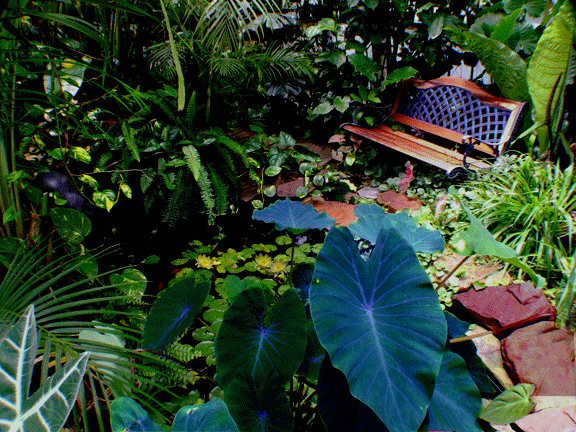 Lexan Thermoclear™ comes
in either 4 x 8 foot or 4 x 12 foot sheets and is easily installed. We
built our atrium of pressure treated cedar 2 x 6's atop a concrete foundation set
18 inches (46cm) into the ground. For maximum support there is
one large 6 x 8 inch pressure treated cedar timber in the center of
the room with another 6 x8 cedar cross beam running form the east to
west wall to tie the entire building together. The the center
support beam is sunk in two feet or concrete.
Lexan Thermoclear™ comes
in either 4 x 8 foot or 4 x 12 foot sheets and is easily installed. We
built our atrium of pressure treated cedar 2 x 6's atop a concrete foundation set
18 inches (46cm) into the ground. For maximum support there is
one large 6 x 8 inch pressure treated cedar timber in the center of
the room with another 6 x8 cedar cross beam running form the east to
west wall to tie the entire building together. The the center
support beam is sunk in two feet or concrete.
If you want a more beautiful
structure there are
companies including General Electric that make metal frames that allow the Lexan Thermoclear™ to be simply inserted into slots within those structures.
With Lexan Thermoclear™ you can even make the walls curve slightly.
Before you begin be sure and check with your city or county for
local construction regulations since they vary all of the United
States!
In our case, the Lexan Thermoclear™ is simply screwed to the wood and sealed with clear Silicone sealant. Once the Lexan is attached thin strips of cedar were applied to the seams to seal them further and make the exterior of the building look more professional. The tiny gaps between sheets MUST be sealed with silicone sealant, do not avoid this extra step! If you leave the seams unsealed the Thermoclear™ will loose efficiency and mold will form between the doubled layers of the exterior walls. Our building is framed much the way you would frame a standard wood home with the exception we did not want any interior walls to block the sun's light.
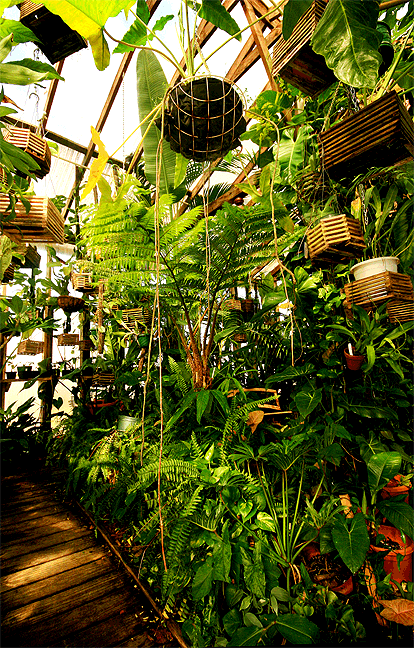 My building is 16 feet 4 inches (5
meters) tall at the highest
point with a 12 foot (3.66 meter) outer wall height. Since many plants have already tried
to outgrow that height I've decided if I ever build another
one, and I just may, it will have a taller center post as well as both
longer and higher outer walls.
My building is 16 feet 4 inches (5
meters) tall at the highest
point with a 12 foot (3.66 meter) outer wall height. Since many plants have already tried
to outgrow that height I've decided if I ever build another
one, and I just may, it will have a taller center post as well as both
longer and higher outer walls.
One very important consideration needs to be addressed at the time of construction or you'll be paying thousands of dollars in repair costs just a few years later. No wood product will last forever but you can extend the life! You are considering building a structure that will contain a highly tropical environment and tropical environments make wood rot! The interior moisture and humidity will remain high year round so be certain all the wood is coated with a water protection material such as Thompson's® WaterSeal® Advanced Clear Multi-Surface Waterproofer. This product offers a far superior protection to the normal Thompson's® Water Seal®. Every stud, every base plate and every cross beam must be protected or in under 10 years the building is going to rot! The wood should also be recoated on a regular basis if you plan to to make it last.
We learned this lesson
the hard way since our original builder assured us the cedar would
last a "life time". He was wrong! After only 6 years we
began to find a few cedar studs totally
rotting through near their bases. We were forced to have
another contractor go back into the building, dig up many plants and
then double plate each side of those studs with new 8 foot tall
cedar 4 x 6 boards. At that time we had every piece of wood
pressure cleaned and then sealed at a cost of multiple thousands of
dollars!
If you want to make your
"rain forest" lasts do it right the first time. Seal it!
Don't trust any label that says the wood has a "lifetime guarantee".
If you read the fine print most will say something to the effect
"warranty void if the wood is exposed to water"! The wood is
going to be "exposed to water" in a tropical atrium!
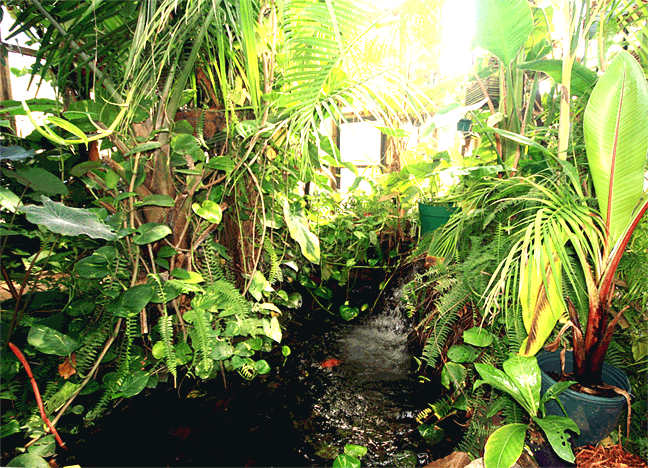 A mistake I discovered
we made after the building was finished was the size! My wife didn't
like the idea of my using the entire backyard when I indicated I wanted to
build a rain forest atrium 36' by 36'. After a lot of "discussion" I
scaled the size down to 24' by 24'. Guess what? That is now
much too small for what I need! I have many more plants (and more I want) than I
now have room so I should have built it 36' x 36' in the beginning!
Believe me, I'm going to build one that size when we move next! We are now
beginning to consider a move to the Sherwood, Arkansas area to be near our
children and grandchildren. If you'd like to a nice old
Victorian house with a rain forest, send me a note!
A mistake I discovered
we made after the building was finished was the size! My wife didn't
like the idea of my using the entire backyard when I indicated I wanted to
build a rain forest atrium 36' by 36'. After a lot of "discussion" I
scaled the size down to 24' by 24'. Guess what? That is now
much too small for what I need! I have many more plants (and more I want) than I
now have room so I should have built it 36' x 36' in the beginning!
Believe me, I'm going to build one that size when we move next! We are now
beginning to consider a move to the Sherwood, Arkansas area to be near our
children and grandchildren. If you'd like to a nice old
Victorian house with a rain forest, send me a note!
My point? Plan
ahead. You'll hate yourself if you let your love of plants outgrow
what you build and tropical plants will grow much faster than you have ever
experienced if you give them a "rain forest" structure!
Be sure to also prepare
for plenty of ventilation, especially during the summer, using lots of covered
fans. Tropical species do not appreciate sitting in dormant air
any time of the year. They need adequate circulation all the
time! Dormant air, combined with high humidity, is a guarantee
of plant disease and unwanted pests! So insure the air is
moving at all times. I now recommend
covered fans since some of the taller plants
will eventually grow into them! We have two ceiling fans that run in
reverse all the time to draw air from the outside ventilation openings
(which can be closed in winter) into the building. But the tall
Alocasia sp., Bird of Paradise, climbing Philodendron sp. and banana
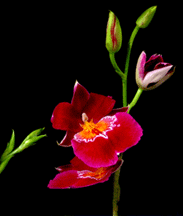 trees eventually find their way into the
blades. Plan ahead. At the rear of the building we have two exhaust
fans on temperature controlled timers that begin to run when the temp
near the ceiling hits 80 degrees. These help to evacuate the excess
heat during the summer months. Those exhaust fans have automatic
closures which prevent heat from escaping in the winter as well as
cool Spring and Fall evenings. They also have manual on/off
switches to prevent heat from being evacuated in the winter. That
type exhaust fan is commonly
available at home renovation stores. Standard greenhouse construction
works very well for a tropical atrium provided you insure a very high
humidity. You can find a lot of books
about how to do it at home improvement stores or good book stores.
For winter heat, we use natural gas.
Other growers have reported problems with some gas fuels such as
butane. Apparently some fuels can create fumes within the
atrium that conflict with the plants ability to grow. We have
observed no problems with natural gas.
trees eventually find their way into the
blades. Plan ahead. At the rear of the building we have two exhaust
fans on temperature controlled timers that begin to run when the temp
near the ceiling hits 80 degrees. These help to evacuate the excess
heat during the summer months. Those exhaust fans have automatic
closures which prevent heat from escaping in the winter as well as
cool Spring and Fall evenings. They also have manual on/off
switches to prevent heat from being evacuated in the winter. That
type exhaust fan is commonly
available at home renovation stores. Standard greenhouse construction
works very well for a tropical atrium provided you insure a very high
humidity. You can find a lot of books
about how to do it at home improvement stores or good book stores.
For winter heat, we use natural gas.
Other growers have reported problems with some gas fuels such as
butane. Apparently some fuels can create fumes within the
atrium that conflict with the plants ability to grow. We have
observed no problems with natural gas.
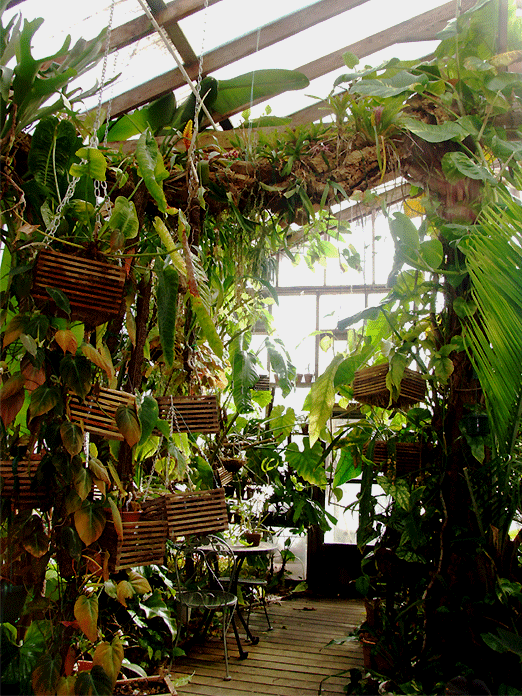 For easy access we had
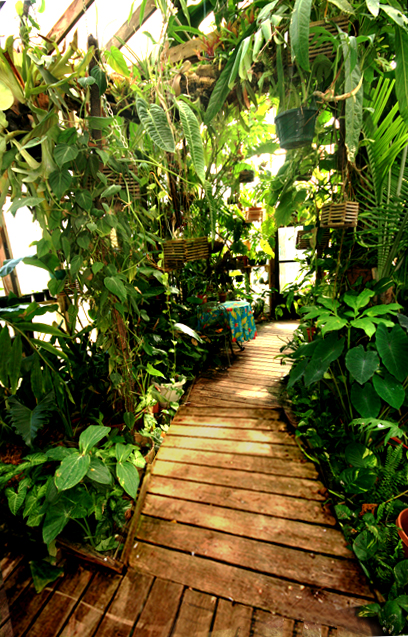
a 4 foot wide walkway built around the room in the shape of a "U".
That was done partly because I get around in a wheelchair and the wooden
walkway makes it much easier for me to get most places in the building. But it also adds
to the beauty of the building. In some cases you may find a simple
stepping stone path will work as well. But in my case, when I
build the next
one I plan to make the walk even wider at
least in some places. Plants tend to grow in over the walk and make it
appear narrower that it is. And in a wheelchair, even four feet is
difficult to turn around or negotiate tight corners. Just another
reason to have made the building even larger.
Be sure and use pressure treated wood. The
humidity in a tropical atrium will destroy unprotected wood in short
!
For easy access we had
a 4 foot wide walkway built around the room in the shape of a "U".
That was done partly because I get around in a wheelchair and the wooden
walkway makes it much easier for me to get most places in the building. But it also adds
to the beauty of the building. In some cases you may find a simple
stepping stone path will work as well. But in my case, when I
build the next
one I plan to make the walk even wider at
least in some places. Plants tend to grow in over the walk and make it
appear narrower that it is. And in a wheelchair, even four feet is
difficult to turn around or negotiate tight corners. Just another
reason to have made the building even larger.
Be sure and use pressure treated wood. The
humidity in a tropical atrium will destroy unprotected wood in short
!
The big secret to making your tropical plants grow as they do in the jungle is the soil mixture, designing the room to hold in humidity, and the amount of water you plan to give them. We spent a lot of time preparing the soil before the first plant went in the ground. We mixed a huge amount of peat, good potting soil, sand, humus, cypress mulch and a few other goodies such as large quantities of Perlite™ and pellet fertilizer in our own Arkansas clay before ever planting anything. My goal was to make the soil porous, quick draining and tropically rich while retaining moisture. The peat, cypress mulch and humus all helped to increase the ability of soil to stay damp but not soggy. It also tends to keep the soil pH low, something tropical plants prefer.
As a general rule, tropical plants do not like their roots overly wet but they love moisture. If you ever visit a rain forest you'll discover the soil there is often very easy to dig. That's because there is so much decaying material mixed in with the growing media. By adding lots of peat and humus, along with the other ingredients, you'll speed up that decaying vegetative process. We add new cypress mulch regularly as it decays on the surface. We don't carry off all the dead leaves that collect, we just try to turn them into the soil whenever possible and let them do their job naturally. Those dead leaves contain natural fertilizer! As you can see from the photos on this website it appears to be working.
The next
thing to consider is the study the plants you want to plant before
you start digging. Before you plant anything make a plan.
A computer program called 3-D Landscaping will help. With it you can
layout where you want the planting
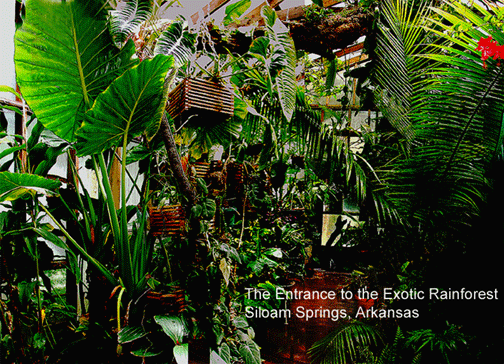 areas, the walks, the pond,
furniture and other fixtures. Figure
out what needs more light and which need less. Rain forests have both
canopies and wide open areas. Plan for the plants that require both.
We have a descent sized group of bananas and heliconia plants that love
the sun. So one area is left fairly open so the summer sun can beat
down. But below them we have a lot of Anthurium sp., and other plants
that like bright filtered light. That way we can utilize the full
atrium for all kinds of species. In other areas where we have planted
small flowering trees we planted species beneath their branches (and on
their branches) that love filtered light. We even have areas for
plants that don't particularly like the sun and thrive in very low
light. Plan ahead and you'll keep everyone happy for a much longer
life.
areas, the walks, the pond,
furniture and other fixtures. Figure
out what needs more light and which need less. Rain forests have both
canopies and wide open areas. Plan for the plants that require both.
We have a descent sized group of bananas and heliconia plants that love
the sun. So one area is left fairly open so the summer sun can beat
down. But below them we have a lot of Anthurium sp., and other plants
that like bright filtered light. That way we can utilize the full
atrium for all kinds of species. In other areas where we have planted
small flowering trees we planted species beneath their branches (and on
their branches) that love filtered light. We even have areas for
plants that don't particularly like the sun and thrive in very low
light. Plan ahead and you'll keep everyone happy for a much longer
life.
If the plants you
wish to grow require more water in their soil calculate all of
that before you start digging holes. The same is true for plants that
like to dry a bit. If you have plants that need to dry out
between watering allow for that need so you don't quickly drown their
roots. In those areas add more peat moss and Perlite™. Plan the entire building's planting areas before you put
anything in the ground! If you give the plants what they want before
planting you will be shocked at how fast they will grow and
reproduce. If you read my plant descriptions on this website
(http://www.exoticrainforest.com/plantscollection.html) you'll find I try
to tell you what the plants will like and will not like in regards to
water, soil and light. You'll find out you don't have to dig up
nearly as many plants later and move them somewhere else!
A large number of
jungle plants are epiphytes (ep=a-FIT). They grow on the sides or up in the
trees. In fact, scientists estimate 70 to 90% of all plants and
animals in the rain forest live up in the canopy! There are more plants growing on other plants in the rain
forest than growing in the ground! Plan in
advance to give them something to
which they can attach themselves so they can hang down or grow upwards while attached.
You'll find the effect of a real jungle is more quickly achieved
when you have hanging vines and roots!
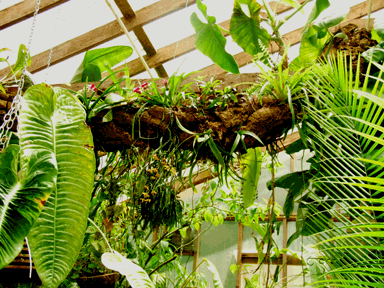
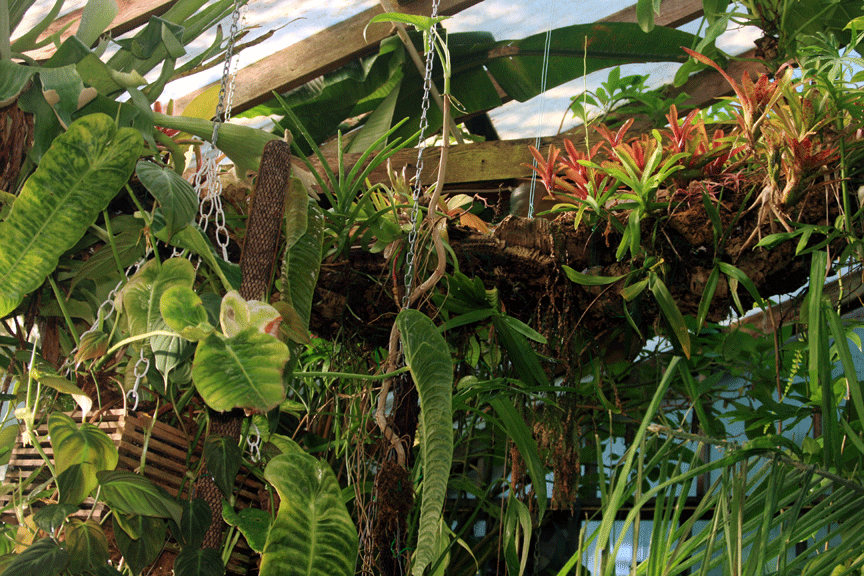
Since we used
cedar for the entire building we allow it to be a "growing media" for
epiphytes all over the building. Our center post and center columns
are 8 inch x 6 inch posts. If you look at the photos in the Views
of the Rainforest section you'll see they are now almost covered
with plants which have attached themselves to the cedar. In
other parts
 of the building we solved the problem by borrowing an
idea from Fairchild Tropical Garden in Miami, FL. In the
Fairchild tropical atrium they created a gorgeous display of
orchids, bromeliads and other epiphytes by attaching rolled cork
bark to 4 inch PVC pipe with screws. The sections of PVC can
then be assembled with a variety of PVC joints to create what
appears to be fallen logs or broken tree branches and tree trunks
laying on the ground or falling against piles of rock. Rolled
cork bark is expensive
but if you search for it
and it by the bale (approximately 130 pounds) you can still find
it at a fair price. The cork bark will last a long time and with a
little assistance, such as a small amount of Liquid Nails glue, you can
"convince" most epiphytic plants to attach themselves.
of the building we solved the problem by borrowing an
idea from Fairchild Tropical Garden in Miami, FL. In the
Fairchild tropical atrium they created a gorgeous display of
orchids, bromeliads and other epiphytes by attaching rolled cork
bark to 4 inch PVC pipe with screws. The sections of PVC can
then be assembled with a variety of PVC joints to create what
appears to be fallen logs or broken tree branches and tree trunks
laying on the ground or falling against piles of rock. Rolled
cork bark is expensive
but if you search for it
and it by the bale (approximately 130 pounds) you can still find
it at a fair price. The cork bark will last a long time and with a
little assistance, such as a small amount of Liquid Nails glue, you can
"convince" most epiphytic plants to attach themselves.
One grower who is building a similar building in Kentucky recently sent photos of a large rock wall with terraces. I wish I had thought of that idea! Especially one with an enormous waterfall down the center! That technique is known as a "wet wall". A small water pump is used to pump water to the top of the wall which is filled with rock and sphagnum moss. Climbing plants such as Philodendron sp. and Anthurium sp. will grab hold of the damp rocks and climb just as they do in the rain forest! The next ExoticRainforest will have one!
 A pond is an absolute
must. Rain forest plants need the humidity and a nice pond with a waterfall
will keep the humidity high all the time. While recently
visiting with a staff member at the Missouri Botanical Garden in St.
Louis I was asked how we managed to get our plants to grow so
thickly. I answered "the same way you do in your main
display"! "Lots of flowing water!" We estimate our pond holds
approximately 2500 gallons. The waterfall in the atrium runs at
approximately 5000 gallons an hour when the filters are newly
cleaned. As a result our atrium rarely drops below 85% humidity and
most of the time is higher. In the morning water drips off the
ceiling all over the building. In addition, our atrium now
has a complete overhead misting system which operates on an auto
timer. Our system was installed by friends Richard and Teri Baber and Teri is a member of the International Aroid Society.
A pond is an absolute
must. Rain forest plants need the humidity and a nice pond with a waterfall
will keep the humidity high all the time. While recently
visiting with a staff member at the Missouri Botanical Garden in St.
Louis I was asked how we managed to get our plants to grow so
thickly. I answered "the same way you do in your main
display"! "Lots of flowing water!" We estimate our pond holds
approximately 2500 gallons. The waterfall in the atrium runs at
approximately 5000 gallons an hour when the filters are newly
cleaned. As a result our atrium rarely drops below 85% humidity and
most of the time is higher. In the morning water drips off the
ceiling all over the building. In addition, our atrium now
has a complete overhead misting system which operates on an auto
timer. Our system was installed by friends Richard and Teri Baber and Teri is a member of the International Aroid Society.
There are lots of good books with instructions on how to build a pond and waterfall. Just plan ahead about the filtration. You will need it! The pond is also a great place to grow tropical water lilies. Just make sure you keep the pond from being totally covered over by large plants which will block the sunlight. If you don't have a pond or other source of moving water in a large volume you can be sure the humidity will suffer during the winter since your artificial heat system will dry out the air.
Unless you just love to stand in the "garden" with a garden hose in hand have a good misting/watering system built attached to the rafters. Most tropical plants like lots of water in the Spring and Summer and less in the Fall and Winter. If you have a system put in on a watering timer you'll soon figure out just how much water everyone needs ever day. A water timer will make keeping everyone happy a lot easier, including you, when you need to be away for a few days! For us, 7 minutes up to 10 minutes a day five days a week seems to work best in the summer heat. In the rain forest rain often falls in the afternoon at the heat of the day. I try to copy that to some degree. It is extremely important you maintain the humidity level at above 80% or higher and watering along with an indoor pond/waterfall will help.
Don't forget the
natural sounds of the rainforest to add to your complete rainforest
experience. We installed a set of waterproof speakers attached to a
CD player capable of rotating 5 CD's. We located a bunch of natural
rain forest sounds from a variety of sources and play them almost all
day long on a rotating schedule. We even located night recordings of
jungles in Costa Rica that include tree frogs and an occasional
howling monkey. A great source for many different rain forest
 recordings is Listening Earth. You can
listen to samples on their website at:
http://www.listeningearth.com.au/
Don't forget the natural ambience of rain forest animals. We
have also located some very nice South American Andes reed flute
music with the sounds of rain forest birds in the background.
Very restful when you are in your "jungle".
recordings is Listening Earth. You can
listen to samples on their website at:
http://www.listeningearth.com.au/
Don't forget the natural ambience of rain forest animals. We
have also located some very nice South American Andes reed flute
music with the sounds of rain forest birds in the background.
Very restful when you are in your "jungle".
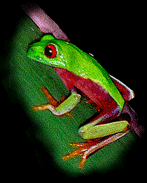
We added quite a few tree frogs and small lizards (anoles) which really add to the joy and experience of being in a rain forest. Snakes? No. Not us. But we did once have a grass snake find its way in somehow. Fortunately it found its way back out before my wife could get to it! If you do decide to add live animals be sure and plan for their nutritional needs! We turn loose 1500 baby crickets once a month for everyone to stay fat. Of course, don't forget to feed the crickets cat food or fish flakes so they will grow and chirp for you at night. Since cat food is full of protein the crickets eat the protein and pass it along to the frogs and lizards. Crickets can be ordered from a number of sources on the internet. The listening experience created by the crickets is also incredible! Visit a good pet store and a book on caring for rain forest frogs and lizards. They are simple to keep healthy in an artificial rain forest. Our's even produce babies each spring!
Birds
flying free in your rainforest? I'm not convinced that is a
great idea. We've done it. Forest, our Red Rump
Australian
 grass
parakeet
has made many trips around the Exotic Rainforest with no apparent
damage to either himself or the plants. Our pair
of Sun Conures have made a few flights but prefer to stay in or on their
cage. They know where the food is! The male conure
has been out a few extra times and always finds something to chew.
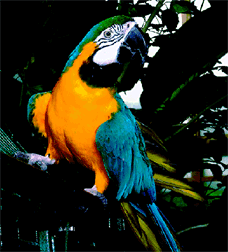
But even though we allow our recently added Blue and Gold Macaw,
Wizard, to stay on a perch outside the cage during the day she is
not allowed to fly free. Macaws are notorious for chewing on
anything and everything including rare plants! If you have rare plants that could be dangerous for your collection.
Large species, such as macaws and cockatoos, would certainly chew
everything in the room. Since our birds seem to
prefer the security of their cages we have now elected to let them
"stay home". If you plan to allow birds to free-fly do not use
ceiling fans! The birds can easily fly into the blades!
grass
parakeet
has made many trips around the Exotic Rainforest with no apparent
damage to either himself or the plants. Our pair
of Sun Conures have made a few flights but prefer to stay in or on their
cage. They know where the food is! The male conure
has been out a few extra times and always finds something to chew.
But even though we allow our recently added Blue and Gold Macaw,
Wizard, to stay on a perch outside the cage during the day she is
not allowed to fly free. Macaws are notorious for chewing on
anything and everything including rare plants! If you have rare plants that could be dangerous for your collection.
Large species, such as macaws and cockatoos, would certainly chew
everything in the room. Since our birds seem to
prefer the security of their cages we have now elected to let them
"stay home". If you plan to allow birds to free-fly do not use
ceiling fans! The birds can easily fly into the blades!
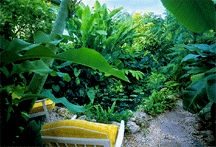
A word to those of you fortunate enough to live in a climate where you don't need a building to house your "rain forest". We once owned a home in South Florida near the coast in far southern Miami. I elected to turn the entire backyard into a rain forest with Biscayne National Park directly across the street! As a result many of the natural and imported "rain forest" animals moved into the yard. We had a selection of anoles and other lizards including iguanas many varieties of tree frogs, Bull Frogs and probably a few snakes although we never saw any. Colorful parrots and macaws from nearby Parrot Jungle even came to visit and sample the fruit from our banana and Papaya trees. We even had an Almond Tree that produced nuts and made a perfect food source for the larger parrot species.
The ponds were filled with blooming water lilies
and we had many tropical fish in each. One critter that has
been imported into Florida from Cuba also moved in, the Buffo Toad.
Buffo Toads are not dangerous if you don't bite them. But dogs
sometimes bite them! We once lost a very valuable and large male Great Pyrenees
because he chose to bite a Buffo. When we sold the house we thought the
people bought it because they loved the landscaping.
 Everyone
in the neighborhood loved the landscaping and people use to visit
often just to see our "jungle". Apparently the new
owners lost a small dog to a Buffo Toad. One of my old
neighbors called me almost crying and told me they had cut down
everything! Everything including the palms and concreted the
entire back yard. They did it in an effort to keep the Buffo
Toads away. Silly thing to do since the toads live in Biscayne
National Park and will come in the yard if you have a jungle or
nothing but concrete. When they lost the second dog they sold
the house! I looked it up recently on a satellite photo and it
is nothing but 1/3 acre of concrete with a pool in the center! Shame. If you
build a backyard rainforest you will have to learn to accept your
new "resident neighbors"! To borrow a line from
a movie, if you build it, they will come!
Everyone
in the neighborhood loved the landscaping and people use to visit
often just to see our "jungle". Apparently the new
owners lost a small dog to a Buffo Toad. One of my old
neighbors called me almost crying and told me they had cut down
everything! Everything including the palms and concreted the
entire back yard. They did it in an effort to keep the Buffo
Toads away. Silly thing to do since the toads live in Biscayne
National Park and will come in the yard if you have a jungle or
nothing but concrete. When they lost the second dog they sold
the house! I looked it up recently on a satellite photo and it
is nothing but 1/3 acre of concrete with a pool in the center! Shame. If you
build a backyard rainforest you will have to learn to accept your
new "resident neighbors"! To borrow a line from
a movie, if you build it, they will come!
You cannot imagine the
joy of seeing a white layer of snow on the ground while being
in a semi-clear building with blooming orchids, rare tropical plants
and a temperature
still 80 degrees in the day!
Go ahead. Don't let anyone tell you it can't be done. Build a rain forest.
Still have questions? We have associates that can help you design and build the structure as well as provide the plants.
Steve Lucas
Steve@ExoticRainforest.com
www.ExoticRainforest.com
The ExoticRainforest is growing upwards! Click this link to see how!
Join the
International Aroid Society:
http://www.exoticrainforest.com/Join%20IAS.html
For information on purchasing GE Lexan
Thermoclear™
contact GE Polymershapes at
(866) GEP-SHAPES or (866) 437-7427.
You can also access the website at
http://www.gepolymershapes.com
After more than 25 years in South Florida, Steve Lucas is a retired commercial photographer living in Siloam Springs, Arkansas since 2001. Almost everyone said it would be impossible to build a "rain forest" under glass. But the nearly 300 pages on this website may persuade you it can be done. Steve has published more than 300 national magazine articles. His photos and stories have appeared in more than 30 magazine titles since 1982.
This text is a copyright protected text.
If you wish to reuse this information please contact the author for
permission.
Copyright 2006 Steve Lucas, the Exotic Rainforest