
Aroids and other genera in the Collection
Take the Tour Now?
Orchids
The
Exotic Rainforest
Plants in
the Exotic Rainforest Collection
All photographs on this
page are registered under U.S. Copyright law. Copyright
2004/2008, Steve Lucas
They are not in the public domain and permission must be sought prior to any
secondary use.
Epiphyllum phyllanthus subspecies phyllanthus (L.) Haw.
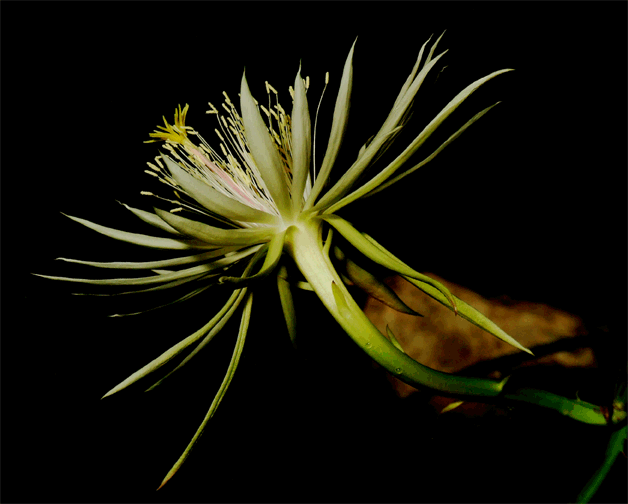
Synonyms:
Cactus phyllanthus, Phyllocactus phyllanthus, Rhipsalis phyllanthus, Cereus phyllanthus, Epiphyllum gaillardae, Phyllocactus gaillardae, Rhipsalis macrocarpa, Hariota macrocarpa
Common names: Night Blooming Tropical Cactus,
Orchid Cactus,
Queen of the Night Cactus, incorrectly Night Blooming Cereus
Definition of a rain forest:
"First, as the name indicates, tropical
rainforests are found in the tropics located between the Tropic of Capricorn
and the Tropic of Cancer, between the latitudes of 23.5° N and 23.5° S.
Second, a tropical rainforest is rainy and wet, receiving at least 100
inches of rain each year. Other types of tropical forests experience one or
two distinct dry seasons. So, a simple definition for tropical rainforest
is: a forest in the tropics which receives rain throughout the year.
Within this definition, however,
exists considerable variation. The rainforest's location in the world, the
species it contains, the amount of rainfall it receives, soil conditions,
elevation and associated temperature ranges are some of the things that
influence the appearance of a rainforest. One of the defining
characteristics of a rainforest is the tremendous diversity of life that
exists within the forest. In fact, most of the world's plants and animals
live in rainforests."
Source: Fairchild Tropical Botanic Garden, Miami, FL
Originally described to science in 1826 by botanist Adrian Hardy Haworth (1768-1833), according to all available published scientific articles, Epiphyllum phyllanthus is a rain forest cactus species. But then, what is a "rain forest"?
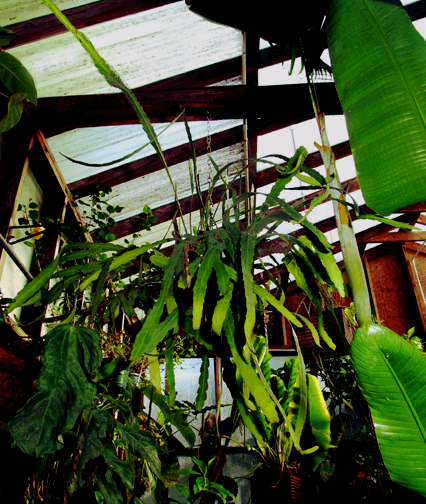 Within the genus Epiphyllum you will find an
unusual group of epiphytic (tree dwelling) cacti that range from
southern Mexico through Central
America and into almost all of tropical South
America. Species within the genus Epiphyllum are cacti although they don't often present themselves with the same
thorny characteristics as the cacti seen growing in the desert.
Within the genus Epiphyllum you will find an
unusual group of epiphytic (tree dwelling) cacti that range from
southern Mexico through Central
America and into almost all of tropical South
America. Species within the genus Epiphyllum are cacti although they don't often present themselves with the same
thorny characteristics as the cacti seen growing in the desert.
Despite their tropical nature, they are true cacti and are members of the larger plant family Cactaceae. For those unacquainted with botanical terms, an epiphyte (ep-a-FIT) is simply a plant that grows upon another plant. Plants within this genus are highly variable. For additional information on natural variation: Click here.
These species are not parasitic but instead are closer to guests of the host plant. Epiphyllum don't draw nourishment from the host, which is normally a tree and often one that is dead, but instead use the host as a support in the rain forest in to gain better access to brighter light. And despite one common name, plants in this genus have no relationship to any orchid species. To compound any internet research on this species, almost all the photos of the bloom found on the internet as Epiphyllum phyllanthus are of an entirely different species, some including Zygocactus. As a result, accepting information on this Epiphyllum species found generically on the internet is little more than believing internet gossip.
I am admittedly a neophyte when it comes to Epiphyllum species since my specialty is members of the family Araceae (aroids). In addition to the plant shown above I have two other species (or hybrids) that are still immature but I make it a point to have the scientific names of specimens in my collection verified either through a scientific text or by a botanical source, often a botanist. In the years I have been maintaining this website I have been fortunate to become personal friends with some of the world's best rain forest botanists and tropical plant experts. The cursory identifications offered are still found to be incorrect. Through conferences, phone calls, personal visits and having traded many emails with numerous qualified botanists I have learned that a cursory examination of a single photograph or even a casual examination of a living specimen often offers only an "opinion" as to the species. And the genus Epiphyllum is well known to be complicated by the fact that specimens not in bloom are often confused with other genera. As a result, I am often dubious when any self proclaimed "expert" offers the species name of a plant by simply glancing at a photo. Much more detailed information is necessary to be certain beyond a doubt. But still, I see these self proclaimed "experts" hand out "beyond a doubt" scientific names on plant forums by seeing only a single photo.
In early 2001 I took the specimen
shown above, which was
substantially smaller at the time, along with a photo of a bloom produced by
the parent to a botanic garden in Miami, FL
and asked for an
identification. That ID came
 back as Epiphyllum oxypetalum.
Now, due to the help of a
concerned reader I have
learned the plant is not what I had always
thought. This is the note which I regret came unsigned,
"The foliage is very distinctive on an oxy and can usually be id'd
without seeing the bloom. In your case, I have seen the bloom, and
it is not like any oxypetalum I have ever seen. I referred your
website photo to someone who has written many books and lectured on
the subject of epiphytes, and he believes that your plant is
Epiphyllum phyllanthus subspecies phyllanthus."
As a result, I located a copy of the scientific description of the
species (see that at the bottom of this page) and completed a more thorough search for the true species'
information. After doing so I have updated this page with all the current
scientific information I
can locate along with personal comments from a variety of qualified rain
forest experts. Based on the scientific material as well as other
information I've been able to uncover, the specimen in our
collection at least strongly appears to be
Epiphyllum phyllanthus subspecies
phyllanthus.
back as Epiphyllum oxypetalum.
Now, due to the help of a
concerned reader I have
learned the plant is not what I had always
thought. This is the note which I regret came unsigned,
"The foliage is very distinctive on an oxy and can usually be id'd
without seeing the bloom. In your case, I have seen the bloom, and
it is not like any oxypetalum I have ever seen. I referred your
website photo to someone who has written many books and lectured on
the subject of epiphytes, and he believes that your plant is
Epiphyllum phyllanthus subspecies phyllanthus."
As a result, I located a copy of the scientific description of the
species (see that at the bottom of this page) and completed a more thorough search for the true species'
information. After doing so I have updated this page with all the current
scientific information I
can locate along with personal comments from a variety of qualified rain
forest experts. Based on the scientific material as well as other
information I've been able to uncover, the specimen in our
collection at least strongly appears to be
Epiphyllum phyllanthus subspecies
phyllanthus.
Although you can find over 80
named species
listed on a variety of scientific sources, current research now compacts
all those names into 16 true Epiphyllum species. All the rest are now
considered simply synonyms of those base species, or
basionym.
A synonym is a name granted by a botanist that later proves to have
been a species previously identified.
The first name granted
and published always remains the true name of the species. Variation is not uncommon in tropical plant species and as a result
many published scientific names are
commonly found to simply be a variation of another
 known
species. Botany is a growing science and as a result changes
are found all the time.
Botanists do not simply
"change" a name unless a
technical error is later observed as to the genus. And one of the most frequent changes
is
when a qualified botanist discovers that a commonly accepted species'
name is no longer valid since that species has
previously been
named and published.
This happens due to a phenomenon known to botanists as
"variability". Within numerous plant species individual
specimens are capable of producing slightly different growth forms
such as different leaf shapes. Sometimes that variation is so
distinct that the two plants bear little, if any resemblance.
Consider it similar to the faces of human beings. We are all
one species, but all of us have a different face. But still, those
different looking plants are the same species and sometimes only the examination of the
sexual parts of the plant within the flower or inflorescence can verify they are one and the same. As a result, the newer names become synonyms of the oldest
established name which is proven to be the true base species
or basionym. You will find a link
near the bottom of this page to
the website of Epiphyllum ecologist Joseph W. Dougherty along
with a link to the Cactus and Succulent Society of American, both of which
present more detailed information on this genus.
known
species. Botany is a growing science and as a result changes
are found all the time.
Botanists do not simply
"change" a name unless a
technical error is later observed as to the genus. And one of the most frequent changes
is
when a qualified botanist discovers that a commonly accepted species'
name is no longer valid since that species has
previously been
named and published.
This happens due to a phenomenon known to botanists as
"variability". Within numerous plant species individual
specimens are capable of producing slightly different growth forms
such as different leaf shapes. Sometimes that variation is so
distinct that the two plants bear little, if any resemblance.
Consider it similar to the faces of human beings. We are all
one species, but all of us have a different face. But still, those
different looking plants are the same species and sometimes only the examination of the
sexual parts of the plant within the flower or inflorescence can verify they are one and the same. As a result, the newer names become synonyms of the oldest
established name which is proven to be the true base species
or basionym. You will find a link
near the bottom of this page to
the website of Epiphyllum ecologist Joseph W. Dougherty along
with a link to the Cactus and Succulent Society of American, both of which
present more detailed information on this genus.
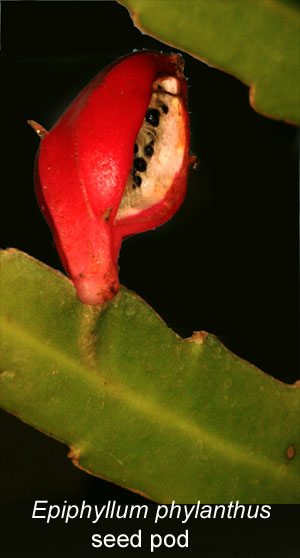 A plant collecting neighbor in Miami, FL had
the parent of this strange
plant hanging under a tree in his yard. I finally
mustered the nerve
in 1998 to
ask for a cutting and he gladly gave me three. Today
our
Epiphyllum
phyllanthus has
grown from three small cuttings to an enormous epiphyte
with "branches" that are truly flattened stems that
grow up
to 180 cm or 6 feet long. The photo at the top of this page is
now 3 years old. Those flattened stems are known
scientifically as a cladode. A cladode is simply a modified stem
which is capable of photosynthesis (light gathering) while appearing somewhat like a
leaf. Scientists believe it is flattened to
facilitate a large surface area for gathering sufficient light while also
storing water. However, cladodes are not leaves! Cladode
producing plants are found almost exclusively within the larger
family commonly known as cacti
(Cactaceae).
Russ Hammer who lives in Central Florida, a rare plant
collector with a large collection that often helps me checks these pages for
accuracy made this observation, "Interesting
that these Epi's and related types are absolutely leafless and that
they're basically nothing but stems that flower."
A plant collecting neighbor in Miami, FL had
the parent of this strange
plant hanging under a tree in his yard. I finally
mustered the nerve
in 1998 to
ask for a cutting and he gladly gave me three. Today
our
Epiphyllum
phyllanthus has
grown from three small cuttings to an enormous epiphyte
with "branches" that are truly flattened stems that
grow up
to 180 cm or 6 feet long. The photo at the top of this page is
now 3 years old. Those flattened stems are known
scientifically as a cladode. A cladode is simply a modified stem
which is capable of photosynthesis (light gathering) while appearing somewhat like a
leaf. Scientists believe it is flattened to
facilitate a large surface area for gathering sufficient light while also
storing water. However, cladodes are not leaves! Cladode
producing plants are found almost exclusively within the larger
family commonly known as cacti
(Cactaceae).
Russ Hammer who lives in Central Florida, a rare plant
collector with a large collection that often helps me checks these pages for
accuracy made this observation, "Interesting
that these Epi's and related types are absolutely leafless and that
they're basically nothing but stems that flower."
 In most cases you will learn the
Epiphyllum plants most of us commonly grow are not species but
are instead hybrids sometimes involving other related genera. This passage from the Cactus and
Succulent Society of America website explains more fully,
"What we call
epiphyllum today are actually hybrids of the epiphytic cacti species
native to the jungles of So. and Central Amer. and Mexico. The name
Epiphyllum, epi means "upon" and phyllum means "leaf", because they
produced flowers on their leaf-like stems. But they have no leaves,
these are actually thickened stems or branches, most are flat but
some grow in a
triangular shape. Epiphyllums are not covered with
spines, but have hair bristles or tiny spines in the areolar, some
more than others."
In most cases you will learn the
Epiphyllum plants most of us commonly grow are not species but
are instead hybrids sometimes involving other related genera. This passage from the Cactus and
Succulent Society of America website explains more fully,
"What we call
epiphyllum today are actually hybrids of the epiphytic cacti species
native to the jungles of So. and Central Amer. and Mexico. The name
Epiphyllum, epi means "upon" and phyllum means "leaf", because they
produced flowers on their leaf-like stems. But they have no leaves,
these are actually thickened stems or branches, most are flat but
some grow in a
triangular shape. Epiphyllums are not covered with
spines, but have hair bristles or tiny spines in the areolar, some
more than others."
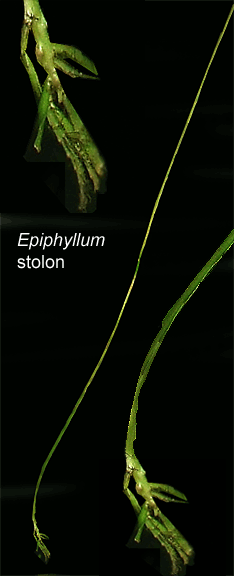
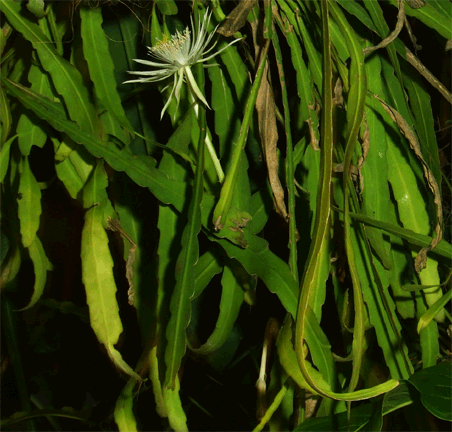
The areolar is filled with extra-floral nectaries known as areolar glands. The glands are normally found in cactus species in the the axils of the cladode and exude a nectar juice high in sugar content. The specimen uses that nectar to attract ants which would therefore appear to be the natural pollinator. Provided the flower is pollinated it will eventually produce fruit containing seeds which are eaten by birds or small mammals and introduced onto the branches of other trees in their droppings. However, the plant also reproduces itself by extending a long stolon or runner. These stolons are sometimes 3 meters (9 feet) or more in length in to reach another branch. A specimen often uses the method to extend itself to another branch and is how canopy plants move around when they want to spread to another portion of the tree. They will grow these long thin appendages (see photo, left) that moves laterally, upwards or downwards until it finds a place that gives the the specimen an additional growth platform. At that point, it begins to produce cladode flattened stems (see top of photo) and establishes a new plant.
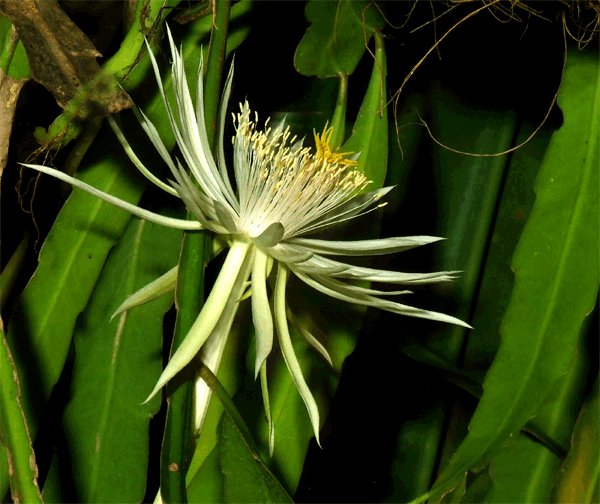
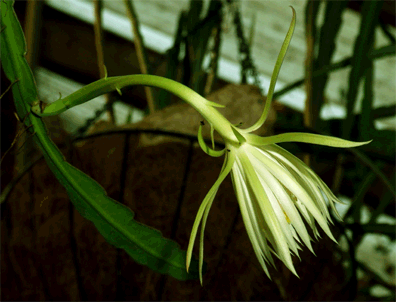
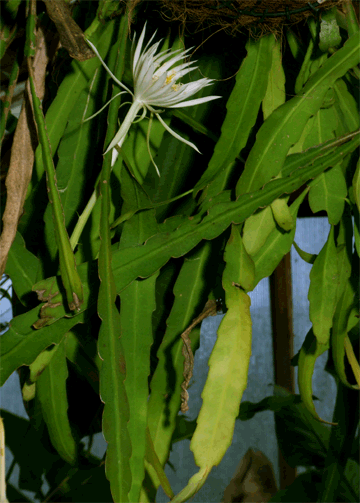
A tropical humidity loving cactus which may be complete with thorns that are often difficult to find, Epiphyllum species are common in nature from select portions of the Caribbean, Mexico through all of Central America and well into South America as far south as Bolivia on the west and virtually all the northern countries of the continent down into Brazil. That entire region is a tropical rain forest although not all tropical forest receive constant rain. The plants and flowers of the genus grow up near the top of the canopy on the branches and in the crooks of tropical rain forest trees high up in the forest. Within the species Epiphyllum phyllanthus the flowers open at night and are short lived. As can be seen in the photo left, just one hour after dawn they are already beginning to close. An hour or two later they will completely drop from the specimen if not pollinated. However, other than during the super wet rain period that zone of the forest may be comparatively dry but the humidity is often quite high. These species do not naturally grow in soil, but may survive in very porous modified soil in a personal collection. At least some epiphytic cacti also grow over rocks in full sun and not necessarily in the shade of the forest. As to genus and species, I cannot comment. The natural position in the canopy would indicate a desire for stronger light which leads to warn collectors these species are not pleased with dim light.
To better understand the
anatomy and function of the flower of an Epiphyllum I turned
to an expert, Dr. Leo A. Martin director of the Cactus and Succulent
Society of America (CSSA). Dr. Martin's explanation is both
interesting and exceptionally clear,
"Cactus
anatomy is really not that different from other dicots once one
realizes the various spines, bristles, hairs
and scales are modified leaves. The flowers are also quite simple.
What distinguishes cacti from almost all other plant families is the
areole. This is a felty spot on the stem which has two meristems
during development. Normally one of these
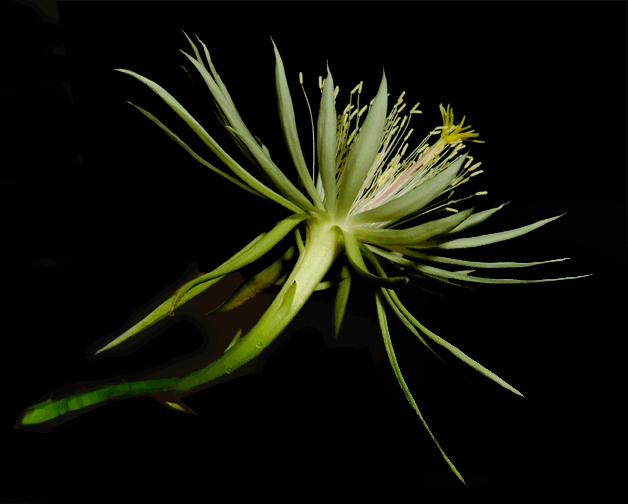 meristems forms spines.
The other can form flowers or stem segments. Once a given areole has
flowered or produced another stem segment, that is it for that
areole.
meristems forms spines.
The other can form flowers or stem segments. Once a given areole has
flowered or produced another stem segment, that is it for that
areole.
The majority of an Epiphyllum plant consists of flattened stems.
Sometimes these flattened stems are called cladodes, but this term
is usually reserved for Opuntia (prickly pear) stem segments - the
roundish, flat pads, or the stem segments in the chollas (Cylindropuntia
in North America). The long shoots shown in the photo are just stems
with a slightly different form than usual. They don't have any
special name. Many epiphytic cacti have polymorphic stem segments,
especially with new growth from cuttings or juvenile plants.
Epiphyllum stem areoles are tiny, seemingly spineless, and are
hidden in the notches along the sides of the stem segments.
Above the ovary, cactus flowers show gradual change from the
enveloping scale-like outer parts to what most people would call
petals. Because there is no clear dividing line between petals and
scales, all these parts are called tepals. There are no sepals on
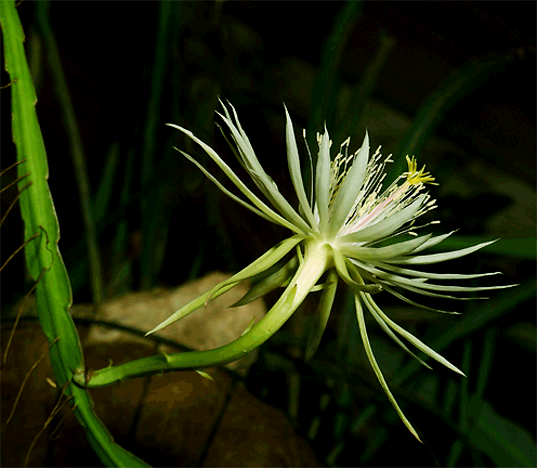
cactus flowers. Epiphyllum flowers are elongated into long tubes
formed from the tepals. Below the tepals the ovary with its spiny
areoles is normally clearly visible, though it is not shown in the
photo. Almost all cacti have inferior ovaries, meaning the
ovary is below the flower and is really a modified hollow stem. The
ovary isn't visible in the flower photo you sent me, but it is just
off the image. It is covered with areoles The protruding yellow
structure shown in the photo is the pistil. Cacti have a single
pistile that is divided into at least five divisions at the tip, and
with Epiphyllum it is usually many more than five. Cactus
fruits are hollow berries, normally filled with seeds attached to
the wall of the fruit with very fleshy structures called funicles.
When slicing a dragon fruit or a cereus fruit, these funicles are
the juicy white part of the fruit.
Surrounding the pistil in the photo are the dozens of filaments
bearing anthers. In cactus flowers filaments tend to be attached in
a ring near the base of the tube. Cacti, like other plants, have
evolved flowers to attract many different kinds of pollinators. The
nocturnal, white-flowered, usually scented Epiphyllum species are
thought to attract moths, who can reach the nectaries at the bases
of the tepals with their long tongues. The moth picks up pollen on
its forehead while hovering, and it bumps into the receptive surface
of the next flower it visits. The individual flowers typically open
well after dark and close with the next morning's light."
The species Epiphyllum phyllanthus is noted by
several
sources to be found
primarily within the rain forests of the Guiana Shield of north
 eastern South America.
According
to Dutch naturalist Joep Moonen (pronounced yupe) who lives and works in French Guiana
the species is common in the region. Joep then made
these valuable comments,
"I've never
seen an Epiphyllum in flower since our specimens open at night and I am
not a night hunter. However, I have taken pictures of the fruit.
They are always opened and something has eaten the seeds, possibly
birds. I don't see the plants low in the forest since it is
too dark. You see them more in dead threes, on sides of roads,
or on inselbergs which just rocky outcrops. The segments can
be different in shape and color, flat and about 30 to 50 cm long but
just 2 to 3 cm wide but over 200 cm long! They are green but
sometimes the entire plant is pink-orange"
eastern South America.
According
to Dutch naturalist Joep Moonen (pronounced yupe) who lives and works in French Guiana
the species is common in the region. Joep then made
these valuable comments,
"I've never
seen an Epiphyllum in flower since our specimens open at night and I am
not a night hunter. However, I have taken pictures of the fruit.
They are always opened and something has eaten the seeds, possibly
birds. I don't see the plants low in the forest since it is
too dark. You see them more in dead threes, on sides of roads,
or on inselbergs which just rocky outcrops. The segments can
be different in shape and color, flat and about 30 to 50 cm long but
just 2 to 3 cm wide but over 200 cm long! They are green but
sometimes the entire plant is pink-orange"
This quote can also be found on the website of Epiphyllum ecologist and enthusiast Joseph W. Dougherty, "They are widely distributed in many parts of Central and South America, living high in the crowns of trees. Although they are dispersed over a large area, all grow in moist, tropical areas with warm to hot climates." Expert collectors such as Ursula Kammlott have reported personally collecting Epiphyllum phyllanthus subspecies phyllanthus near the Essequibo River in Guiana. Her account can be found at http://www.kammlott.net/Ephyllanthus.html
In the beginning
the stems of our specimen grew only pendently (downwards). But after the
first 3
years they began to
branch and finally in 2006 began growing straight up until
their own weight forced them to droop. It took 4 to 5 years from the time
we started the Epiphyllum specimen before we saw the first bloom.
The white blooms of Epiphyllum
phyllanthus
are
beautiful to behold and in the early years were relatively small.
As the plant matured the blooms continued to grow to a fully open
size of approximately 17.75 to over 20cm (7 to 8 inches). But you better be quick if you plan to take a
photograph! The flowers
can be found growing from the nodes, or joints, near the edges of the
cladodes but don't wait until
tomorrow to try to get a photograph! Epiphyllum
phyllanthus is a night blooming
cactus
producing blooms which open just after dark and are dried up and dead before noon the next
day. You get a chance to see one fully open only during the
night until the very extreme early morning the following day. Such a behavior indicates the natural pollinator is
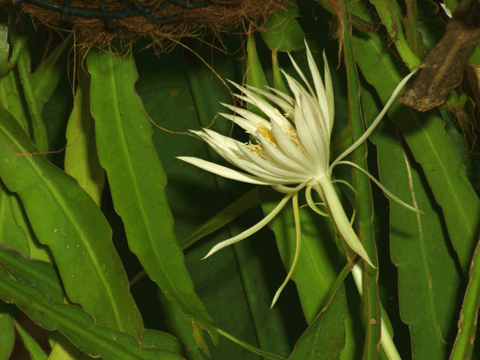
active during the night hours. New flowers can be seen
developing in the large photo above left just behind the fully open
bloom. And in a photo below a fully open flower can be
observed with its attachment to the edge of a cladode.
 This writer is not a scientist nor considers himself an expert in any plant species including the
genus Epiphyllum. Instead, an avid
collector and serious plant researcher as well as having over 30
years experience as a professional photographer who has
written and published over three hundred articles in national magazines on a
variety of subjects including plants. The pages of this
website are literally my personal notes to myself written in a style
others may be able to utilize. They were placed on the
internet in the event I die prematurely so my adult daughters can
easily access them in to identify and properly care for as
well as find appropriate homes for my
large plant collection. While working on my notes I
read as much scientific material as possible along with the notes of
experienced growers in to learn about any plant in this collection.
This writer is not a scientist nor considers himself an expert in any plant species including the
genus Epiphyllum. Instead, an avid
collector and serious plant researcher as well as having over 30
years experience as a professional photographer who has
written and published over three hundred articles in national magazines on a
variety of subjects including plants. The pages of this
website are literally my personal notes to myself written in a style
others may be able to utilize. They were placed on the
internet in the event I die prematurely so my adult daughters can
easily access them in to identify and properly care for as
well as find appropriate homes for my
large plant collection. While working on my notes I
read as much scientific material as possible along with the notes of
experienced growers in to learn about any plant in this collection.
During my research
on Epiphyllum species I encountered two quotes the University
of British Colombia (UBC) plant forum in regard to
Epiphyllum species I could not easily understand. The first is
clearly incorrect but the second less easily
dismissed. These
quotes were published by cactus grower Stephen Jankalski who often uses the screen name
Cereusly Steve on
several forums. His statement plus the clarifications are
still easily found on the internet and thus are included here for
accuracy, "There
are only about a dozen species recognized in the genus
Epiphyllum.
Most of the species originally described as
Epiphyllum
are now in several
other genera." Mr.
Jankalski then posted this statement, "None
of the species occur in tropical rainforest. They are commonly found
as epiphytes in tropical forest with seasonal rainfall and a cool
season not a constantly hot climate with year-round rainfall."
Does
no one but me see a contradiction in that second statement?
I realize Mr. Jankalski considers himself an expert in this field
but his opinion appears to both differ and be in opposition to those
of scientists that have spent years working in the field of rain
forest botany and ecology.
Many Anthurium and Philodendron species don't live in the wettest parts of the rain forest preferring to live in regions where there are periods of dryness. Both genera are clearly known to science as rain forest species. So does that mean these Anthurium and Philodendron species are not "rain forest" species either? Well, perhaps it is contradictory solely depending only on your understanding and definition of a "rain forest".
The first indicates there are fewer than the scientifically accepted 16 known species (some sources indicate up to 20 species). The second quote strongly appears to attempt to contradict published and accepted scientific knowledge by proposing these epiphytes are not truly rain forest plants by incorrectly pointing out they are found only in the dry regions of those forests. That lead me to the question, "when is a rain forest not a rain forest"? It is certainly correct in many cases that rain forests have dry seasons. But does that automatically disqualify these rain forest dwellers from being rain forest plants? Especially since they are located naturally nowhere on earth other than in a rain forest?
Almost all rain forests have both wet and dry seasons but during the dry season dew from high humidity does much of the water maintenance for the plants. Just because they dry out part of the year does not mean the forest is not a rain forest or that plants living there are not rain forest plants. Please read again the definition of a rain forest at the top of this page. Despite popular belief, it does not have to rain every day in a rain forest! .It should be noted that most of these forests do have dry, moist and wet regions as well as seasons. The Amazon basin is often known to be completely flooded for portions of the year and quite dry during others. But scientific literature often describes the genus Epiphyllum as being found at least in moist forest. The claim they grow only in dry regions would appear to be improbable as well as scientifically inaccurate since in the majority of the countries where the species are observed they have seasonal rains that are intense and the humidity constantly high.
When new material is
presented I do my best to give it due consideration. As a result, I sent a
personal note to Mr. Dougherty and asked for a clarification.
He responded,
"Absolute
rubbish. Whoever wrote that clearly doesn't know what they
are
talking about. I have seen, in person, many different species of
Epiphyllum, Hylocereus and Rhipsalis growing wild in Costa
 Rica and
Honduras in areas that would be considered lowland humid rainforest,
as well as in mountainous regions that could be considered cloud
forest. I have seen images from northern South America of
similar habitat containing Epiphyllum and Disocactus species. So
whomever that person is, they are quite mistaken."
He
then continued,
"Bottom line is that these plants come from humid and wet regions.
Temperatures may vary widely in the ranges of different species, but
there is certainly no rule that they come from dry zones. I've seen
them thriving in extremely moist regions."
Rica and
Honduras in areas that would be considered lowland humid rainforest,
as well as in mountainous regions that could be considered cloud
forest. I have seen images from northern South America of
similar habitat containing Epiphyllum and Disocactus species. So
whomever that person is, they are quite mistaken."
He
then continued,
"Bottom line is that these plants come from humid and wet regions.
Temperatures may vary widely in the ranges of different species, but
there is certainly no rule that they come from dry zones. I've seen
them thriving in extremely moist regions."
I then sent a query to one of my personal friends who is America's top rain forest botanist, Dr. Tom Croat Ph.D., P.A. Schulze Curator of Botany of the Missouri Botanical Garden since Dr. Croat has made countless trips into the rain forests of all of Mexico, Central America and almost the entirety of South America. Dr. Croat is the author of many major botanical journals as well as the botanist of record who discovered and then described and named an incredible number of plant species to science. And in his scientific descriptions he frequently notes whether a species is found in wet, moist or dry forest. But still, he does not appear to rule dry forest species as not being rain forest species as I understand his work. This was Dr. Croat's initial response, "While it is true that Epiphyllum does occur in Tropical dry forest and even drier biomes some species are common in Tropical moist forest, perhaps also in Tropical wet forest."
Following that, I sent a post to a forum frequented by rain forest botanists and researchers who spend a great deal of time in those forests. My primary goal was to locate the email address of Dr. Myron Kimnach which was promptly provided. Several contributors responded privately to say they had seen these species in both dry, moist and wet forest. Aroid ecologist and expert Neil Carroll who has spent considerable time in the rain forests of Central and South America as well as published many papers on tropical species (see the International Aroid Society website for examples) sent this note, "I have seen them in the trees in the rainforests of Ecuador and Panama. the guy is probably confused that a cactus would grow in anything but a desert." And Mr. Harry E. Luther who is the Director of the Mulford B. Foster Bromeliad Identification Center and Curator of Living Collections of the Marie Selby Botanical Gardens in Sarasota, FL offered this response, "Cacti are not my thing but I've seen plenty of Epiphyllum spp and Rhipsalis spp growing in wet lowland rainforest in Bocas del Toro, Panama, Los Rios , Ecuador and in dry cool cloud forest in El Oro , Ecuador. Yes, some are rainforest epiphytes." It should be strongly noted that Mr. Luther's specialty is Bromeliad species and both Bromeliad and Epiphyllum often share the exact same host. Harry would therefore be highly qualified to know if he was in fact observing an Epiphyllum or other cacti species.
But to be absolutely certain I also sent a request to Dr. Kimnach who is one of the top cacti experts in the United States as well as the Director Emeritus of Huntington Botanical Gardens in California and the former editor of CSSA journal of the Cactus and Succulent Society of America. A private note from Dr. Martin followed and he has advised me he will attempt to help me receive a response. Dr. Martin also provided this comment, "I have seen epiphyllums growing in Veracruz and Oaxaca states in tropical deciduous forest." A deciduous rain forest is one in which the trees lose their leaves. A second note from Dr. Martin received in late April, 2008 included this helpful information, "Without going into it further, lots of epiphytic cacti look like Epiphyllum when not in bloom. The whole group of epiphytic cacti is not that well studied other than the group of small cacti Rhipsalis - Lepismium - Hatiora and related species, which were extensively revised and published in Bradleya, the British Cactus and Succulent Society's scientific annual. To identify a plant as an Epiphyllum one would need to see the flowers, not only the plant. As I mentioned E. chrysocardium does indeed live in wet forests." To my regret, no response from Dr. Kinmach was ever received.
 But then Dr. Martin
provided this quote which involves the definition of what some may,
or may not, consider a rain forest,
"They
aren't rain forest plants. I've seen some of them in Mexico.
There are indeed cacti that are rain forest plants but Epiphyllum
in
general aren't, with the possible exception of E. chrysocardium.
They are denizens of tropical deciduous forest. In other words,
4
months of summer rain, 8 months of no rain (but with normal
nighttime dew.) Most (not all) of Mexico has this climate regime. I
haven't been to Central America but there's plenty of tropical
deciduous forest there too. The epi hybrids involve lots of
other genera. The few species remaining in Epiphyllum have nocturnal
white flowers. The other colors in hybrids come from other genera.
The species may take a tiny amount of frost but almost all the
hybrids are extremely tender. Hardier plants with flowers
similar to Epiphyllum are some of the Selenicereus species. They are
vining epiphytes that are what was originally meant by "Queen of the
Night Cactus."
But then Dr. Martin
provided this quote which involves the definition of what some may,
or may not, consider a rain forest,
"They
aren't rain forest plants. I've seen some of them in Mexico.
There are indeed cacti that are rain forest plants but Epiphyllum
in
general aren't, with the possible exception of E. chrysocardium.
They are denizens of tropical deciduous forest. In other words,
4
months of summer rain, 8 months of no rain (but with normal
nighttime dew.) Most (not all) of Mexico has this climate regime. I
haven't been to Central America but there's plenty of tropical
deciduous forest there too. The epi hybrids involve lots of
other genera. The few species remaining in Epiphyllum have nocturnal
white flowers. The other colors in hybrids come from other genera.
The species may take a tiny amount of frost but almost all the
hybrids are extremely tender. Hardier plants with flowers
similar to Epiphyllum are some of the Selenicereus species. They are
vining epiphytes that are what was originally meant by "Queen of the
Night Cactus."
So are Epiphyllum species rain forest plants? It certainly appears confusing. As you will soon read, some of the world's top rain forest researchers have a very different opinion.
The final sentence in one of Dr. Martin's notes indicates at least one of the 16 species does live in the wet forest. And a quote stating where Epiphyllum species are naturally found on the Cactus and Succulent Society of America website (see link below) under a discussion on Epiphyllum species certainly at least appears to be somewhat contradictory, especially when combined with Dr. Croat's information quoted above. Should plants that live in drier rain forest not be considered rain forest plants? Consider this quote from the CSSA website, "Most of the blooms of the 16 true 'Epiphyllum' species are fragrant and all have white flowers, through some of the outer petals have tinges of yellow, cream and strawcolor. E. cooperi flower from the base of the plant, the buds develop slowly at first and may take up to 10 weeks to open. These plants that came from the dense tropical forests of Central and So. Amer. live in humid jungle conditions."
Certainly, there appears to be some debate as to what the definition of a rain forest plant should be. My friend Julius Boos who is a noted expert on rain forest aroids and has co-authored scientific descriptions published this comment on one public forum, "It appears that this debate is now centered around the narrow determination of the difference between a rain forest and a tropical deciduous forest. Being from Trinidad, and having traveled in French Guyana, I can assure all that tree-growing cacti I am familiar with in most cases do not make a distinction and that they do not suddenly stop growing or existing in what the experts consider true rain forests. I have seen climbing epiphytic cacti high in the wet canopy, who knows what genera they may be determined to belong to once they are collected, and taxonomists get their hands on them. If, as it is being said, the range of the cactus genus Epiphyllum is from Southern Mexico, all of Central America, and all down the Western side of S. America, I can assure all that in many of these areas, especially in Panama and W. Colombia, W. Bolivia and W. Brazil there are real rain forests with cacti growing in them, I don`t know how many species and of what genera they may be!"
A dear friend who has been to South America many times as a botanical research assistant, or while leading rare plant collectors into the rain forest, wrote this line in response to the original assertion Epiphyllum species are found only in dry rain forest. Regrettably, she doesn't like for me to post her name! Referring solely to the person who originally made the statement that began my quest she said, "Steve, that person has never been to the jungle. These things do not appear very often, but they fall from the crotch of trees and in very wet areas where one would not expect to find a cactus. Humor them, and tell them you have a friend who has often found them in very wet rainforests epiphytically............ some may not grow in such areas."
 These notes from Dr. Croat, who likely knows more about
the tropical rain forests of Central and South America than anyone in the United States, sums
it up,
"The term
rain forest is not a standard or formal designation. In the
Holdridge Life Zone System which I use the term “rain forest” is
used a variety of designations. A standard range of wetness would
range from Tropical dry forest to Premontane dry forest to Tropical
moist forest, Premontane wet forest, Tropical wet forest, Tropical
rain forest, Premontane rain forest, Lower montane rainforest,
Montane rain forest. The effective degree of wetness is the
critical feature and may be owing to a lot of rain or a cooler
temperature and thus a reduced amount of transevaporation so that a
single life zone could range form sea level to 2000 m depending on
the amount of precipitation. Pluvial lowland forest is the wettest,
hottest and is rather restricted, known only from northwest S.
America in Colombia where it may rain 36 feet a year."
Followed by a private note which
read,
"I doubt if
Epiphyllum occurs in the wettest of forests, for example in Tropical
Pluvial forest, but they do occur in many types of tropical forests."
These notes from Dr. Croat, who likely knows more about
the tropical rain forests of Central and South America than anyone in the United States, sums
it up,
"The term
rain forest is not a standard or formal designation. In the
Holdridge Life Zone System which I use the term “rain forest” is
used a variety of designations. A standard range of wetness would
range from Tropical dry forest to Premontane dry forest to Tropical
moist forest, Premontane wet forest, Tropical wet forest, Tropical
rain forest, Premontane rain forest, Lower montane rainforest,
Montane rain forest. The effective degree of wetness is the
critical feature and may be owing to a lot of rain or a cooler
temperature and thus a reduced amount of transevaporation so that a
single life zone could range form sea level to 2000 m depending on
the amount of precipitation. Pluvial lowland forest is the wettest,
hottest and is rather restricted, known only from northwest S.
America in Colombia where it may rain 36 feet a year."
Followed by a private note which
read,
"I doubt if
Epiphyllum occurs in the wettest of forests, for example in Tropical
Pluvial forest, but they do occur in many types of tropical forests."
You are free to draw your own concussions as to whether or not a plant that lives exclusively in a tropical rain forest is a rain forest species. But it would strongly appear that just because any particular species or genus does not appear in all the regions Dr. Croat describes, that plant should not be considered a "rain forest species".
Easy to propagate and grow, Epiphyllum species produce primarily white blooms, some with tinges of color, while hybrid specimens produce a variety of colors including reds, pinks and yellows. Many species bloom during the day while others exclusively at night. To start a new plant simply take a 15cm (6 inch) or larger cutting and pot it in loose soil mixed with sand, Perlite and other media to make it porous. Hanging baskets lined with a coconut liner work best. Wild specimens collect falling leaves and other debris including animal droppings from the tree that is their host. That pile of "trash" collects around the base of the plant and holds moisture as well as providing nutrients. To simulate the natural environment, we prefer to use a moisture control potting soil mix with sand, peat, Perlite, and a lot of orchid bark to be certain the medium stays damp yet never soggy. The small roots of the plant need moisture but should not be soaking wet. Sand speeds the drainage while the hard wood orchid bark provides a natural anchor.
We've found Epiphyllum phyllanthus prefers bright but slightly diffused light. As of the most recent measurements almost every cladode is close to 2 meters (6 feet) long with multiple new cladodes developing. We have hung the plant from one of the major beams in the atrium so it can spread fully. The "epi" blooms from late Spring through mid summer, sometimes 4 to 6 blooms at a time. And of interest, a few months before this article was complete we added an automatic misting system to the atrium. Our Exotic Rainforest is now watered automatically at 5:30AM fpr 10 minutes almost daily. On many days, in the heat of the afternoon we cause the system to "rain" again. Since that system was installed the plant is now producing as many as 5 blooms in the evening. There appear to be an abundance of new blooms preparing to open all the time apparently as a result of the additional water. I have read many times on plant forums "do not over water this plant". I could not disagree more! Just make sure the media is very porous and fast draining.
One note as to whether or not I personally would consider this specimen to be a rain forest species. Our collection is watered a minimum of 3 to 4 times a week for 10 minutes at a time during the entire year. In the heat of the year everything is watered almost daily. But during the winter we do back off to 2 to 3 days each week. Our Epiphyllum phyllanthus does nothing but grow so it appears all that water certainly does no harm. As a result of all the growth over the past 10 years I've given away countless cuttings.
I do my best to publish correct information on this site, even when that information is somewhat confusing or contradicts my personal beliefs. I openly invite botanists, scientists and expert growers to point out potential errors found on this site at any time. However, any suggestions will be researched before changes are made. If you believe you locate an error, please include a scientific reference with your information. My email address is near the bottom of the homepage of this site. Information submitted by non-scientists will be duly considered but is also subject to verification in scientific texts.
And one final note. I am uncertain where this information originated but I have now been privately advised twice that I am credited on at least one forum with saying Epiphyllum species can tolerate a freeze. That information has never been presented on this website and in one public forum (University of British Colombia Botanical Garden) I advised a Canadian grower several times against even attempting such a venture. In one post on the UBC forum I stated our plant did survived one exceptionally cold night in South Florida when the temperature dropped for a short while just below freezing, but I never said they could tolerate long term freeze. If you read UBC forum, please notice I didn't advise the plant enjoyed the cold! Virtually every grower I have corresponded with has indicated these species do not thrive in the cold.
In the opinion of this writer, Epiphyllum species are clearly tropical as is evidenced by where they grow in nature. But the final determination is clearly defined by any individual's perception of a rain forest. Others on that forum tried to indicate these plants can tolerate low temperatures but my advice has been consistently to keep them above 10 to 12.78 C (50 to 55 F) degrees at a minimum. If you are aware of the person or source of this non-factual information please send us a private note.
For a more detailed look at Epiphyllum species visit the website of Joseph W. Dougherty: http://www.ecology.org/ecophoto/articles/Epiphyllum.htm
and
The Cactus and Succulent Society of America
http://www.cssainc.org/index.php?option=com_content&task=view&id=213&Itemid=212
The Published Scientific Description of Epiphyllum phyllanthus:
Cactus pyllanthus Linnaeus 1753, Opuntia phyllanthus (Linnaeus)
P. Miller 1768, Cereus phyllanthus (Linnaeus), A, P. de Candoll
Rhipsalis phyllanthus (Linnaeus), K Schumann 1890
Epiphyllum gaillardia (Britton & Rose)1913, Phyllocactus gaillardia
Plants much branched. Primary stems round in cross sec-
broad, white to cream. Fruits ellipsoidal to ovoid, pur-
plish red, smooth, 3-8 cm (1.2-3.1 in) long, odorless.