
Aroids and other genera in the Collection
Take the Tour Now?
Orchids
The
Exotic Rainforest
Plants in
the Exotic Rainforest Collection
Images on this website are copyright protected. Contact
us before attempting to reuse.
New: Understanding, pronouncing and using Botanical terminology, a Glossary
Only Alocasia zebrina is an accepted published scientific name
Warning: Florida Hill Nursery of Debary, FL is currently using
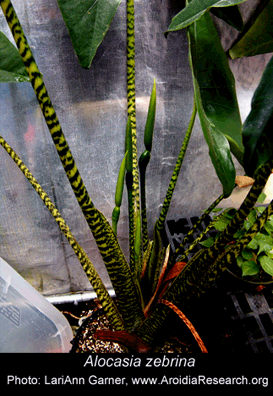
the first photo below to he left of the text
without permission on
their website
and on eBay in violation of
my legal copyright stated above and embedded beneath the photo.
Just run your cursor over the photo.
We recommend you do not purchase from anyone that takes photos illegally.
Alocasia zebrina reticulata form
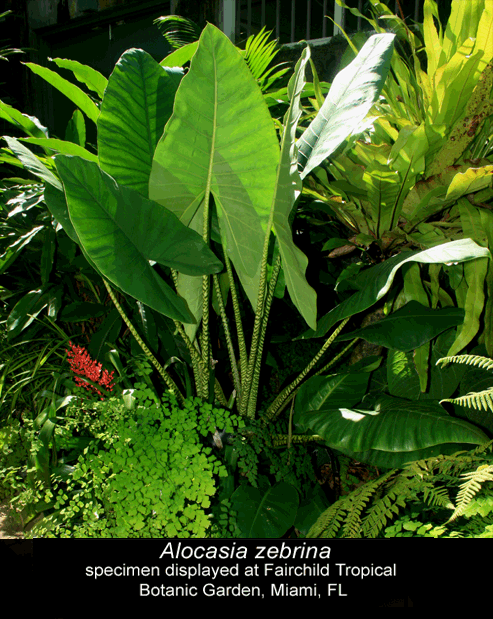
Alocasia zebrina Schott ex Van
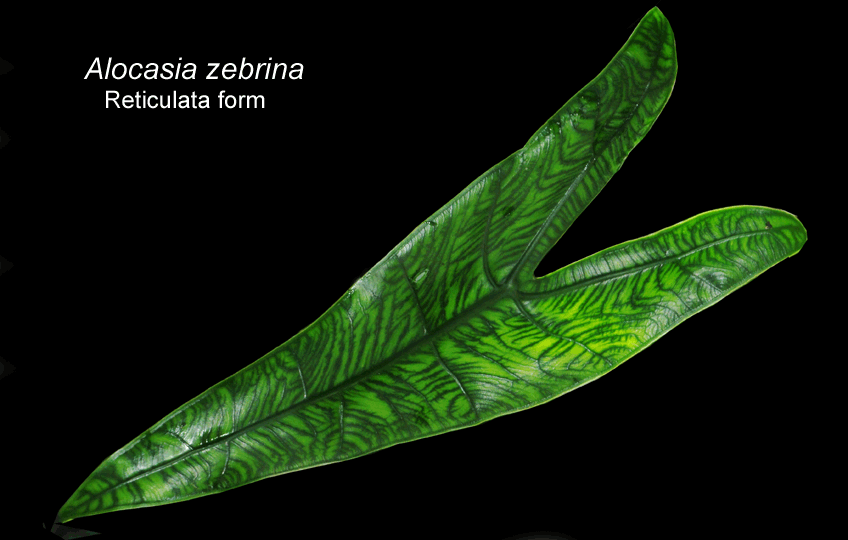
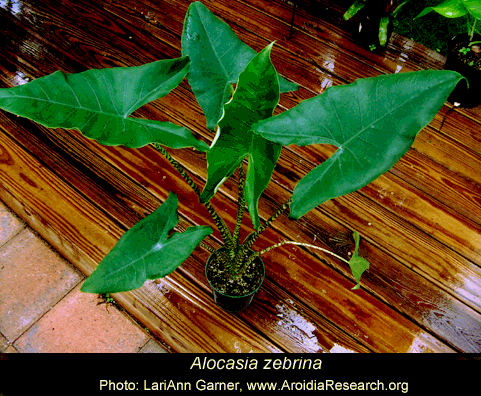
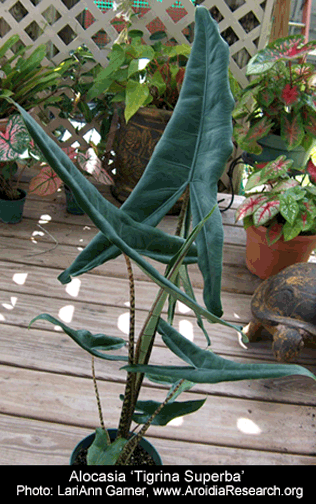
The second photo shown above is often sold incorrectly as a unique species called Alocasia zebrina Reticulata.
No such species exists in science.
None of the following names are scientifically recognized nor have any been officially registered as horticultural cultivars.
All appear to be names created for commercial purposes without following the established rules of horticulture:
Alocasia zebrina 'Reticulata', Alocasia zebrina cv Reticulata, Alocasia Tigrina Superba,
and Alocasia zebrina Superba are only unregistered sports of the species Alocasia zebrina.
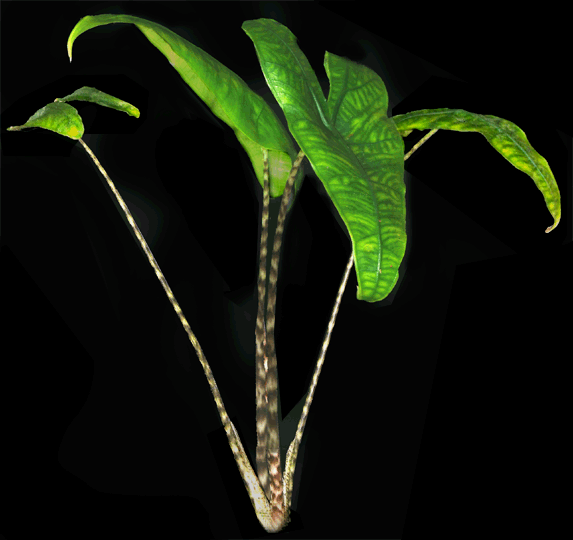 Alocasia Tigrina also
demonstrate the elongated leaf blade. As
the blades of the reticulated variation mature the pattern fades until it is
barely noticeable.
Alocasia Tigrina also
demonstrate the elongated leaf blade. As
the blades of the reticulated variation mature the pattern fades until it is
barely noticeable.
The species Alocasia zebrina is
found on the island of Luzon in primary rain forests at elevations
of 100 to 400 meters (330 to 1,300 feet). A. zebrina
is
typically
found in nature growing in wet humus covered soil adjacent to boulders in the shade
of the
forest.
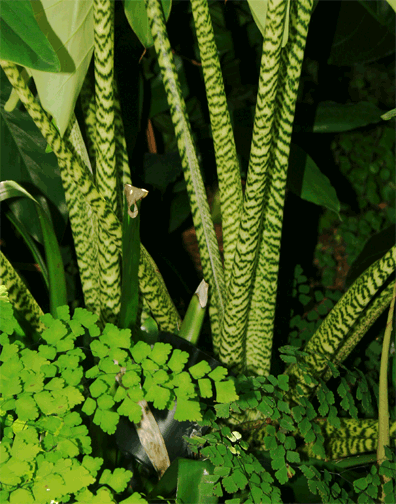
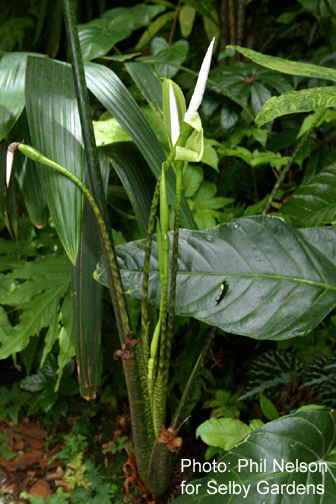
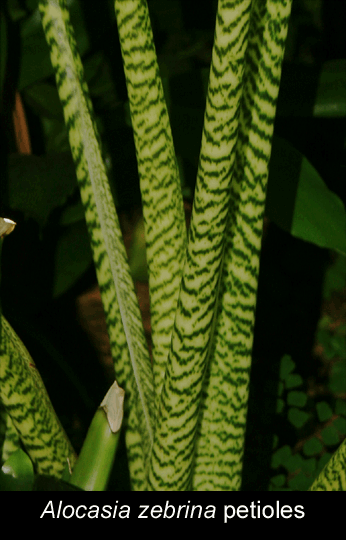 A. zebrina possesses a short caudex
with petioles that grow to approximately 92 cm (36 inches) long or
longer although juvenile specimens will be much shorter in height. The
name "zebrina" was granted as a result of the pattern on the petiole
which collectors commonly incorrectly refer to as a "stem". A caudex
is the axis or base which is the true stem of the plant.
The stem of any aroid is
not the support for any individual leaf blade but is the central axis and base of the
plant where the petioles that support the
leaves as well as the roots emerge.
A. zebrina possesses a short caudex
with petioles that grow to approximately 92 cm (36 inches) long or
longer although juvenile specimens will be much shorter in height. The
name "zebrina" was granted as a result of the pattern on the petiole
which collectors commonly incorrectly refer to as a "stem". A caudex
is the axis or base which is the true stem of the plant.
The stem of any aroid is
not the support for any individual leaf blade but is the central axis and base of the
plant where the petioles that support the
leaves as well as the roots emerge.
The confusion over the term "stem" used incorrectly as a leaf support appears to come
from roses. The rose flower is supported by a non-woody
segment of stem but the florist removes the leaves which have short
petioles along with the "thorns" from a portion of that stem.
The "thorns" are not true thorns but are instead simply modified
stems. Since it often comes cleaned in the box many appear to
forget the stem is not the support for the roses' leaves and misapply
the term to other plant species. The stem of the rose supports a
terminal flower and not any individual leaf blade. Take a look
at any rose and you'll see the leaves are supported by petioles.
The
stems of Alocasia zebrina are an un-branched sympodium.
Sympodium refers to the "symphony" or rosette-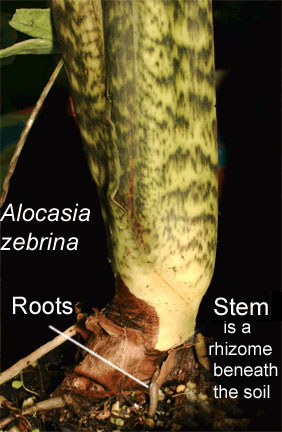 ike form of the
branching growth of the new petioles which is similar to the arrangement of
the petals of a rose. The stem is rhizomatous (a rhizome) and runs
just beneath the surface of the soil producing new plants
adjacent to the parent from nodes along the stem.
ike form of the
branching growth of the new petioles which is similar to the arrangement of
the petals of a rose. The stem is rhizomatous (a rhizome) and runs
just beneath the surface of the soil producing new plants
adjacent to the parent from nodes along the stem.
In some Alocasia species the newly emerging leaves and petioles are
protected by a cataphyll. A cataphyll is a sheath-like modified
leaf that envelopes and protects each new leaf as it develops.
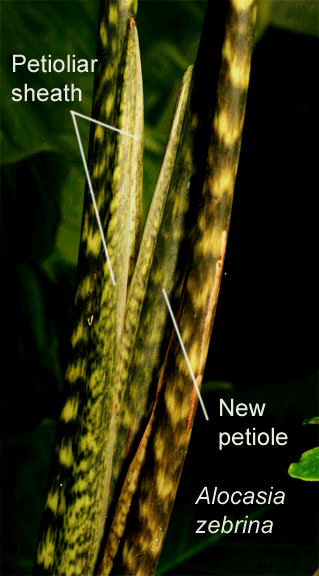
Rather than a cataphyll Alocasia zebrina produces new petioles with
blades that emerge from a sheath on the side of the petiole known as
a petiolar sheath. Each new petiole
emerges from these "wing-like" sheaths on the side of the previous
petiole (see photo, right).
 Alocasia
zebrina is known to be a highly variable species which is
capable of producing more than one leaf form. Variation is
common among aroid species but as aroid expert Julius Boos
explains later in this article variation is especially prominent within
the genus Alocasia.
Botanists including
Australian Alistair Hay have been working to reclassifying numerous
specimens
previously thought to be individual species into single merged names
as a result of natural variation.
Some of these advances are as a result of the increased use of DNA
to explore the genetic makeup of plant specimens which will result
in some previously accepted scientific names being sunk into
synonymy under other species' names.
Alocasia
zebrina is known to be a highly variable species which is
capable of producing more than one leaf form. Variation is
common among aroid species but as aroid expert Julius Boos
explains later in this article variation is especially prominent within
the genus Alocasia.
Botanists including
Australian Alistair Hay have been working to reclassifying numerous
specimens
previously thought to be individual species into single merged names
as a result of natural variation.
Some of these advances are as a result of the increased use of DNA
to explore the genetic makeup of plant specimens which will result
in some previously accepted scientific names being sunk into
synonymy under other species' names.
Just as humans with different body shapes and sizes as well as skin, eye, or hair color are not different species, difference in the blade appearance alone is insufficient evidence to presume a plant is a unique species. What truly
 determines a unique aroid species are distinct characteristics
of the
plant including the venation (vein structure), stem and petiole
as well as the sexual portions of each species'
inflorescence.
determines a unique aroid species are distinct characteristics
of the
plant including the venation (vein structure), stem and petiole
as well as the sexual portions of each species'
inflorescence. Those sexual characteristics appear to be one and the same in Alocasia zebrina, the Alocasia zebrina reticulata form as well as all the other forms of this species sometimes offered for sale. Both the Alocasia zebrina reticulata form and the form sold as Alocasia Tigrina Superba appear to be nothing more than sports of the scientifically described species Alocasia zebrina.
It also appears the insistence on the part of some to grant a completely different name to any plant that has slight variations in leaf form, pattern or color may be only a conflict between horticulture and science due to the known variations within this species. However, the Alocasia zebrina reticulata form does remain somewhat of a mystery since the true origin of the plant is not known. This form has not been observed in the wild.
Even more unfortunate is
the fact many grower/sellers also often attempt to display the name in italics
or give the plant a Latin sounding name. The use of
Latinized names or italics is reserved for scientifically
described species and is not
an accepted practice for commercial plant names.
It appears some grower/sellers would prefer to completely throw out
the rules of either botanical science or horticulture causing a
great deal of confusion among plant collectors.
Additionally, no one is certain where the commonly used
name of a similar sport, Alocasia tigrina originated.
Some sources indicate "Alocasia tigrina" is a species name and
attempt to display it in italics but according to
 aroid botanist
Pete Boyce in
Singapore there is no such plant as "Alocasia tigrina" in
science, "The name Alocasia tigrina
does not exist. It has been applied to Alocasia zebrina in the trade
for the clone with the very well-marked petioles.
Alocasia zebrina
is endemic to the Philippines and restricted to the islands of
Luzon, Mindanao, Leyte, Samar, Biliran and
Alabat. It is easily
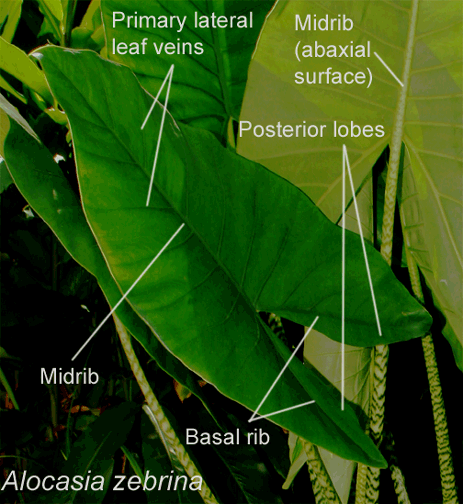
distinguished from all other Philippine Alocasia species by the
rather narrowly sagittate leaves with striped petioles and rather
long acute posterior lobes bearing lamina to the sinus but not or
only very narrowly peltate."
A sagittate leaf is one that is arrow shaped.
Peltate refers to the position the petiole is attached to the leaf
blade near the center. The
petioles of Alocasia zebrina are virtually identical to that of
Alocasia zebrina reticulata form
but the leaves are quite different.
aroid botanist
Pete Boyce in
Singapore there is no such plant as "Alocasia tigrina" in
science, "The name Alocasia tigrina
does not exist. It has been applied to Alocasia zebrina in the trade
for the clone with the very well-marked petioles.
Alocasia zebrina
is endemic to the Philippines and restricted to the islands of
Luzon, Mindanao, Leyte, Samar, Biliran and
Alabat. It is easily
distinguished from all other Philippine Alocasia species by the
rather narrowly sagittate leaves with striped petioles and rather
long acute posterior lobes bearing lamina to the sinus but not or
only very narrowly peltate."
A sagittate leaf is one that is arrow shaped.
Peltate refers to the position the petiole is attached to the leaf
blade near the center. The
petioles of Alocasia zebrina are virtually identical to that of
Alocasia zebrina reticulata form
but the leaves are quite different.
Horticulturists and plant collectors have attempted to give variations of species
in the genus Alocasia totally new
scientific sounding names in the past which have never been scientifically accepted.
Although there is nothing wrong with a collector placing a unique
tag in the pot of a unique specimen that does not mean the plant is
a new or different plant species.
 Here's a great example as explained by
my friend Derek who is the editor of the International Aroid Society journal, Aroideana
and supervises the IAS cultivar registration,
"the
prefix “cv.” is no longer valid to indicate a cultivar. The only way
of writing a cultivar
name is now in roman script with capital
letters for the words and inside single quotation marks. So when
you
write “Incorrectly Alocasia
zebrina cv. reticulata”, the
response is “yes, but it would be incorrect even if it were written
Alocasia
zebrina ‘reticulata’, which
would be correct for a registered cultivar name apart from the
Latinized form of the name”.
Here's a great example as explained by
my friend Derek who is the editor of the International Aroid Society journal, Aroideana
and supervises the IAS cultivar registration,
"the
prefix “cv.” is no longer valid to indicate a cultivar. The only way
of writing a cultivar
name is now in roman script with capital
letters for the words and inside single quotation marks. So when
you
write “Incorrectly Alocasia
zebrina cv. reticulata”, the
response is “yes, but it would be incorrect even if it were written
Alocasia
zebrina ‘reticulata’, which
would be correct for a registered cultivar name apart from the
Latinized form of the name”. A cultivar is a naturally produced sport of a known species which has been properly registered with a governing authority such as the IAS. If you do an internet search you can easily find specimens which are variable forms of Alocasia zebrina being offered for sale under the names Alocasia 'reticulata' and Alocasia 'Tigrina Superba' in single quotes even though no such cultivar has been registered. Aroid expert Julius Boos explains further, "Aroids, in particular the genera Alocasia appear to sometimes morph spontaneously into new cultivars. This happens even under natural conditions. The name reticulata was never registered as a cultivar. Latinized names cannot be used as cultivar names except if the Latin name is a species name or is registered. As a result, cv cannot be used as it has never become a registered cultivar. Using the word reticulata as a Latinized name is also improper!"
Alocasia species are known to be highly variable and not every leaf of every specimen will always appear the same. This link explains in non-scientific language the details of natural variation and morphogenesis. Click here In a message from Alocasia botanist Lord Alistair Hay if you attempt to locate any of these names on one of the major scientific databases you will learn none exists in the world of science. Despite the fact grower/sellers would apparently like for collectors to believe they are scientifically accepted they are not scientific. In some references it appears the name reticulata dates back to grower Bob Wilson of Fantastic Gardens once in business in Miami, FL during the 1980's but the term reticulata can be found in plant literature preceding Wilson's sale of the plant.
As aroid botanist Dr. Tom Croat explained in
one of his published papers, natural changes are simply the nature
of plant evolution. A very interesting quote can be found
within
Dr. Croat's and Monica Carlen's Taxonomic Revision of
the Section Semaeophyllium in regard to Anthurium species states,
"Size of any morphological structure in Anthurium is
highly
variable because plants often change remarkably in size over the
course of their lives and also in response to the
 general
climatic conditions where they occur, particularly in
geographically widespread species. Habit, Stem, and
Cataphylls". The size of the leaf, the shape of the leaf, the size of the spathe, the size of almost
any feature of any aroid can be variable. Size and leaf
shape does not
determine a plant species!
general
climatic conditions where they occur, particularly in
geographically widespread species. Habit, Stem, and
Cataphylls". The size of the leaf, the shape of the leaf, the size of the spathe, the size of almost
any feature of any aroid can be variable. Size and leaf
shape does not
determine a plant species!
This information by botanist Alistair Hay points to the problems caused by plant grower/sellers when they improperly cause collectors to confuse a common name with a scientific name, "I think this is a mess! Not your page, just the general situation re this name. First, is it really a sport - i.e. a vegetative mutant growing out of and taken from something else. I would have thought direct evidence of this status would be required. I suspect it is a variant seedling of A. zebrina, though of course it could be hybrid of some sort. Second, as far as I can see (and as you say) this species name seems never to have been published properly. I just tried searching the IPNI database but it keeps timing out, but I don't recall seeing this name as a valid species name when I was looking at Alocasia in detail. Third, I don't think it can be valid as a cultivar name. Latin species names can only be transferred across as cultivar names if it can be demonstrated that the originally published "species" is a cultivar. If, as we suspect, this has never been validly published as a species name, it is invalid as a cultivar name simply because it is Latin. Fourth, if the plant was released as a cultivar with a "pseudo species" name, it should be re-named properly (i.e. with an English or other modern language epithet and published with a description and pic either with the introducer's consent, or not, if someone has released a cultivar with an invalid name, they have had their shot at it and it would be open to anyone to rename the plant, though I do think that should be done properly: i.e. publishing it in either Aroideana or the IAS Newsletter with a pic and description. These sort of messy situations need a formal determination by the ICRA and possibly consultation with the ISHS commission for cultivar registration and nomenclature." IPNI refers to the International Plant Names Index and ISHS refers to the International Society for Horticultural Science.
The name reticulata was again briefly described as a variation of Alocasia in the 1983 International Aroid Society journal Aroideana, Volume 7, numbers 3 and 4 by David Burnett where he appears to use Alocasia 'reticulata' only as a horticultural name. David wrote, "This plant seems to have been released by Fantastic Gardens, Florida, sometime in the last ten years. It is still uncommon in the USA and virtually unknown elsewhere. It's origins are, so far as I can determine,
 unknown. I doubt that it is a species and it is not likely be
be a hybrid. Perhaps it is simply a sport or varietal form of a species. I have placed it among the Philippine Alocasia for
reasons that I find extremely difficult to explain in words.
Somehow the plant evokes a relationship with A. zebrina and A. 'Tigrina
Superba', yet; some of its characteristics are distinct
from
both. I have not had sufficient experience with the plant
to describe it, so I shall let the photograph speak for itself
for the time being."
In his discussion David offered no measurements and no
definitive information.
unknown. I doubt that it is a species and it is not likely be
be a hybrid. Perhaps it is simply a sport or varietal form of a species. I have placed it among the Philippine Alocasia for
reasons that I find extremely difficult to explain in words.
Somehow the plant evokes a relationship with A. zebrina and A. 'Tigrina
Superba', yet; some of its characteristics are distinct
from
both. I have not had sufficient experience with the plant
to describe it, so I shall let the photograph speak for itself
for the time being."
In his discussion David offered no measurements and no
definitive information. Following my request for information from members of the aroid discussion group Aroid l, I received this response from former IAS president, Scott Hyndman, "When I first saw this Alocasia at the now long ago closed Fantastic Gardens Nursery of Miami in 1981 it was sold as Alocasia zebrina cv reticulata." However, as Julius explained early in this article, the use of "cv" in relation to this plant is improper since no such cultivar has ever been registered.
All Alocasia species are members of the larger plant
family known as Araceae
(uh-RAY-see ee) commonly called aroids. An aroid is a plant that
reproduces via the production of an inflorescence which is
known to science as a spathe and spadix. The inflorescence is
supported by a stalk known as a peduncle.
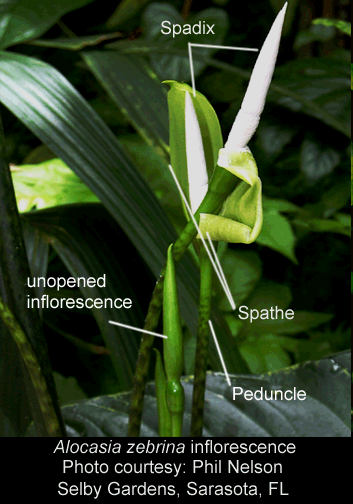 In Alocasia species the inflorescence is more correctly
called a
synflorescence since the inflorescences grow as multiples.
Pete explains,
"A synflorescence is a branching
unit where a series of inflorescences are generated one after
another with no return to vegetative or foliage-leafy units. The
inflorescences arise in sequence one after another
and usually open in sequence."
In Alocasia species the inflorescence is more correctly
called a
synflorescence since the inflorescences grow as multiples.
Pete explains,
"A synflorescence is a branching
unit where a series of inflorescences are generated one after
another with no return to vegetative or foliage-leafy units. The
inflorescences arise in sequence one after another
and usually open in sequence."
Although many
individuals try to call the inflorescence a "flower" the spathe is
closer to being a "flower holder". The spathe is a modified leaf or
bract that surrounds the spadix which truly holds the flowers.
The flowers of Araceae are very small and grow along
the spadice's length which is a spike on a thickened fleshy axis. If
you explore the spadix with a magnifying glass when it is at sexual
anthesis and is ready to be pollinated you can see the near
microscopic flowers.
The spathe is shaped like
a hood which opens during the reproductive cycle known as
anthesis. Berries containing seeds will develop
on the spadix provided the female flowers are pollinated. In botany a
bract is a specialized leaf that is associated with the reproductive
structure of a plant. The spathe cannot be considered a flower
since it contains no sexual parts including anthers, pistils,
stamens, nor stigmas. For more
information on aroid pollination please read this link:
Natural pollination in aroids.
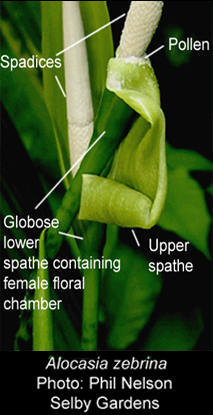 Alocasia species are unisexual since the female and male
flower regions are divided into unique zones. Based on information
published by Peter Boyce the spathe of an Alocasia species
is divided into a convolute (twisted) spathe plus a thicker lower
portion which
surrounds a zone on the spadix containing female flowers and known as the female floral
chamber. Although
the upper portion will eventually drop from the plant the lower portion
remains around the spadix once the upper spathe dies. This
lower chamber turns into a
fruiting region which will eventually produce berries containing
seeds. The two zones of the spathe can be recognized by a
constriction making the lower part containing the
floral chamber appear globose or
rounded to ovoid (see photo right).
There
is also a third zone of sterile male flowers on the spadix found
between the male and female zones. Typically the spathe constriction
is level with this zone division. As a result the female flower zone
is isolated from the male zone.
Alocasia species are unisexual since the female and male
flower regions are divided into unique zones. Based on information
published by Peter Boyce the spathe of an Alocasia species
is divided into a convolute (twisted) spathe plus a thicker lower
portion which
surrounds a zone on the spadix containing female flowers and known as the female floral
chamber. Although
the upper portion will eventually drop from the plant the lower portion
remains around the spadix once the upper spathe dies. This
lower chamber turns into a
fruiting region which will eventually produce berries containing
seeds. The two zones of the spathe can be recognized by a
constriction making the lower part containing the
floral chamber appear globose or
rounded to ovoid (see photo right).
There
is also a third zone of sterile male flowers on the spadix found
between the male and female zones. Typically the spathe constriction
is level with this zone division. As a result the female flower zone
is isolated from the male zone.
You can read Pete's published work here:
http://www.aroid.org/genera/alocasia/alocthailand.pdf
As anthesis begins the spadix-spathe constriction loosens allowing
pollinating insects to access the pistils of the tiny
flowers. Those insects gather pollen from another inflorescence
currently at male anthesis and carry the pollen to an inflorescence
at female anthesis. The
inflorescence can produce a detectable scent in some species that is
fragrant but may also mimic the odor of decaying flesh. This
fragrance is known as a pheromone and once carried on the breeze
serves as an attractant to the any assigned pollinating insect species. Once
female anthesis ends the spathe constriction closes to grip the
spadix and the pheromone ceases to be emitted.
Male anthesis occurs
once female anthesis has completed and only then is pollen produced.
The pollen produced by the male flowers is mealy and once it begins
to drop is collected between the lip of the limb and the spadix in a
trough-like fold that develops between the spadix and the limb's
base. The limb is the edge of the spathe (see photo, above).
The upper portion of the spadix also forms a sterile region which is
often thermogenic as is the male flower zone. Along with the
scented pheromone thermogenesis is considered a major attractant to
any pollinator since it offers a place of warmth in the cool of the
rain forest night. A thermogenic region is one capable of producing heat due to
the chemical reaction of salicylic acid. In some species this heat
zone can be felt by holding an opened palm near the spathe and
spadix during anthesis. The inflorescence also produces infrared
heat which to an insect appears in the form of a "glow" not visible
to the human eye which is clearly visible to the pollinating
insect. As a result the insect can "see" the "glow" of the spadix at
sexual anthesis in the darkness in a way
similar to a pilot searching for the glow of the landing lights of a
runway.
Due to natural variation the blades and spathe may not always appear exactly the same from specimen to specimen. Additional information from aroid hybridizer LariAnn Garner noted, "While the inflorescences are very similar, the leaf texture is markedly different from both "reticulata" and "tigrina". The petioles are more definitively striped rather than just coarsely mottled, as "tigrina" and "reticulata" are. The leaf blades have a thickness, almost a leathery texture, that both of the others lack completely. The leaves are discolorous (upper surface and lower surface different shades of green), which is similar to "tigrina" but unlike "reticulata", whose leaves are concolorous, and the venation is not prominent at all. The width of the leaf blades is significantly greater, especially in mature specimens, than in either of the other two. If you saw all three plants side by side, you'd likely conclude that "reticulata" is a sport of "tigrina", not zebrina!"
At present, adequate
scientific information has simply not been published to determine a
positive status for Alocasia zebrina reticulata form. It does certainly
appear the specimen is a variation of Alocasia zebrina, but
lacking verified evidence published by a qualified botanical
scientist, a scientific determination appears not yet complete. This is
one of Alistair's most recent messages,
"As
I said, the botanical reticulata could be used as
the cultivar epithet as in Alocasia 'reticulata',
provided the species or variety name was given to this clone (i.e.
it is equivalent to a cv) and not to a range of similar clones.
However, to qualify for that, it must go back in its usage to prior
to Jan 1 1959. If it is later than that, it
cannot be used as the cv
name. It seems pretty clear that this is not a distinct
species, and botanical variety is just not an appropriate category
for a horticultural thing like this: it needs to be given a cv
name!" And in one
final email Lord Alistair had this comment,
"A. tigrina has no
botanical merit and is simply a particularly attractive form of
zebrina which should be
recognized as a cultivar if it is a clone.
The same applies as before, if it is a clone and the name has been
published before
 1959 in a way which meets the conditions for
establishment of a cultivar name, then it can
be transferred across as a cultivar name Alocasia 'Tigrina'.
Ditto 'Tigrina Superba'. However, I have tended to take
a rather conservative view of species definitions in Alocasia - i.e.
not splitting off slight variations as species, and others might
disagree. The view of Aroid botanists in the Philippines may be
different!"
1959 in a way which meets the conditions for
establishment of a cultivar name, then it can
be transferred across as a cultivar name Alocasia 'Tigrina'.
Ditto 'Tigrina Superba'. However, I have tended to take
a rather conservative view of species definitions in Alocasia - i.e.
not splitting off slight variations as species, and others might
disagree. The view of Aroid botanists in the Philippines may be
different!"
For now, It appears best to
call the reticulated variation of this plant Alocasia
zebrina reticulata form. As Alistair noted, the name
for this specimen "is
a mess".
This post made July 9, 2008 on Aroid l by
Pete Boyce offers some insight,
"As
you know, Alistair Hay in his herbarium-based account of
Philippines' Alocasia (Gardens' Bulletin Singapore 51: 1-41 (1999))
treated A. zebrina as a variable species and included under that
name A. wenzelii. He made no mention of the name A. tigrina (or A.
zebrina tigrina) as this name and any combination thereof has never
been formally published and thus from a strict botanical standpoint
dos not exist. Goerverts et al. include a further name as a
provisional syn. (A. liervalii) but without further discussion.
Not withstanding the strict application of published
names it is clear to anyone who grows A. zebrina that there are
several conspicuously different (but likewise clearly allied)
entities in cultivation, among which the form with reticulated
venation is particularly striking. What of course is needed is a
comprehensive field study to try to untangle these cultivated clones
and see where they may have originated."
Our specimen in was a gift
from avid collector Teri Baber and is grown in a well draining soil
mixture that is kept damp. The specimen is grown in indirect,
yet relatively bright mottled light. The species and
variations are known to go dormant at temperatures below 12.75 C (55
degrees F). Protect your plant from any freeze.
My thanks to aroid expert Julius Boos for his assistance as well as to Pete Boyce and LariAnn Garner http://aroidiaresearch.org/ My sincere appreciation to Alistair Hay for checking this page and offering his valuable input.
Although the parent species Alocasia zebrina is now apparently rare as a result of over collection in the wild this specimen is commonly available to collectors due to the process of tissue culture (cloning).
One personal note
of explanation: Lord Alistair Hay legitimately possesses his title as a
result of family heritage. He rarely uses the title with his
name but some in the aroid community have referred to Alistair, now
retired, as Sir
Hay. He recently informed me in a personal email he is not a "Sir".
Those of us that appreciate Alistair's work use the title due to our
respect for what he has done for the study of aroid botany.
Alistair
resides several hours south of Sydney, Australia and currently grows
Brugmansia. His website address is:
http://www.MerooMeadowPerennials.com.au/
