
Aroids and other genera in the Collection
Take the Tour Now?
Orchids
The
Exotic Rainforest
The images on this website are copyright protected. Please contact us before any reuse.
Within our collection we have many species of Anthurium. If you are seeking other photos, click this link:
Commonly used plant terms explained!
What
is a stem? Is it the same as a petiole?
Does your plant
grow from a corm, a
bulb or a tuber and what is the stalk that supports a single flower?
Is a stem the stalk that supports a leaf
and other things that you may have learned incorrectly!
The photo below is our Exotic Rainforest Botanical Garden located in
Northwest Arkansas.
To take a brief tour of the Exotic Rainforest
Exotic
Rainforest tour

Species in the ExoticRainforest Collection.
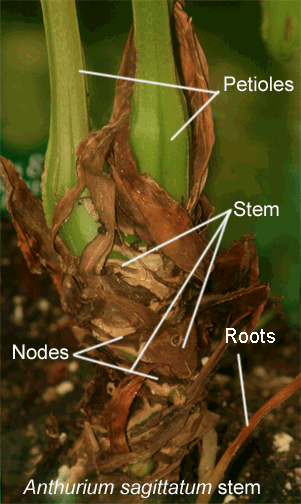
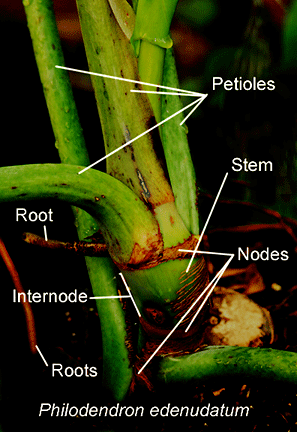
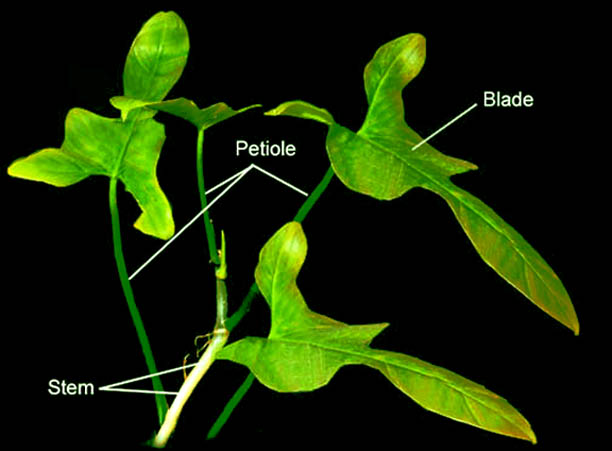 nodes.
Those nodes produce the stalk that supports the leaves
and that support is technically a part of the leaf.
Take a look. You won't find a root or
a node growing on the stalk which
supports a leaf so it cannot be a stem!
nodes.
Those nodes produce the stalk that supports the leaves
and that support is technically a part of the leaf.
Take a look. You won't find a root or
a node growing on the stalk which
supports a leaf so it cannot be a stem!
Although I doubt this article will change the use of the term "stem" or bulb as it has been adopted by house plant growers and in horticulture, regardless of the species any botanist will tell you the stalk that supports a leaf is correctly known as a petiole, not a stem and the underground starch storage unit of a bulb, corm, and a tuber are distinctly different.
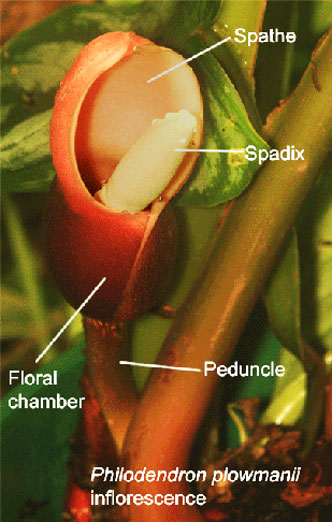 A
pedicel is the support of a single flower. It
can be applied to any flower and the stem is not the
stalk that supports either a leaf or a flower.
The support of a flower is correctly known as a
pedicel and the term applies whether you are talking
about a large flower or a microscopic flower.
Pedicels can even be observed in the tiny near
microscopic flowers of an inflorescence.
A
pedicel is the support of a single flower. It
can be applied to any flower and the stem is not the
stalk that supports either a leaf or a flower.
The support of a flower is correctly known as a
pedicel and the term applies whether you are talking
about a large flower or a microscopic flower.
Pedicels can even be observed in the tiny near
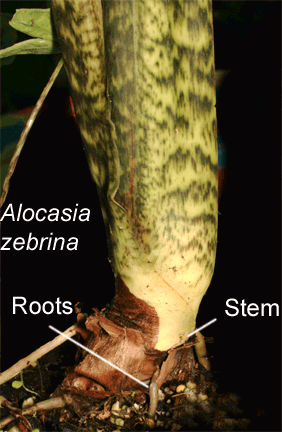
microscopic flowers of an inflorescence.A stem is the plant's main support, base or central axis and its roots anchor the plant either to the ground, a tree or to a rock. A stem may also be a rhizome as well as a tuber (often incorrectly called a corm or a bulb) and grow beneath the soil. A stem may even spread as a repent rhizome creeping across the soil (repent indicates the rhizome runs roughly horizontally). A rhizome is just a stem (central support) that runs either along or just beneath the surface of the soil as can be seen with Ginger plants or with an Iris.
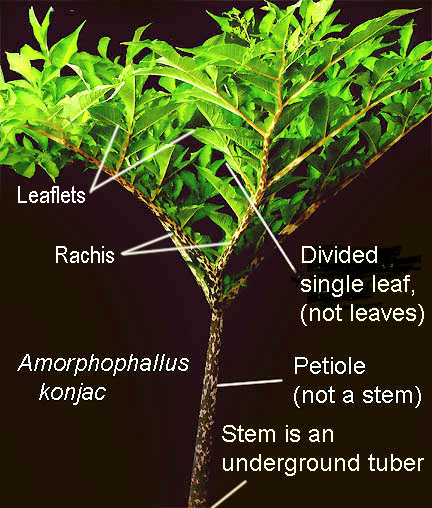 will come from the top with the roots
growing from its base. The roots of a corm
always grow from the bottom, not from the top.
will come from the top with the roots
growing from its base. The roots of a corm
always grow from the bottom, not from the top. 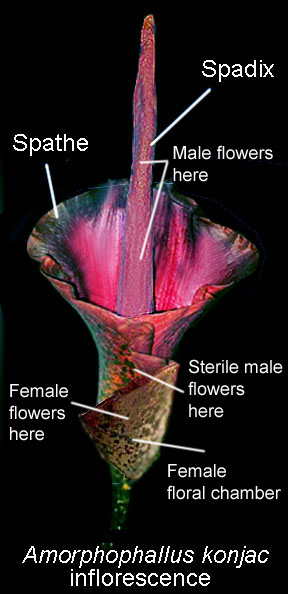 when
in the vegetative state that
tuber produces a single
petiole that supports a single divided leaf.
The leaflets may appear to be individual leaves but
they are all a part of the divided leaf and are
supported on a rachis growing from the petiole.
when
in the vegetative state that
tuber produces a single
petiole that supports a single divided leaf.
The leaflets may appear to be individual leaves but
they are all a part of the divided leaf and are
supported on a rachis growing from the petiole.I've attempted to explain this on many plant forums but someone will almost always come back and say the information I offer is either wrong or irrelevant. Often they'll grab a definition from the internet without ever reading what the definition is attempting to explain or will change the facts to fit their own preconceived notion. The use of a wrong name to describe one of a plant's most distinctive parts is virtually the same as calling a cat a dog or calling a boy a girl. You wouldn't purposely call your child by the wrong name so why do many of us continue to call the petiole something that is not correct?
Even though I've researched this information for several years, just to be sure I am about to explaining this
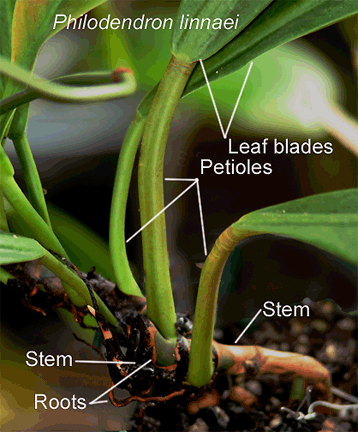 accurately I sent botanist
Peter Boyce in Malaysia a quick note to ask
"Is there ever a situation where the support for a
leaf is
correctly known as a "stem"?
Pete was
in a hurry to catch a plane to Thailand but
responded,
"The quick answer is never."
He then briefly continued while trying to get out
the door saying the use
of that term as a leaf support is
"very poor use of the word stem."
Pete has described and published many tropical plant
species in various genera of the family Araceae (aroids) to science and is one of the co-authors of the scientific text
The Genera of Araceae published by the Royal
Botanic Garden Kew in London. His co-authors are
botanists Simon Mayo and Josef Bogner.
accurately I sent botanist
Peter Boyce in Malaysia a quick note to ask
"Is there ever a situation where the support for a
leaf is
correctly known as a "stem"?
Pete was
in a hurry to catch a plane to Thailand but
responded,
"The quick answer is never."
He then briefly continued while trying to get out
the door saying the use
of that term as a leaf support is
"very poor use of the word stem."
Pete has described and published many tropical plant
species in various genera of the family Araceae (aroids) to science and is one of the co-authors of the scientific text
The Genera of Araceae published by the Royal
Botanic Garden Kew in London. His co-authors are
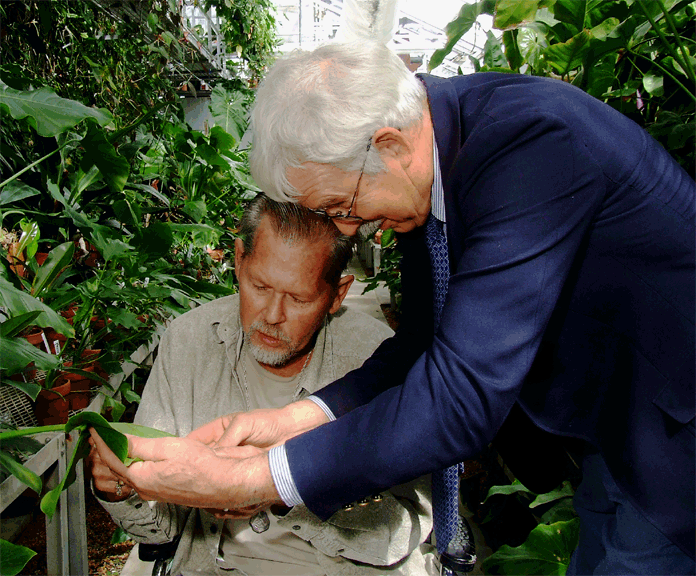
botanists Simon Mayo and Josef Bogner.I sent the same question to my friend and mentor Dr. Tom Croat and he quickly responded, "Steve, it is very simple. The stem has leaves which extend outward. These each have petioles and each petiole has a blade." Please notice Dr. Croat explained each leaf has a petiole and the petiole is the stalk that supports the leaf blade. The problem appears to be the way individuals interpret the definition of a stem as it is often explained on the internet.
Some internet definitions clearly don't make a distinction between a stem and the petiole since the petiole is a part of the entire leaf structure. That lack of a clearly understandable definition combined with the common incorrect usage of the world "stem" may have caused most plant collectors to use the term incorrectly.
Again I asked Dr. Croat to explain about the parts of a leaf, "A leaf consists of a petiole and a blade. A
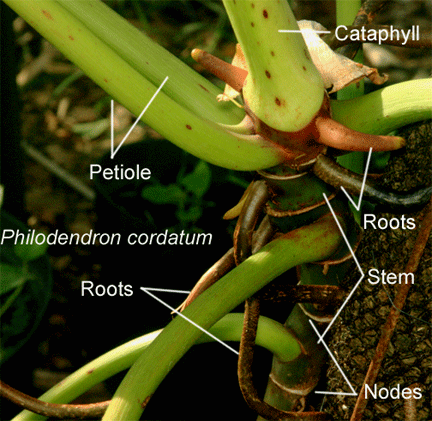 petiole
may also
have a sheath and a
geniculum. As a further twist the geniculum actually
extends
briefly onto the blade at times so is
structurally a part of both the blade and the
petiole even though we consider it to be technically
a part of the petiole."
petiole
may also
have a sheath and a
geniculum. As a further twist the geniculum actually
extends
briefly onto the blade at times so is
structurally a part of both the blade and the
petiole even though we consider it to be technically
a part of the petiole."
When you read sites such as Wikipedia which includes statements such as "A stem is one of two main structural axes of a vascular plant" their statement is both true and scientifically correct but part of their further explanation can be confusing. They include, "The stem is normally divided into nodes and internodes, the nodes hold buds which grow into one or more leaves, inflorescence (flowers), cones or other stems etc." Their article is talking about the entire leaf unit, not just the leaf blade. The "other stem" is known as a shoot as in the case of a rose plant but the support for the flower itself is neithr a stem nor a petiole. The second main structural axis mentioned in the article on Wikipedia is the root system. (Read further for more information on the rose.)
A geniculum is not found on all plant species but is common on plants such as an Anthurium and Monstera species. The geniculum allows the leaf blade to rotate to orient itself to the light just as your knee or elbow allows you to rotate your leg or arm.
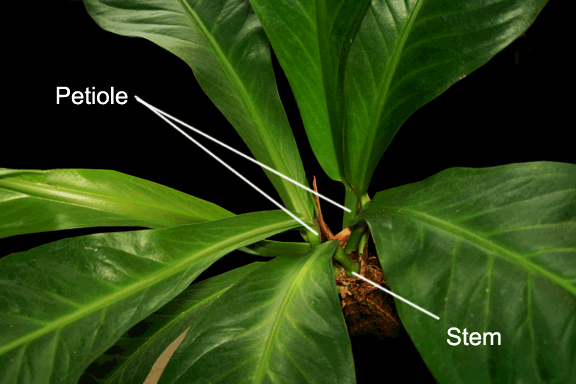
A petiole can take on many shapes including to possess a round shape known as being terete or "U", "C" or "D" shaped when viewed as having been cut as a cross section. The "U" and "C" shaped petiole are also known as being either sulcate or canaliculate as in to possess a canal, A petiole may even have very odd shapes such as being quadrangular or hexagonal and may even have patterns including lines which are known as being striate or grooves which are also known as being sulcate since the grooves form tiny canals in the petioles' axis. A petiole may also be hard or somewhat spongy to the touch. Botanists often use the shape and features of the petiole to determine the species of the plant.
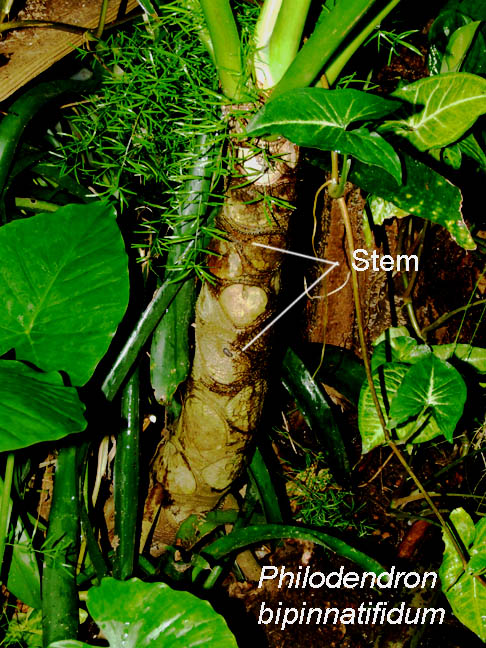
The stem of a plant may be repent and run across the ground as a rhizome or or it may stand erect. In many tropical species the stem often climbs a tree. The stem is always the plant's base and produces buds, nodes and
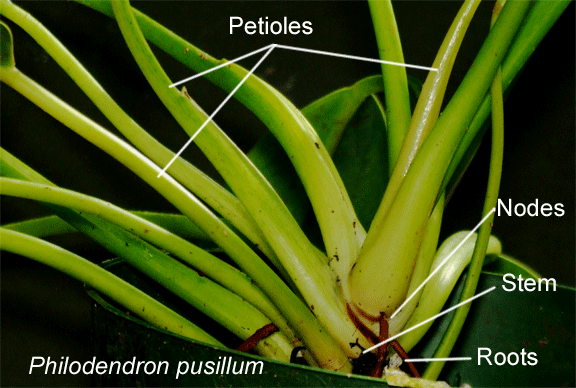 internodes. The purpose is to collect and store
water as well as nutrients which are absorbed by the roots. The water
and nutrients are then distributed to the leaves through the plant's
xylem via the petioles. The xylem transports water and soluble nutrients
collected by the roots and stored in the stem into the petiole and up to
the leaf lamina. The water is not "pushed" up the petiole but is instead
"drawn" to the leaf lamina as a result of evaporation through the leaf blade.
internodes. The purpose is to collect and store
water as well as nutrients which are absorbed by the roots. The water
and nutrients are then distributed to the leaves through the plant's
xylem via the petioles. The xylem transports water and soluble nutrients
collected by the roots and stored in the stem into the petiole and up to
the leaf lamina. The water is not "pushed" up the petiole but is instead
"drawn" to the leaf lamina as a result of evaporation through the leaf blade.The use of the word "stem" to indicate the support for a leaf by plant growers may have begun as a result of the beautiful rose. When we buy a dozen roses we find the flower appearing to be at the end of a stem. In the case of the
 rose
flower that final support stalk actually is a pedicel since it is a
non-woody shoot which grows from the true stem which is likely
climbing some support.
rose
flower that final support stalk actually is a pedicel since it is a
non-woody shoot which grows from the true stem which is likely
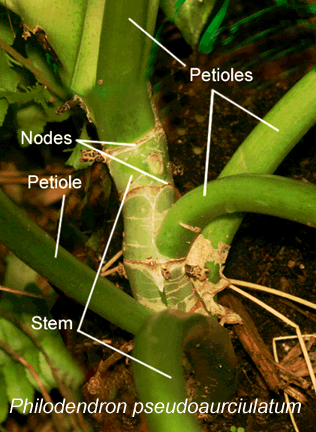
climbing some support. The stem is not the stalk that supports each leaf but is instead the main support of the plant and is composed of nodes and internodes producing roots, petioles and the sexual parts of the plant (flowers). Just take a look at the stalk that supports any leaf. You won't find a node or internode growing from either a petiole or pedicel stalk.
 This
text was researched and written by Steve Lucas:
www.ExoticRainforest.com
This
text was researched and written by Steve Lucas:
www.ExoticRainforest.com
Although as non-technical as possible the information on this page is based largely on the scientific journals of botanist Dr. Thomas B. Croat Ph.D., P.A. Schulze Curator of Botany of the Missouri Botanical Garden in St. Louis, MO. Dr. Croat (CROWat) has located an incredible number of newly discovered species and described them to science. When you see the name "Croat" at the end of a plant's scientific name it was described and likely discovered by Dr. Croat. Tom was honored in the summer of 2008 for having collected over 100,000 specimens in the wild. Also, my thanks to botanist Peter Boyce in Malaysia as well as botanist Dr. Wilbert Hetterscheid in the Netherlands for their input and continued assistance.
 The
finest aroids in Ecuador available direct to any collector!
The
finest aroids in Ecuador available direct to any collector!
http://www.ecuagenera.com//Tropical
Plants/Araceae
For even more information, join the International Aroid Society: http://www.exoticrainforest.com/Join%20IAS.html
If you have a specific question not covered in this text feel free to write: Steve@ExoticRainforest.com