
Aroids and other genera in the Collection
Take the Tour Now?
Orchids
The
Exotic Rainforest
Plants in
the Exotic Rainforest Collection
The images on this website are copyright protected. Please contact us before any reuse.
In depth information on how to grow
Philodendron
species, Click this Link
Within our collection we have many species of Philodendron. If you are seeking other photos, click this link:
The common name "Philodendron cordatum Hort." is not the same plant as the species known to science as
Philodendron cordatum Kunth. "Hort." indicates the name is horticultural and not scientific and as a result
"Philodendron cordatum Hort." is only a common name and is not scientific.
You can see the true Philodendron cordatum Kunth by clicking this link.
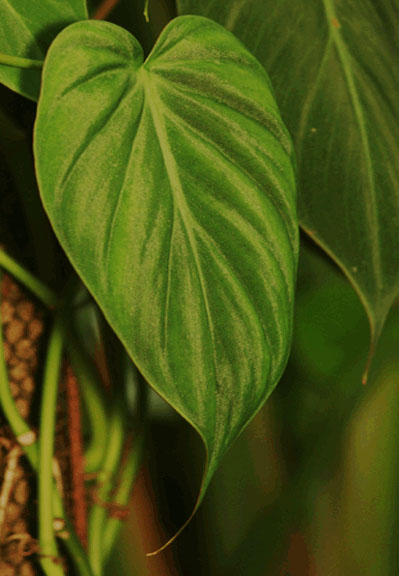
Synoynms:
Philodendron micans (1854), Philodendron cuspidatum, (1854), Philodendron microphyllum (1854),
Philodendron oxycardium (1856), Philodendron oxyprorum (1856), Philodendron hoffmannii (1858),
Philodendron acrocardium (1858), Philodendron pittieri (1899), Philodendron harlowii (1949), Philodendron miduhoi (1950),
Philodendron jacquinii
is a true species, not a synonym
Philodendron cordatum is not a scientific synonym for Philodendron scandens
nor Philodendron oxycardium.
Common Names:
Heart Leaf Philodendron, Velvet Philodendron, Velvet Leaf Philodendron, Heart Philodendron, Sweetheart Plant, Philodendron Brazil, Philodendron Brasil, Velour Philodendron, and apparently the "Blushing Philodendron".
In most papers the "Blushing Philodendron" refers to Philodendron erubescens.
Philodendron Brasil is only a natural cultivar of Philodendron hederaceum
"Philodendron cordatum Hort." is only a common name and is not a scientific name for this species.
A 180 year old discussion that is still argued by plant collectors.
What is the true name of this plant?
 America
and parts of the Caribbean. In the Caribbean
Philodendron hederaceum occurs in the southeastern islands of Martinique south to Trinidad.
In South America it extends from as far
south as Bolivia and Peru to the west along the Los Ríos province near the coast of Ecuador
and up through
Colombia, Venezuela,
the Guianas, and Brazil.
The
species can be observed at sea
level to 1200 meters but possibly as high as 1500 meters (3,900 to 4,900
feet) in elevation.
America
and parts of the Caribbean. In the Caribbean
Philodendron hederaceum occurs in the southeastern islands of Martinique south to Trinidad.
In South America it extends from as far
south as Bolivia and Peru to the west along the Los Ríos province near the coast of Ecuador
and up through
Colombia, Venezuela,
the Guianas, and Brazil.
The
species can be observed at sea
level to 1200 meters but possibly as high as 1500 meters (3,900 to 4,900
feet) in elevation. Although originally published as Arum hederaceum in 1760 that name does not correctly place the species in the proper
 genus
which is Philodendron. The correct placement came in 1829 when
the plant was properly name Philodendron hederaceum.
Collectors consider a few of the
genus
which is Philodendron. The correct placement came in 1829 when
the plant was properly name Philodendron hederaceum.
Collectors consider a few of the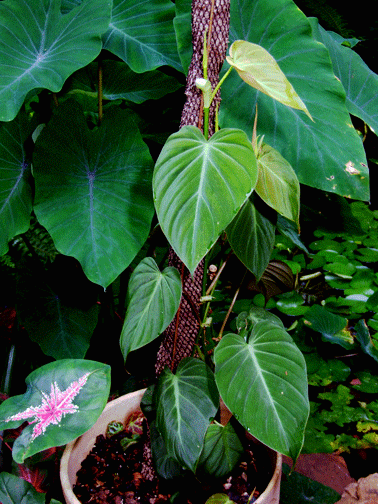 An aroid, the species Philodendron hederaceum was described to science in 1829. Within
aroid species there is change and part is during the life of a single
plant and is known as ontogeny or the changes observed as the plant
grows from juvenile to adult. We often call those changes morphogenesis. The other
change commonly observed in aroids is known as variation within a species.
Morphogenesis is sometimes not observed until a plant is allowed to
climb and change into its adult shape. Despite what many home
growers believe, Philodendron hederaceum is a climber and will
not fully display it's full natural form unless it is allowed to climb.
An aroid, the species Philodendron hederaceum was described to science in 1829. Within
aroid species there is change and part is during the life of a single
plant and is known as ontogeny or the changes observed as the plant
grows from juvenile to adult. We often call those changes morphogenesis. The other
change commonly observed in aroids is known as variation within a species.
Morphogenesis is sometimes not observed until a plant is allowed to
climb and change into its adult shape. Despite what many home
growers believe, Philodendron hederaceum is a climber and will
not fully display it's full natural form unless it is allowed to climb.P. hederaceum is frequently collected by plant growers but is often poorly understood as a species. The plant has obviously been misnamed (renamed) in the past by botanists and the species was at one time the most confusing
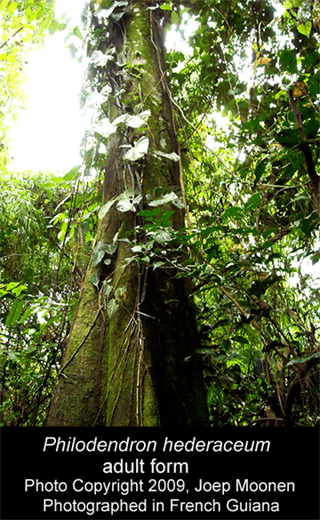 Philodendron in the rain forest
having been
granted new names on a very regular basis during the mid 1800's. Although
virtually all private collectors consider the species to be
only a
small plant suitable for growing in the kitchen or
bath it can
grow much larger than most expect.
Philodendron in the rain forest
having been
granted new names on a very regular basis during the mid 1800's. Although
virtually all private collectors consider the species to be
only a
small plant suitable for growing in the kitchen or
bath it can
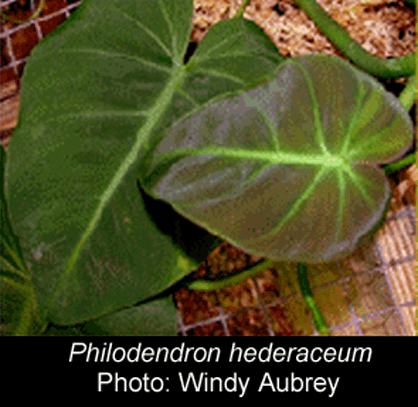
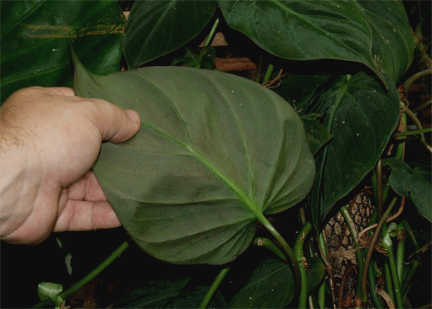
grow much larger than most expect. Philodendron hederaceum will eventually completely loose the velutinous (velvet) texture and can totally change its appearance to the point it is not recognizable by any collector that has not seen it in the rain forest. Dr. Croat explained to a meeting of aroid enthusiasts at the Myriad Botanical Gardens in Oklahoma City the velvet blade is found only on juvenile specimens and once the blade begins to reach adulthood the characteristic is lost.
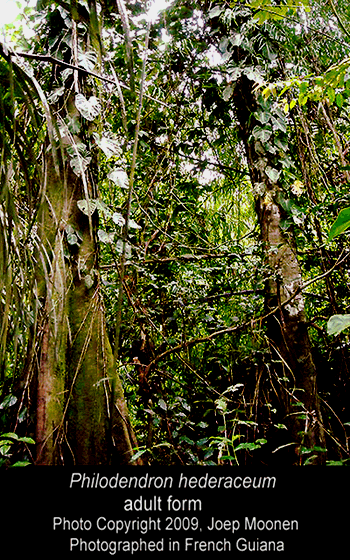 Philodendron species are members of the larger
plant family Araceae (uh-RAY-see ee) commonly known as aroids. An
aroid is
characterized by the growth
of an inflorescence
which is the sexual reproductive organ of the plant. The
major parts of an inflorescence are known
as a spathe and spadix. If you've ever seen a "Peace lily" you've seen an inflorescence.
That species, which is correctly a member of the aroid genus Spathiphyllum, produces
inflorescences on a regular basis but despite everyone calling the
spathes "flowers" they aren't flowers at all. Instead, a
spathe is more like a "flower holder".
Philodendron species are members of the larger
plant family Araceae (uh-RAY-see ee) commonly known as aroids. An
aroid is
characterized by the growth
of an inflorescence
which is the sexual reproductive organ of the plant. The
major parts of an inflorescence are known
as a spathe and spadix. If you've ever seen a "Peace lily" you've seen an inflorescence.
That species, which is correctly a member of the aroid genus Spathiphyllum, produces
inflorescences on a regular basis but despite everyone calling the
spathes "flowers" they aren't flowers at all. Instead, a
spathe is more like a "flower holder".
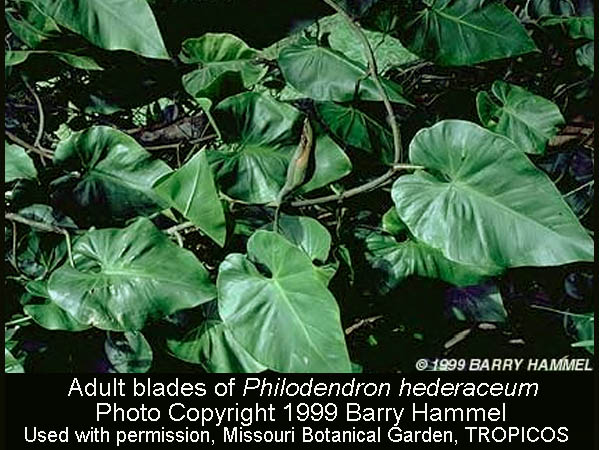 inflorescence the plant
must first climb high into the rain forest and then hang pendently from
a tree branch before an inflorescence is ever produced. Once
produced that inflorescence may either stand erect or
hang pendently and there is only one inflorescence
per axil. The inflorescence is supported by a
peduncle which is short. The peduncle is a stalk-like
support that
grows from the plant's central axis known as the stem. The stem is
completely different from the support for
any leaf which is correctly
known as a petiole. The spathe can be
dark green, yellowish green or other color combinations and is sometimes tinged
purple with the interior sometimes becoming reddish. The spathe typically
measures 9 to 24cm (3.5 up to 9.4 inches) long and can be 1 to 3.3 times
longer than peduncle, Please note the inflorescence in the
center of Barry Hammel's photo (left) as well as the group of
inflorescences in Dr. Tom Croat's photo below (right).
inflorescence the plant
must first climb high into the rain forest and then hang pendently from
a tree branch before an inflorescence is ever produced. Once
produced that inflorescence may either stand erect or
hang pendently and there is only one inflorescence
per axil. The inflorescence is supported by a
peduncle which is short. The peduncle is a stalk-like
support that
grows from the plant's central axis known as the stem. The stem is
completely different from the support for
any leaf which is correctly
known as a petiole. The spathe can be
dark green, yellowish green or other color combinations and is sometimes tinged
purple with the interior sometimes becoming reddish. The spathe typically
measures 9 to 24cm (3.5 up to 9.4 inches) long and can be 1 to 3.3 times
longer than peduncle, Please note the inflorescence in the
center of Barry Hammel's photo (left) as well as the group of
inflorescences in Dr. Tom Croat's photo below (right).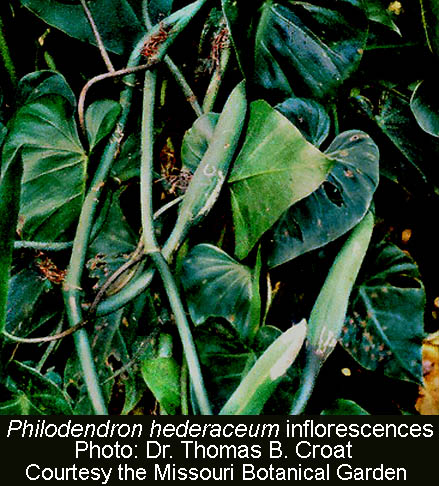 female flowers will produce berries which contain seeds.
If the plant is pollinated
the berries are greenish white and will develop along the spadix. If a bird or other animal eats the berry and drops a seed in its droppings a new plant may form.
Those seeds often end up on the branch of a tree and as a result,
Philodendron hederaceum is known to science as a hemiepiphytic vine.
Hemiepiphytes are species that are capable of beginning life on a tree
branch or they may begin as a seed dropped on the ground which
proceeds to climb. P. hederaceum does not necessarily need soil to survive
although as collectors we always grow them in soil.
female flowers will produce berries which contain seeds.
If the plant is pollinated
the berries are greenish white and will develop along the spadix. If a bird or other animal eats the berry and drops a seed in its droppings a new plant may form.
Those seeds often end up on the branch of a tree and as a result,
Philodendron hederaceum is known to science as a hemiepiphytic vine.
Hemiepiphytes are species that are capable of beginning life on a tree
branch or they may begin as a seed dropped on the ground which
proceeds to climb. P. hederaceum does not necessarily need soil to survive
although as collectors we always grow them in soil. 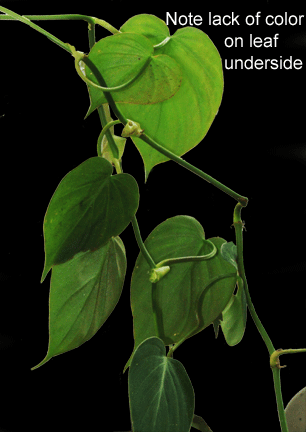 leaves that surround a newly emerging leaf and
whose purpose is to protect the new leaf as they develop.
A bract is a portion of the plant
from where flowers eventually grow so the cataphyll isn't a bract but
only appears similar.
leaves that surround a newly emerging leaf and
whose purpose is to protect the new leaf as they develop.
A bract is a portion of the plant
from where flowers eventually grow so the cataphyll isn't a bract but
only appears similar. The support for the leaves of an aroid are known as the petioles. Despite the fact many growers call the petiole a "stem" a petiole is not a stem. The petiole is the shoot-like stalk that connects the lamina of the leaf at the petiole's top to the specimen's stem which is at its bottom. The petioles emerge from a bud on the stem at the base of the plant and their purpose is to support the leaf as well as transfer water along with nutrients through the petiole's cellular structure (xylem) to the leaf blades using a specialized form of hydraulic pressure. The unique upwards pull on the water is actually caused by the evaporation of water through the leaves. This link explains the difference in the stem and the petiole: What is a stem?
The term "stem" is one of the most
frequently misused terms in the world of plant collecting since
collectors almost always incorrectly refer to the stalk that supports
any individual leaf as a "stem". The stem is the support for the entire
plant and is the plant's base, In terrestrial species the stem is
found growing over the ground as a rhizome while in epiphytic and
hemiepiphitic species such as Philodendron hederaceum the stem
climbs the host tree to which it is often tightly pressed (appressed).
Although roots normally anchor a plant to the soil the stem of an
epiphyte is also held to the tree by the same roots which grow from the
nodes found at intervals along its own length. Those nodes are separated
by stem segments which are called internodes. The nodes also produce
buds which in turn produce the petioles which support the leaves.
In the case of a
cultivar being sold as
Philodendron Brasil the blades
of the juvenile plant are yellow and
pale to deep
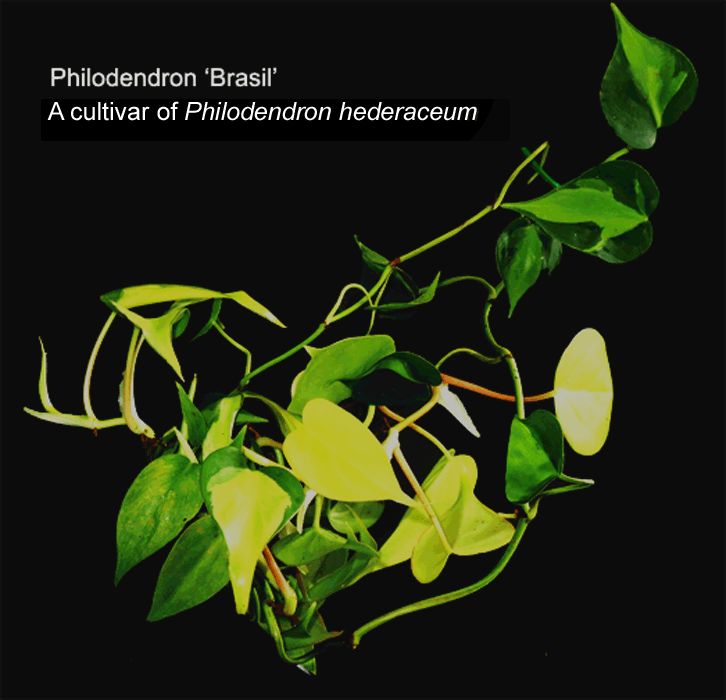 green with some leaves exhibiting a mixture of both colors. U.S. law allows anyone who discovers a unique natural cultivar of any
species to give that plant a non-scientific name (i.e. Philodendron Brasil)
and legally claim exclusive sales rights to that cultivar.
Although sold with the name Brasil in single quotes ('Brasil') the plant
has never been registered with the International Aroid Society which is
the registrar for all aroid cultivars. Even though the seller has
a patent the name is not a registered cultivar as the single quotes
would imply.
green with some leaves exhibiting a mixture of both colors. U.S. law allows anyone who discovers a unique natural cultivar of any
species to give that plant a non-scientific name (i.e. Philodendron Brasil)
and legally claim exclusive sales rights to that cultivar.
Although sold with the name Brasil in single quotes ('Brasil') the plant
has never been registered with the International Aroid Society which is
the registrar for all aroid cultivars. Even though the seller has
a patent the name is not a registered cultivar as the single quotes
would imply.
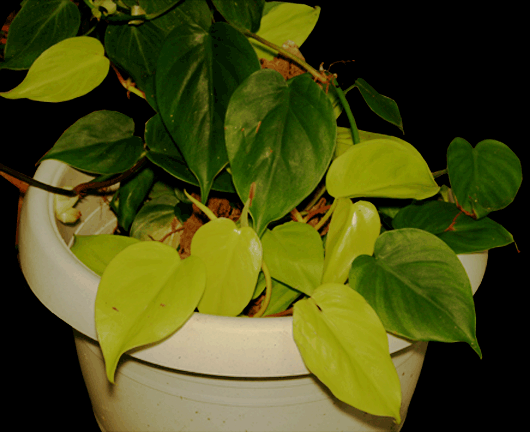
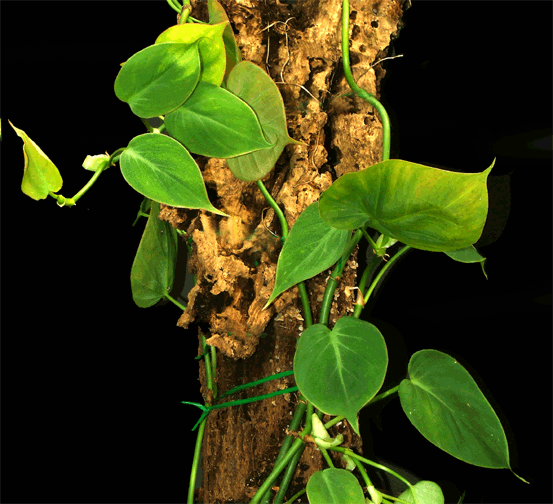
In Philodendron Brasil the undersides have no distinctive color other than that similar to the top of the leaf blade. Although many collects believe Philodendron Brasil is a unique species it is not and as the plant ages all the color other than green will eventually vanish. If you look at the second photo of the plant (right) you can easily see as the plant emerges from the juvenile form the multicolored leaves as well as the yellow-green leaves are lost and begin to turn dark green as a part of natural plant variation and the morphogenesis into their adult form. Keep in mind Philodendron Brasil is nothing more than a natural variation of Philodendron hederaceum and not a unique scientific species.
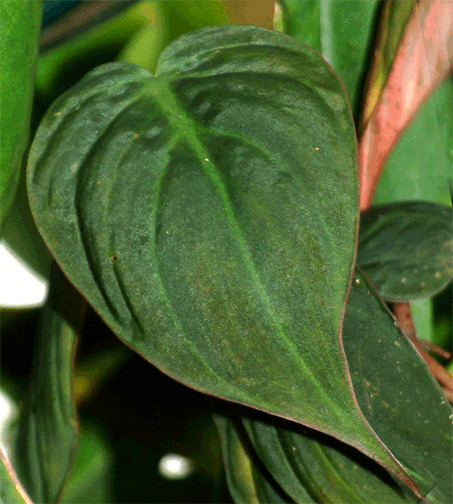
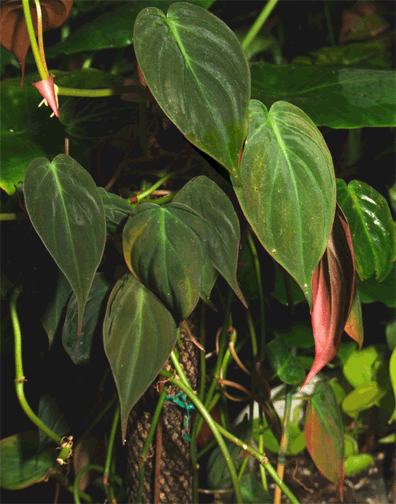
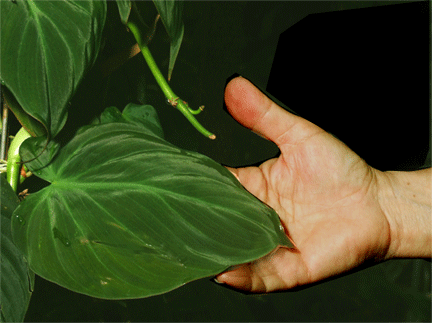
The leaves of Philodendron hederaceum may be broadly ovate (heart shaped) as well as subcoriaceous to coriaceous. A coriaceous leaf is one that is leathery to the touch which would leave a subcoriaceous blade to be less than leathery when felt. Especially in juvenile leaves the blade is quite thin. Unless you have a plant with very large leaves you are almost certainly growing a juvenile plant!
 possible? Within aroids variation is common, Consider
it to be somewhat like human faces. You know many people but
those
people don't all look alike, they all have different body sizes, different shoe sizes,
different hair color, different tones of skin, and often very
distinctive facial features which we accept as human or racial
differences. That is the same as variation in the world of
plants!
possible? Within aroids variation is common, Consider
it to be somewhat like human faces. You know many people but
those
people don't all look alike, they all have different body sizes, different shoe sizes,
different hair color, different tones of skin, and often very
distinctive facial features which we accept as human or racial
differences. That is the same as variation in the world of
plants!
A settled argument
The discussion among botanical scientists about the natural variation of Philodendron hederaceum goes back close to 180 years and is now a closed issue.
Since the mid 1800's
botanist once argued about the synonyms of Philodendron hederaceum. Botanist
Heinrich Wilhelm Schott (1794 to 1865) transferred Arum hederaceum to the genus
Philodendron in1829 when he realized it was not an
Arum. In 1856 he also transferred Philodendron scandens, Philodendron oxycardium,
Philodendron micans and others as synonyms of the species. In 1899 botanist Gustav Heinrich Adolf Engler
(1844 to 1930) reversed Schott and once again treated Philodendron hederaceum as four distinct species
and declared Philodendron scandens, P. oxycardium, P. micans
and a name were separate species. Despite
 the confusion, botanist
Julian Alfred Steyermark (1909 to 1988) again reversed Engler
and in 1958 cited the
"species" were only synonyms of Philodendron hederaceum
since their characteristics were the same. Other noted botanists have
written opinions all along the way about the variation within
the species Philodendron hederaceum and it is now
considered a settled argument with P. hederaceum
being the accepted species name and all others as synonyms.
the confusion, botanist
Julian Alfred Steyermark (1909 to 1988) again reversed Engler
and in 1958 cited the
"species" were only synonyms of Philodendron hederaceum
since their characteristics were the same. Other noted botanists have
written opinions all along the way about the variation within
the species Philodendron hederaceum and it is now
considered a settled argument with P. hederaceum
being the accepted species name and all others as synonyms.
Within the rules of botany it is well established that the very first name ever granted to a species becomes the accepted name. As a result, all the commonly used names for Philodendron hederaceum known by collectors are now synonyms of the accepted species and are no longer used within science.
 It is
confusing but collectors don't always
like to accept
botanical science and prefer a different name
for anything that does not look alike. Despite beliefs posted on the internet that
botanists are perpetually toying with names and are "constantly
changing" those names, the scientific fact is botanists are simply
following the rules of botany as outlined by
Linnaeus and
no one has changed anything!
These botanical scientists are simply following those rules as defined for
centuries.
It is
confusing but collectors don't always
like to accept
botanical science and prefer a different name
for anything that does not look alike. Despite beliefs posted on the internet that
botanists are perpetually toying with names and are "constantly
changing" those names, the scientific fact is botanists are simply
following the rules of botany as outlined by
Linnaeus and
no one has changed anything!
These botanical scientists are simply following those rules as defined for
centuries. 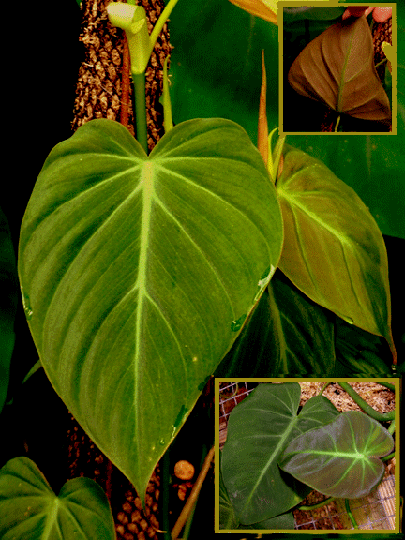 When a botanist determines there is no
scientific difference in Philodendron oxycardium, Philodendron
scandens, Philodendron miduhoi and Philodendron hederaceum we
are left only to go back to the first name ever assigned and that name
is Philodendron hederaceum.
It doesn't work well for plant collectors but it works fine for
science. Collectors are the ones that perpetuate the confusion by
using multiple names since botanists did not change the name of anything!
Rather than "changing" a name they are forced to revert to the original
name once a synonym is discovered.
When a botanist determines there is no
scientific difference in Philodendron oxycardium, Philodendron
scandens, Philodendron miduhoi and Philodendron hederaceum we
are left only to go back to the first name ever assigned and that name
is Philodendron hederaceum.
It doesn't work well for plant collectors but it works fine for
science. Collectors are the ones that perpetuate the confusion by
using multiple names since botanists did not change the name of anything!
Rather than "changing" a name they are forced to revert to the original
name once a synonym is discovered.Within Mr. Graf's texts there are many names that have no basis in science, someone simply made them up to sound scientific! Many of the names Graf chose to use never had any standing in science and were never published in any scientific journal! As a result of Mr. Graf I personally spent two years chasing "Philodendron mandaianum" and could
 never figure out why the
name wasn't in a
scientific text and to this day I do not know where Mr. Graf came up
with the name. Mr. Graf was not a botanist, he was a
horticulturist and a plant
collector who did a good thing by introducing many of us to unusual
species but his books are known to be filled with
errors.
never figure out why the
name wasn't in a
scientific text and to this day I do not know where Mr. Graf came up
with the name. Mr. Graf was not a botanist, he was a
horticulturist and a plant
collector who did a good thing by introducing many of us to unusual
species but his books are known to be filled with
errors.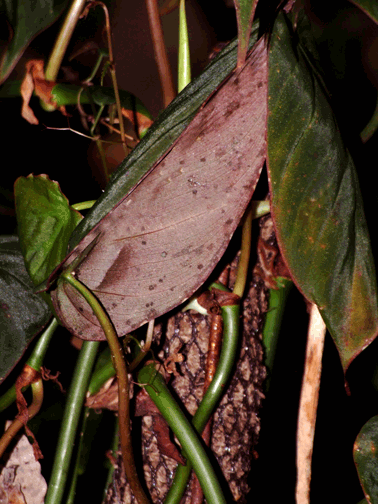 Attempting to grow one in a dark bathroom
or living room with little light will eventually cause the plant not to
flourish although it will benefit from the higher humidity. This species grows up in the rain forest
canopy where it can easily gather light and the humidity is constantly
high. For short periods of time
lower light levels should not harm the ultimate health of a specimen.
The brighter the light, the larger the leaves will grow.
Attempting to grow one in a dark bathroom
or living room with little light will eventually cause the plant not to
flourish although it will benefit from the higher humidity. This species grows up in the rain forest
canopy where it can easily gather light and the humidity is constantly
high. For short periods of time
lower light levels should not harm the ultimate health of a specimen.
The brighter the light, the larger the leaves will grow.
Want to learn more
about aroids?
Join the
International Aroid Society:
http://www.exoticrainforest.com/Join%20IAS.html
Looking for a specimen? Contact
http:///
