
Aroids and other genera in the Collection
Take the Tour Now?
Orchids
The
Exotic Rainforest
The images on this website are copyright protected. Please contact us before any reuse.
Within our collection we have over 80 plus species of
Philodendron.
If you are seeking other photos,
click this link
New:
Understanding, pronouncing and using
Botanical terminology, a Glossary
"Much of what we believe is
based on what we have yet to be taught. Listen to Mother Nature. Her advice
is best."
Researched and written by Steve Lucas
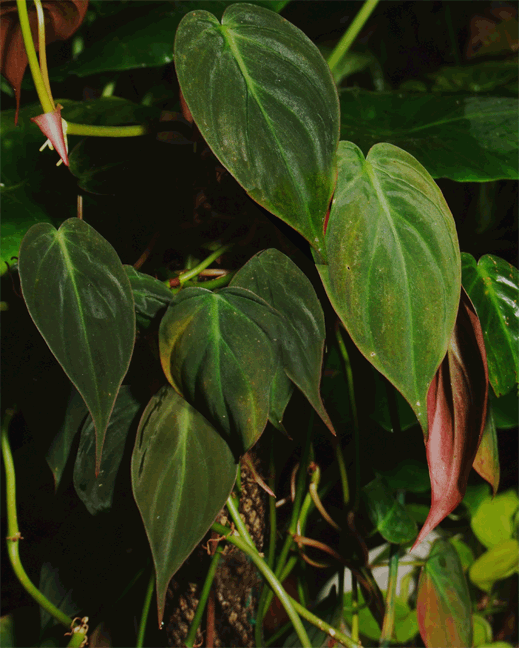
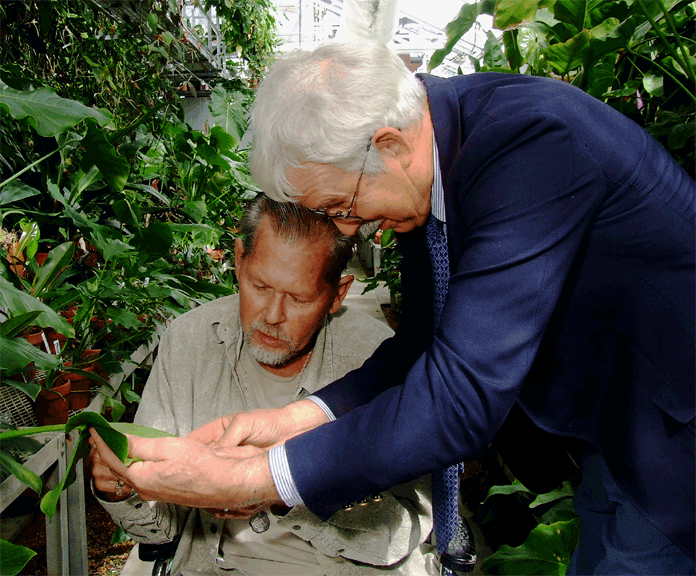 The
botanical information on this page is based on the scientific
journals of aroid botanist Dr. Thomas B. Croat
Ph.D., P.A. Schulze Curator of Botany
of the
Missouri Botanical
Garden in St. Louis, MO.
Dr. Croat was honored in the summer of 2008 for having collected
over 100,000 specimens in the wild. My thanks to aroid expert Julius Boos, aroid, palm and cycad
expert Leland Miyano, aroid pollination expert Dr. Marc Gibernau and expert aroid grower Russ Hammer
for their input.
The
botanical information on this page is based on the scientific
journals of aroid botanist Dr. Thomas B. Croat
Ph.D., P.A. Schulze Curator of Botany
of the
Missouri Botanical
Garden in St. Louis, MO.
Dr. Croat was honored in the summer of 2008 for having collected
over 100,000 specimens in the wild. My thanks to aroid expert Julius Boos, aroid, palm and cycad
expert Leland Miyano, aroid pollination expert Dr. Marc Gibernau and expert aroid grower Russ Hammer
for their input. My sincere thanks goes to my mentor Tom Croat for his continued personal guidance.
For a list of the majority of Philodendron species in the Exotic Rainforest collection with photos as well as keys to identify species, click here.
Note: For help to identify a species shown below, click on any photo and you will be directed to
the page that gives the scientific name, common names if any, and description of that
Philodendron species. Every photo on this page is linked to a page with an explanation.
If you are concerned about calcium oxalate crystals read the information at this link!
Philodendron, where and how they grow in nature.
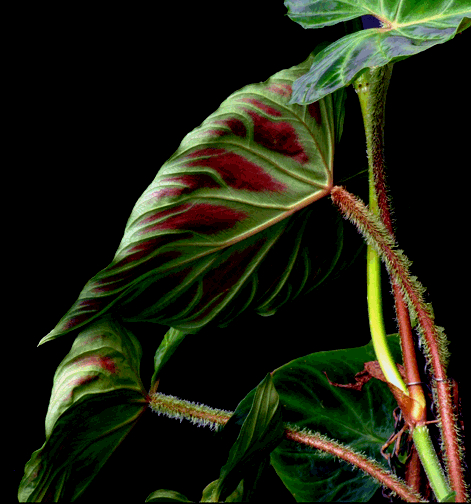 Philodendron
species are divided into subgenera, sections and subsections in
order to classify their individual characteristics. The three
major groups of Philodendron include Philodendron
subgenus Philodendron, Philodendron subgenus
Meconostigma (the "tree Philodendron) and Philodendron
subgenus Pteromischum. Species within the first
two subgenera are commonly collected but species found in subgenus
Pteromischum are rarely grown in private collections due to
their specialized growing requirements.
Philodendron
species are divided into subgenera, sections and subsections in
order to classify their individual characteristics. The three
major groups of Philodendron include Philodendron
subgenus Philodendron, Philodendron subgenus
Meconostigma (the "tree Philodendron) and Philodendron
subgenus Pteromischum. Species within the first
two subgenera are commonly collected but species found in subgenus
Pteromischum are rarely grown in private collections due to
their specialized growing requirements.With many species yet to be discovered there are an estimated 1000 species (or more) of Philodendron that are common to much of Mexico, all of Central America, most of South America as well as a few Philodendron species on Caribbean islands. Since Philodendron species are native only to these regions of the world, they are known as "Neotropical" species. All are tropical and will not tolerate extended freezes.
Philodendron
species have been released into
the tropical Pacific as well as Australia and Southeast Asia
but are not found naturally in those parts of the world and have been introduced
by man. Philodendron "escapees"
can easily be
 found among the flora of Hawaii and
other exotic islands but are not native to those islands.
found among the flora of Hawaii and
other exotic islands but are not native to those islands.
Despite advice given on far too many websites indicating Philodendron enjoy infrequent watering that information is simply untrue! Philodendron are rain forest species and during the rainy season often experience rain on a daily basis for up more than half the year. People often just believe what they are told without doing any research on their own and those "old wife's tales" are almost always wrong! If you listen to Mother Nature you'll find her advice indicates the correct approach to growing any plant species and Mother Nature gives her Philodendron plants lots of water.
In nature most Philodendron species live on the trunks or branches of trees and do not need soil to survive. Those tree dwelling species are known as epiphytes or hemiepiphytes and are plants that live upon another plant. Some Philodendron species may even grow attached to stone however only extremely knowledgeable growers ever manage to make a Philodendron grow successfully on stone.
Relatively few
Philodendron species grow in rain forest soil and are truly
terrestrial plants although a few species are consistently
terrestrial. There are species
such as Philodendron renauxii from
southeastern Brazil and Philodendron mamei from Colombia that are primarily terrestrial in nature. Terrestrial
species do not normally grow on a tree but
 simply spread across the ground
but terrestrial species are far outnumbered
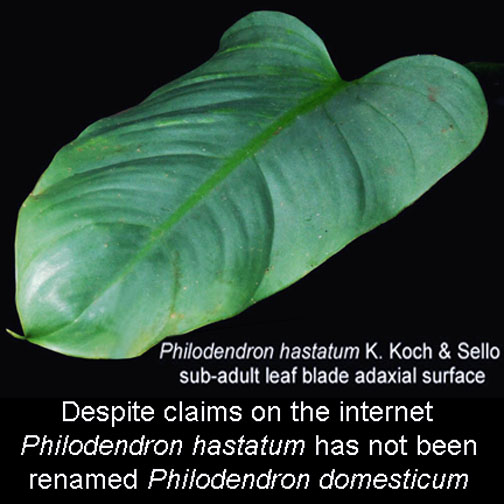
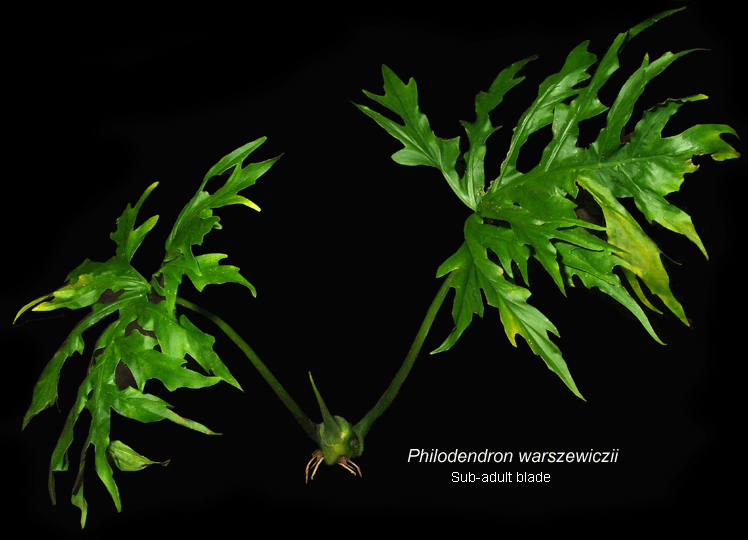
by the species that are epiphytic. All Philodendron species vary in shape
and size as they mature but within a species there is no such thing as
a single
leaf shape due to both natural variation and
morphogenesis.
simply spread across the ground
but terrestrial species are far outnumbered
by the species that are epiphytic. All Philodendron species vary in shape
and size as they mature but within a species there is no such thing as
a single
leaf shape due to both natural variation and
morphogenesis.
Hemiepiphytes are divided into two groups,
primary and
secondary. Primary hemiepiphytes
begin their life cycle as
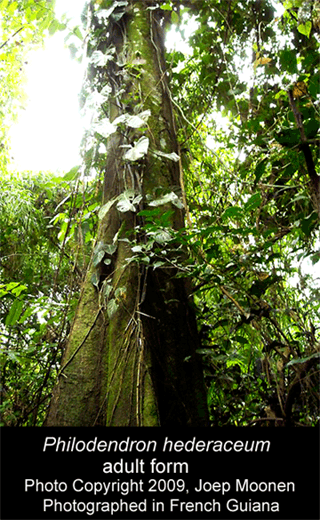 seeds that germinate on the trunk or limbs of a host
tree in the
same way as a true epiphyte. They then develop
slowly until they are large enough to develop long
aerial roots that eventually reach the ground. Their
growth strategy is to attain height in the forest as quickly
as possible in order to reach a spot where the light is
brighter. The second type known as Secondary hemiepiphytes
begin their lives as seeds that germinate in the soil or on
a tree trunk very near the ground. Their strategy is to
quickly send their roots to the ground where they can gather
additional nutrients from the soil. Secondary hemiepiphytes
then climb the host where they morph into the adult form
and sometimes completely lose their connection to the
ground. If an epiphyte manages to grow its roots all
the way to the soil, by definition it becomes a
hemiepiphyte. Conversely, if a hemiepiphyte looses
contact with the soil it becomes an epiphyte.
seeds that germinate on the trunk or limbs of a host
tree in the
same way as a true epiphyte. They then develop
slowly until they are large enough to develop long
aerial roots that eventually reach the ground. Their
growth strategy is to attain height in the forest as quickly
as possible in order to reach a spot where the light is
brighter. The second type known as Secondary hemiepiphytes
begin their lives as seeds that germinate in the soil or on
a tree trunk very near the ground. Their strategy is to
quickly send their roots to the ground where they can gather
additional nutrients from the soil. Secondary hemiepiphytes
then climb the host where they morph into the adult form
and sometimes completely lose their connection to the
ground. If an epiphyte manages to grow its roots all
the way to the soil, by definition it becomes a
hemiepiphyte. Conversely, if a hemiepiphyte looses
contact with the soil it becomes an epiphyte.
It appears their own DNA directs the secondary hemiepiphyte towards a tree so it can begin the climb toward the light and to adulthood. Dr. Croat explains, "I suspect that it is auxin controlled. As you may imagine younger plants grow scototropically one assumes because they have to find a tree, rock or wall. Once there they stop growing horizontally and grow upward, effectively toward the light, rather than away from the light." Scototropic refers to the behavior of a tropical seedling vine that grows toward dark objects. The plant does this as an adaptive characteristic that enables the young vine to grow towards the shade around the trunk of a large tree so it can eventually begin to climb in order to find brighter light. Auxins are plant hormones that control the behavioral processes of the plant.
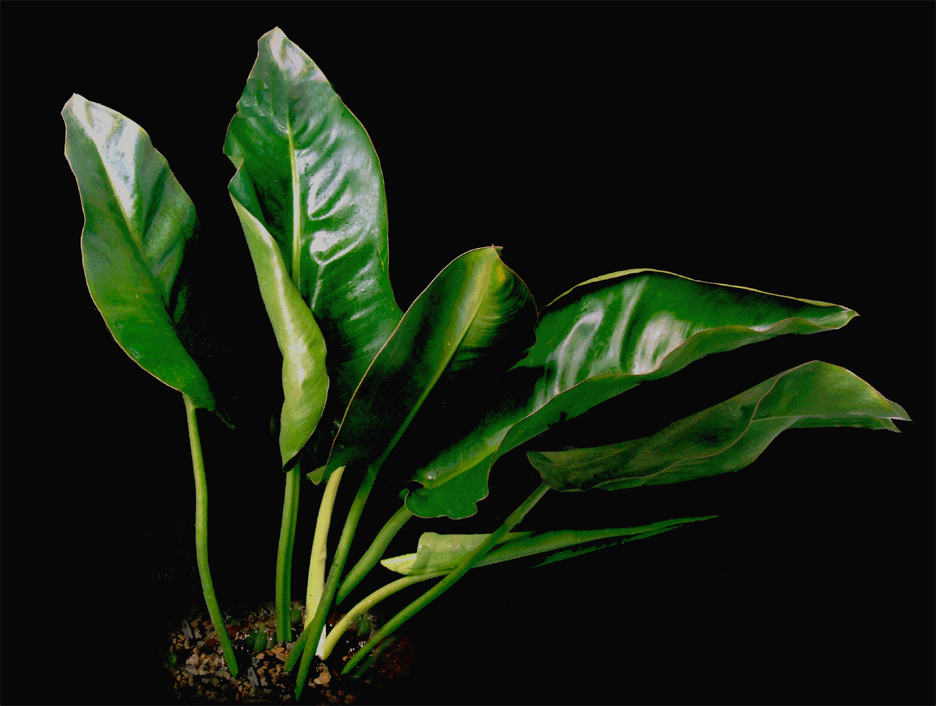 Some
Philodendron start life 20 meters (60 feet) or more up
their host and eventually drop roots all the way to the ground! Before
a Philodendron drops its long roots the plant may remain
relatively small in blade size. Once the roots hit the soil and the plant can
gain extra
nourishment it can become enormous in size! Some epiphytic
Philodendron species can grow leaves that are one
to two meters (3 to 6 feet) in size
and
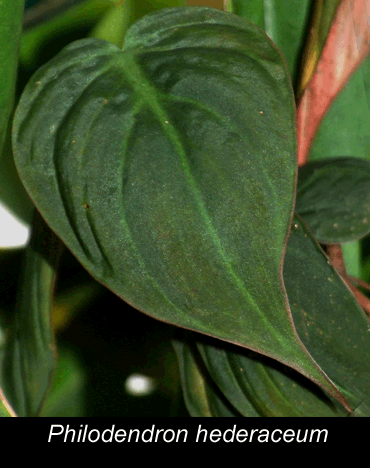
larger. The tiny kitchen plant most know as "Philodendron
scandens or Philodendron micans" (correctly
known to science as Philodendron hederaceum) often
grows 7 to 8 times the size in the forest it can be seen in a pot!
Some
Philodendron start life 20 meters (60 feet) or more up
their host and eventually drop roots all the way to the ground! Before
a Philodendron drops its long roots the plant may remain
relatively small in blade size. Once the roots hit the soil and the plant can
gain extra
nourishment it can become enormous in size! Some epiphytic
Philodendron species can grow leaves that are one
to two meters (3 to 6 feet) in size
and
larger. The tiny kitchen plant most know as "Philodendron
scandens or Philodendron micans" (correctly
known to science as Philodendron hederaceum) often
grows 7 to 8 times the size in the forest it can be seen in a pot!
The importance of trees in the rain forest
With the vast amount of rain forest
destruction now underway in South America, few people
realize the true importance of the loss of those trees that are now
routinely cut down. Even the U.S. government has
encouraged South American governments to clear the rain
forest in order to grow crops that can be used by other
countries including the U.S. for the production of
bio-fuels. In many cases those crops were never intended to
be grown in the poor soil tjat remains once the forest is
gone so more and more trees and plant species vanish since
those crops will only grow for a few years
 and
the farmers must then cut down even more forest!. Of all the plant
species that live in the
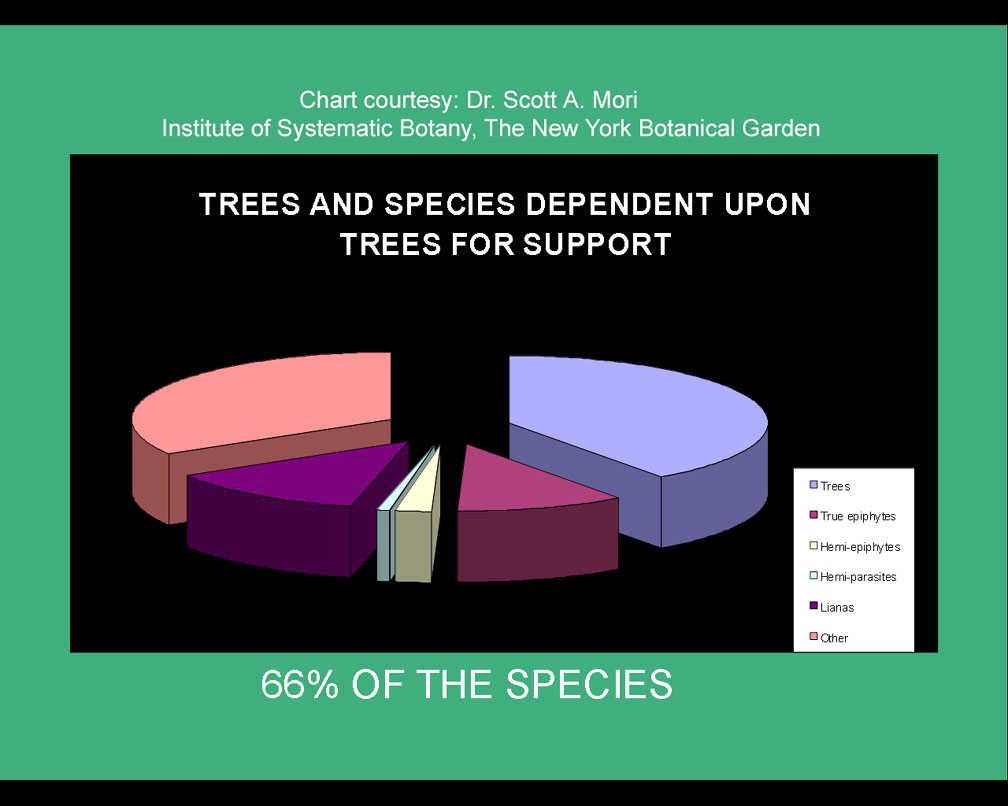
forest a full 66% are dependent on a tree for their
survival.
and
the farmers must then cut down even more forest!. Of all the plant
species that live in the
forest a full 66% are dependent on a tree for their
survival.
Not only do many plant species depend on the trees of the forest but so do many animal and insect species as well. High in the canopy can be found many exquisite species of frogs, invertebrates and small mammals that never come down to the forest floor. The live their entire lives on the branches of those large trees.
If you examine Dr. Scott Mori's chart below you will find that more species live in the trees than the total number of trees in the forest! If we allow the rain forest to be devastated we are completely wiping out enormous numbers of plant and animal species by destroying their natural habitat. If we allow the destruction of even a section of the forest we often destroy the habitat for many plant species as well as the insects and animals tha pollinate those plants and eventually that plant species vanishes from the face of the earth. By simply looking at the "smaller pie slices" you will quickly see the importance of the forest trees to the survival of the majority of Philodendron species since they are epiphytic or hemiepiphytic.
The plant to the left above, Philodendron spiritus-sancti, is now extremely rare with only six known specimens left in the wild in Brazil as a result of rain forest destruction.
"Tree Philodendron", members of Philodendron subgenus Meconostigma
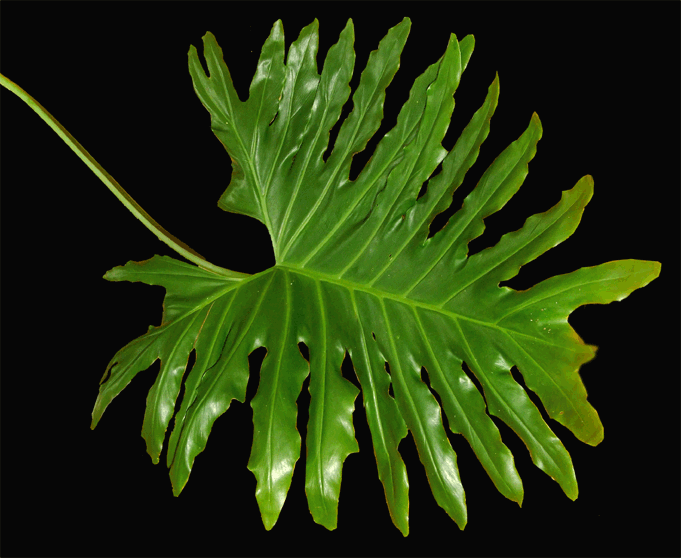 The
"Tree Philodendron" are found largely in Brazil, Argentina,
Bolivia and Paraguay, Although quite a few websites claim
species known as "tree Philodendron" that are members of
subgenus Meconostigma do not climb that information has no
basis in science.
The
"Tree Philodendron" are found largely in Brazil, Argentina,
Bolivia and Paraguay, Although quite a few websites claim
species known as "tree Philodendron" that are members of
subgenus Meconostigma do not climb that information has no
basis in science.
This claim is often made in regard
to Philodendron bipinnatifidum (also sold as
Philodendron selloum) which is often sold as
Philodendron selloum. In his scientific paper A
Revision of Philodendron Subgenus
Meconostigma (Araceae) Dr. Simon
Mayo of the Royal Botanic Garden Kew in London describes
these species as being hemiepiphitic.
Again, in the
scientific text The Genera of Araceae by Mayo, Bogner
and P.C. Boyce when
discussing
the roots of climbing aroids the text states,
"Roots in Araceae are always
adventitious and dimorphic roots are often found in climbing
hcmiepiphytes, e.g. Monstera deliciosa, Philodendron
bipinnatifidum." Adventitious
roots form from shoot tissues, not from another root while
dimorphic indicates the roots grow in two distinct forms.
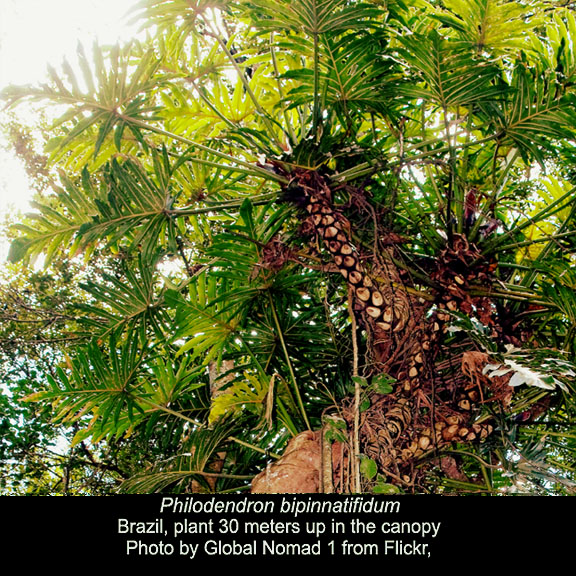 Despite the belief Meconostigma species don't climb they do
in fact climb to 30 meters or higher (100 plus feet).
When asked, Dr. Mayo responded to my query in a personal note. "Yes
Philodendron bipinnatifidum certainly does climb but from
what I've seen the way it does it is different from Subgenus
Philodendron and subgenus Pteromischum species which emit
relatively fine anchor roots at or near the nodes. In P.
bipinnatifidum and other members of Subgenus Meconostigma
the anchor roots are pretty thick and can wrap themselves
around small tree stems like ropes. It is almost as if the
plant hauls itself into the canopy. I've seen plants
suspended between neighboring small trees by these roots.
They do have a very adaptable kind of growth habit, which I
suppose goes along with their natural ecology, preferring
rather higher light intensity situations than "normal" "Tree Philodendron" do in fact climb.
Despite the belief Meconostigma species don't climb they do
in fact climb to 30 meters or higher (100 plus feet).
When asked, Dr. Mayo responded to my query in a personal note. "Yes
Philodendron bipinnatifidum certainly does climb but from
what I've seen the way it does it is different from Subgenus
Philodendron and subgenus Pteromischum species which emit
relatively fine anchor roots at or near the nodes. In P.
bipinnatifidum and other members of Subgenus Meconostigma
the anchor roots are pretty thick and can wrap themselves
around small tree stems like ropes. It is almost as if the
plant hauls itself into the canopy. I've seen plants
suspended between neighboring small trees by these roots.
They do have a very adaptable kind of growth habit, which I
suppose goes along with their natural ecology, preferring
rather higher light intensity situations than "normal" "Tree Philodendron" do in fact climb.
If you grow a Philodendron species such as plants known as Philodendron scandens, Philodendron oxycardium, Philodendron micans or one of the other names used for this single species it is wise to first learn just how the species grows in nature and then attempt to duplicate that condition (as best possible) if you wish to experience the species' natural beauty. Due to variation and morphogenesis a single Philodendron sp. can assume many shapes. Every one of the plants just named is the same exact species. Just because they have differences in the leaf blades does not mean they are a different species.
There is no such
thing as a single leaf form for any Philodendron species even
though many people think
all Philodendron sp. just look like dime store "ivy".
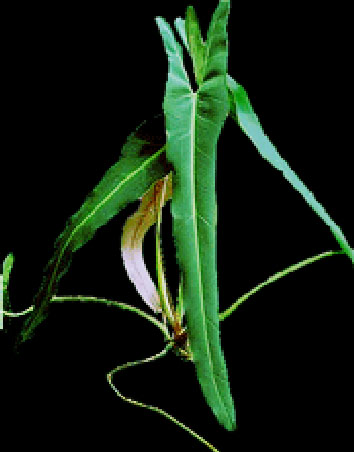
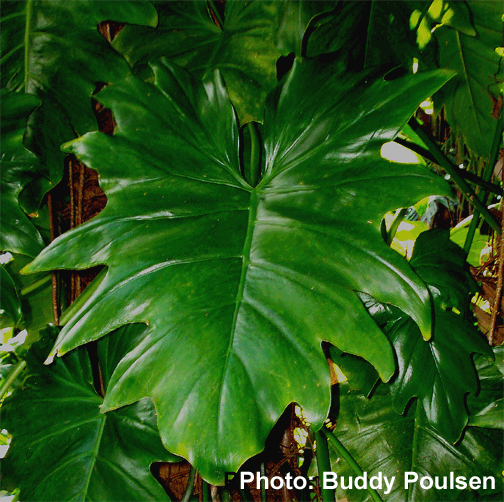
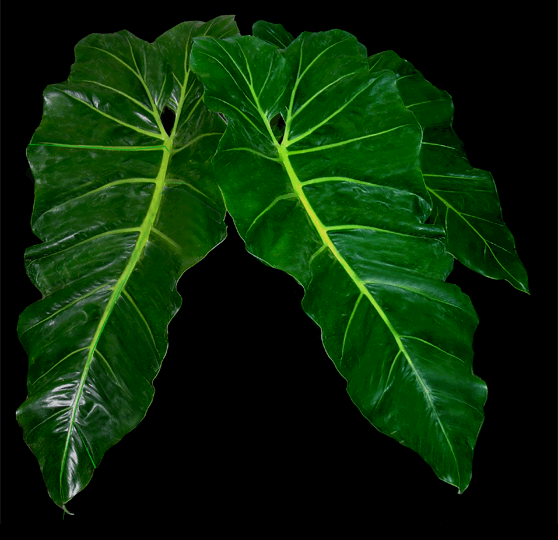
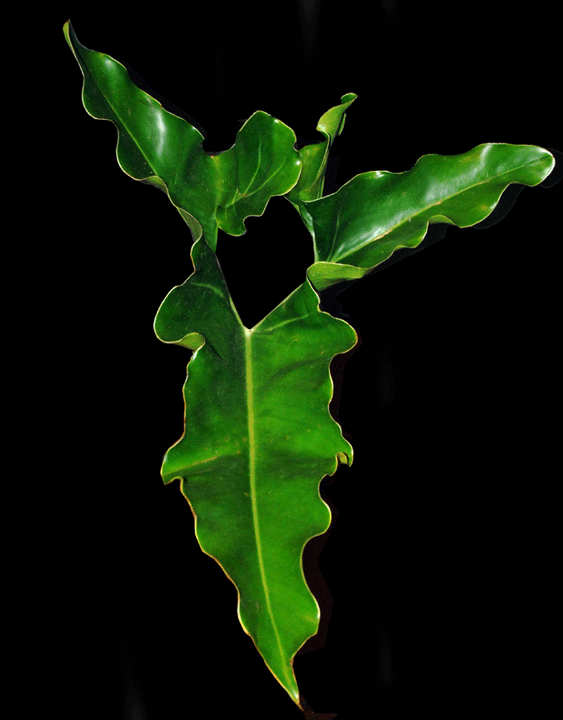
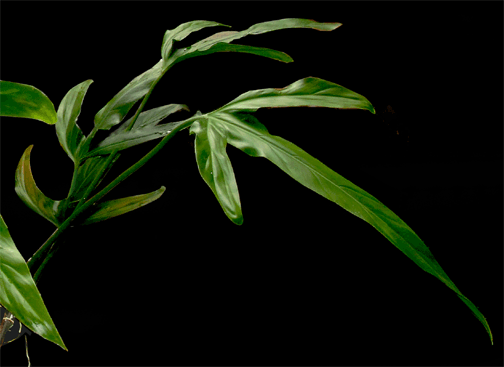
As can easily be see from the few photos on this page a
Philodendron
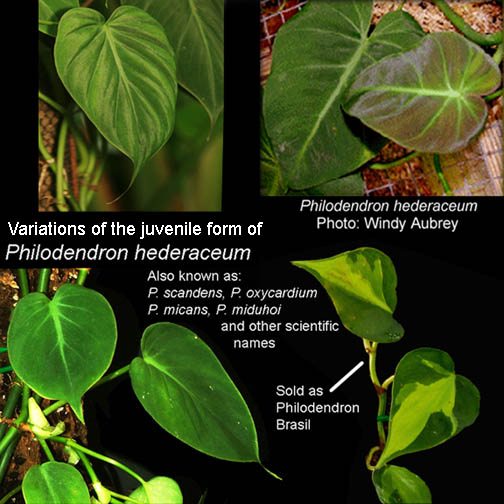 has no set shape! Some are oval, some are round,
some are spear shaped, some are shaped like the frond of a palm
while many
possess very strange shapes.
has no set shape! Some are oval, some are round,
some are spear shaped, some are shaped like the frond of a palm
while many
possess very strange shapes.
Many plants known as "ivy" are not Philodendron species at all but instead belong to Asian genera such as Epipremnum or Rhaphidophora.
You can see a few of those species on this list.
To understand natural variation and morphogenesis think of a Philodendron like your friends and family. You know people who are skinny, over weight, tall people who are short and wide, friends with dark skin, light skin and many other human variations. As a baby grows it changes (morphs) and no longer looks like a baby. But all those people are still humans (Homo sapiens). The same is true with Philodendron sp. Within a single species you can have leaves that are tall, short, fat, skinny, dark, light, small, large and many other variables. That condition is "variation". This link offers a more complete explanation of natural variation within plant species in non-technical language: Natural variation in species
Many Philodendron
sp. can be reproduced through simply taking a cutting that
contains at least one node (preferably two) on the stem for new roots to
develop and grow.
Some growers believe you
 must first place the node in water in to allow it to root, but
knowledgeable growers know you
can simply
place the petiole section
with a good node or nodes in damp soil and it will root. I've
often taken stem cuttings with nodes and simply laid them on their side,
partially
submerged in soil, and a new plant will form. In the rain forest there is no one around to cut
the stem with a couple of
node, place it in a jar of water and then pot it once it produces roots! When a
stem (commonly called the cane) falls to the ground in a storm nature finds a way to
grow new specimens.
must first place the node in water in to allow it to root, but
knowledgeable growers know you
can simply
place the petiole section
with a good node or nodes in damp soil and it will root. I've
often taken stem cuttings with nodes and simply laid them on their side,
partially
submerged in soil, and a new plant will form. In the rain forest there is no one around to cut
the stem with a couple of
node, place it in a jar of water and then pot it once it produces roots! When a
stem (commonly called the cane) falls to the ground in a storm nature finds a way to
grow new specimens.
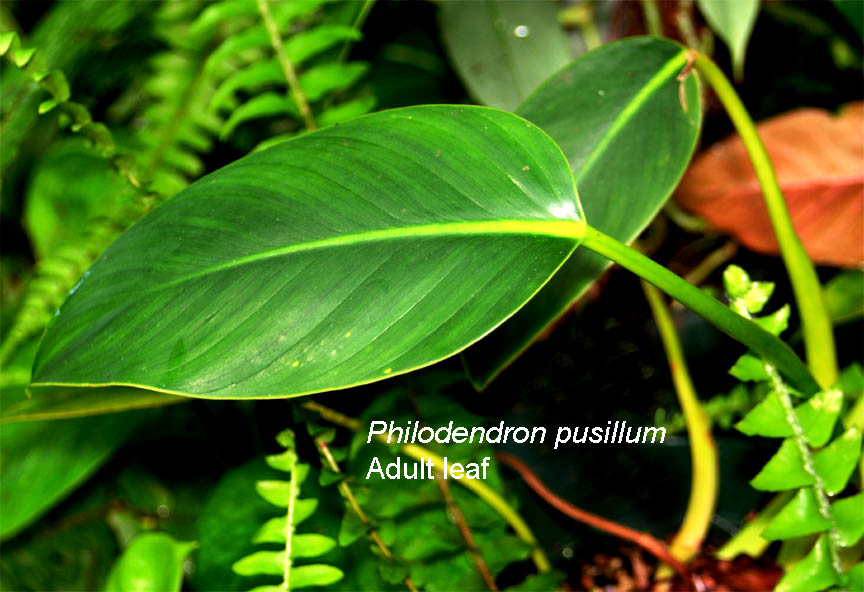
Important parts of a Philodendron.
 The
shape of the leaf blade is important to a collector but is far less important to
a botanist. The blades of Philodendron species naturally in shape and a
single plant is often observed to have many different shapes to its blades.
The blade may have no lobes or lobes that are clearly divided. The upper
portion of the lobe is called the back lobe or posterior lobe while the lower
part is known as the front or anterior lobe. The blade is divided down the
center by the midrib which is a large vein. The shape of the midrib is
important to the identification of the species. Running laterally from the
midrib can be found the primary lateral leaf veins that may or may not be
prominent, the interprimary leaf veins, and the tertiary or smallest venation.
All are important in the determination of the species.
The
shape of the leaf blade is important to a collector but is far less important to
a botanist. The blades of Philodendron species naturally in shape and a
single plant is often observed to have many different shapes to its blades.
The blade may have no lobes or lobes that are clearly divided. The upper
portion of the lobe is called the back lobe or posterior lobe while the lower
part is known as the front or anterior lobe. The blade is divided down the
center by the midrib which is a large vein. The shape of the midrib is
important to the identification of the species. Running laterally from the
midrib can be found the primary lateral leaf veins that may or may not be
prominent, the interprimary leaf veins, and the tertiary or smallest venation.
All are important in the determination of the species.
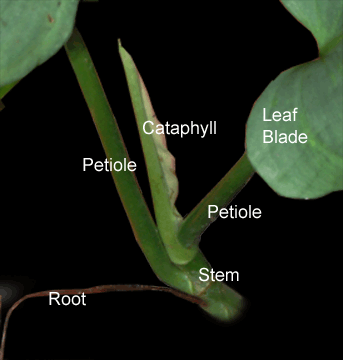
 The portion of a Philodendron that
most people call the "stem" is actually the petiole. Despite common
misconceptions the petiole is not a stem and is a term incorrectly used by
collectors. The petiole is the stalk that connects the leaf blade lamina to the
stem at the base of the plant. The real stem is not the
support for any single leaf but instead the stem is the base of the plant often
called a "cane". The petioles grow from nodes along the stem's
length. The stem sections that are the segments between two nodes are
known as internodes.
The portion of a Philodendron that
most people call the "stem" is actually the petiole. Despite common
misconceptions the petiole is not a stem and is a term incorrectly used by
collectors. The petiole is the stalk that connects the leaf blade lamina to the
stem at the base of the plant. The real stem is not the
support for any single leaf but instead the stem is the base of the plant often
called a "cane". The petioles grow from nodes along the stem's
length. The stem sections that are the segments between two nodes are
known as internodes.
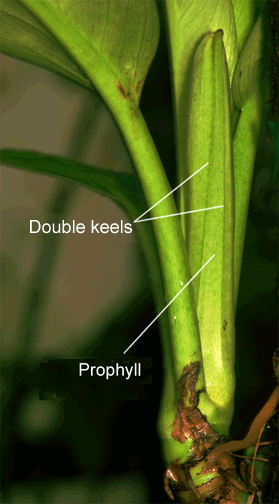
When a new leaf begins to develop a cataphyll normally surrounds the newly emerging leaf. The cataphyll is a bract-like modified leaf that surrounds any new leaf and whose purpose is to protect the leaf as it develops. A cataphyll is any foliar organ that has no differentiation of petiole and blade and usually has either a single rib on the back side but often has no rib at all. In the case when the cataphyll possess two ribs (double keeled) it is known as a prophyll. Prophylls often form on species that have a growth structure known as being sympodial, a subject far tood complicated for this discussion. The more common form of growth is known as being monopodial. If you would like to know more about these two growth forms please click this link and read about our unique specimen collected near Limón, Ecuador. The cataphyll is the single most important identifying characteristic any botanist uses to identify the species and is more important than the leaf shape due to their unique shapes.
At the base or axis of the plant the stem
will be observed. The stem may be rhizomatous and run across the ground or
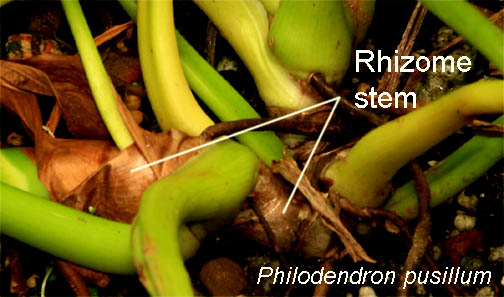 it may climb a host tree. In some cases the stem will even grow attached
to stone. Along the stem can be seen the nodes from which the roots and
petioles extend. The sections that separate the nodes are known as
internodes and their length and circumference can be used to help identify the
species.
it may climb a host tree. In some cases the stem will even grow attached
to stone. Along the stem can be seen the nodes from which the roots and
petioles extend. The sections that separate the nodes are known as
internodes and their length and circumference can be used to help identify the
species.
This link will give you an explanation of the
stem.
Another very important way of determining the species is to examine the inflorescence. The inflorescence contains the sexual parts of the plant and is explained in detail later in this article.
 This characteristic is not common but
some (not all) Philodendron
species are known as myrmecophytes that are plant species that live
associated with a colony of ants. Myrmecophytes possesses
specialized organs that exude a sweet liquid or provide shelter or
food for the ants. These Philodendron species often possess extrafloral
nectarines or tissue from which the ants can draw nourishment.
The plant benefits by the protection from predators that try to eat
the plant's leaves that is provided by these often fierce ants.
An extra-floral nectary can be born on the stems and the leaves as
splotches with the color of a purple/reddish wine stain known as
being vinaceous. Although nectaries secrete sweet
liquids to attract pollinators an extrafloral nectary does not
produce its liquid for the purpose of pollination. You will
read more later in this article about insect pollinator attractants.
This characteristic should not alarm the home grower since the ant
species attracted are not found in a home setting outside the
tropics.
This characteristic is not common but
some (not all) Philodendron
species are known as myrmecophytes that are plant species that live
associated with a colony of ants. Myrmecophytes possesses
specialized organs that exude a sweet liquid or provide shelter or
food for the ants. These Philodendron species often possess extrafloral
nectarines or tissue from which the ants can draw nourishment.
The plant benefits by the protection from predators that try to eat
the plant's leaves that is provided by these often fierce ants.
An extra-floral nectary can be born on the stems and the leaves as
splotches with the color of a purple/reddish wine stain known as
being vinaceous. Although nectaries secrete sweet
liquids to attract pollinators an extrafloral nectary does not
produce its liquid for the purpose of pollination. You will
read more later in this article about insect pollinator attractants.
This characteristic should not alarm the home grower since the ant
species attracted are not found in a home setting outside the
tropics.
Species compared to hybridized Philodendron.
Although
there are a very few natural Philodendron hybrids found in
nature (such as Philodendron 'Marijke' (photo below, left), many
Philodendron
commonly sold at nurseries are hybridized plants and are not
species. The majority
of
hybrid names are
simply made up and almost no information
can ever be reliably found. You'll just have to believe what
 a
grower tells you and that may often be incorrect since scientifically accurate information on hybrid plants is rarely
available.
a
grower tells you and that may often be incorrect since scientifically accurate information on hybrid plants is rarely
available.
Hybrid
Philodendron are created when the pollen from one species is
applied to the spadix of another species at the
time the plant
is ready to reproduce. The pollen of a hybrid may be
applied to the spadix of another hybrid creating a further confused
hybrid. (An explanation of the spathe and spadix that are
parts of the inflorescence of an aroid is found later in this
article.) The resulting seeds (if the hybrid even produces seeds
since many are sterile) are not
a species, but
a hybridized form. Some hybridizers enjoy seeing just what they
can create and after a period of time you have no idea what the parents
may have been. As a result, there is no way of knowing if the new
hybrid prefers wet conditions, drier conditions, grows
in the ground or high in the trees. Although hybrids can be
beautiful, my preference is to grow only Philodendron species
that can be traced
back to their natural habitat and better understood.
 The majority of plants you
buy
in a nursery are
juvenile forms and look nothing like the adult of the species.
Think about children that "morph" into adults. A child looks
little like the adult form but still has all the same body parts including the same number of arms, legs,
fingers and toes that are not fully grown. For many years botanists were confused by the differences in
adult forms and juvenile forms and often tried to give each
a different scientific name. That is one reason some plants have
numerous scientific names that can be worked back to the primary
base name (basionym) using a source
such as the International Plant Names Index (a service of the Royal
Botanic Gardens, Kew in London) or TROPICOS (a service of the Missouri Botanical Garden).
One major goal of this website is an attempt to help collectors by
doing some of that research for you and by consulting numerous botanical experts along
with scientific
databases.
The majority of plants you
buy
in a nursery are
juvenile forms and look nothing like the adult of the species.
Think about children that "morph" into adults. A child looks
little like the adult form but still has all the same body parts including the same number of arms, legs,
fingers and toes that are not fully grown. For many years botanists were confused by the differences in
adult forms and juvenile forms and often tried to give each
a different scientific name. That is one reason some plants have
numerous scientific names that can be worked back to the primary
base name (basionym) using a source
such as the International Plant Names Index (a service of the Royal
Botanic Gardens, Kew in London) or TROPICOS (a service of the Missouri Botanical Garden).
One major goal of this website is an attempt to help collectors by
doing some of that research for you and by consulting numerous botanical experts along
with scientific
databases.
Growing and watering Philodendron.
The common advice on most
garden websites is to allow a plant to dry between watering that is
often not good advice. Anyone that has asthma knows the difficulty
of getting air out and then drawing it back in. Even though
plants release
 oxygen into the air through their leaves they draw
fresh oxygen into the plant through their roots. A potted plant
is much like your lungs and if you can't bring in fresh oxygen you
will soon cease to live. As a result the top layer of a potted
plant's soil should not be allowed to dry since that dry soil
prevents the intake of fresh air! Once the soil dries it
creates a "blanket effect" to hold in the stale moisture and keep
out fresh oxygen. Once the soil dries the moist layer below
cannot easily breathe in order to re-oxygenate the soil that soon
becomes anoxic. Anoxia causes root rot, The dry
upper layer actually prevents the capillary effect of the wet
surface evaporation when damp soil is exposed to air.
When you pour water in the air inside the soil is displaced so the
oxygenated air inside has left the pot. If the upper soil layer completely
dries the "lungs" of the pot cannot work and can no longer continue
to draw in another breath of fresh air.
oxygen into the air through their leaves they draw
fresh oxygen into the plant through their roots. A potted plant
is much like your lungs and if you can't bring in fresh oxygen you
will soon cease to live. As a result the top layer of a potted
plant's soil should not be allowed to dry since that dry soil
prevents the intake of fresh air! Once the soil dries it
creates a "blanket effect" to hold in the stale moisture and keep
out fresh oxygen. Once the soil dries the moist layer below
cannot easily breathe in order to re-oxygenate the soil that soon
becomes anoxic. Anoxia causes root rot, The dry
upper layer actually prevents the capillary effect of the wet
surface evaporation when damp soil is exposed to air.
When you pour water in the air inside the soil is displaced so the
oxygenated air inside has left the pot. If the upper soil layer completely
dries the "lungs" of the pot cannot work and can no longer continue
to draw in another breath of fresh air.
The entirety of the soil needs to remain evenly damp so the roots of the plant can continue to draw in fresh oxygen. Otherwise, root rot is likely to begin. Since most people don't want to bother with ever watering their plants, many people go into a garden store and a very rich potting soil that stays soggy all the time. Despite the belief that are giving the plant "rich" soil to make it thrive they may be dooming their Philodendron specimen to death. Philodendron species can literally drown in mucky soil due to a lack of oxygen!
For some unexplained reason many growers believe the rich soil makes a Philodendron grow better! Typical "potting soils" just don't work for the vast majority of Philodendron species since , most grow in trees, not in soggy soil. A Philodendron species' roots are designed to collect rain water during the wet season and suffer through the dry season. But even in the dry season a Philodendron sp. can collect enough water from the humidity around their exposed roots to survive.
 Tropical
plants live in very humid conditions and are capable of gathering
water directly from the air even during the drier portions of the
year when it doesn't rain on a daily basis.
Dew and fog are very important contributors to
the water available to a tropical rain forest plant species and
homes don't have dew or fog! If we deny the plant the water
they crave they only suffer and will never be able to display their
natural beauty. In the temperate rain forest the amount of
water available from the dew alone is estimated to be between
three to five percent of the total annual precipitation!
As a result, your tropical Philodendron species need water
year round but it is wise to reduce the amount offered during the
winter.
Tropical
plants live in very humid conditions and are capable of gathering
water directly from the air even during the drier portions of the
year when it doesn't rain on a daily basis.
Dew and fog are very important contributors to
the water available to a tropical rain forest plant species and
homes don't have dew or fog! If we deny the plant the water
they crave they only suffer and will never be able to display their
natural beauty. In the temperate rain forest the amount of
water available from the dew alone is estimated to be between
three to five percent of the total annual precipitation!
As a result, your tropical Philodendron species need water
year round but it is wise to reduce the amount offered during the
winter.
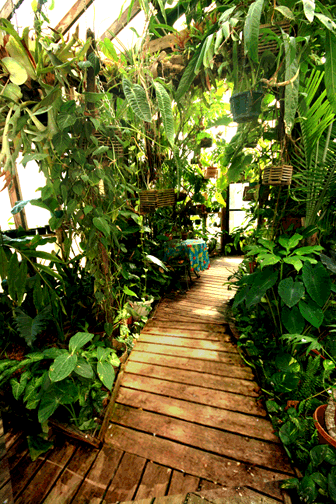
The photo to the right is of our personal collection of rain forest plant species that includes almost 100 Philodendron specimens. We water every week of the year averaging four days a week in summer and three days per week in winter. As can be seen in the photo the plants love water.
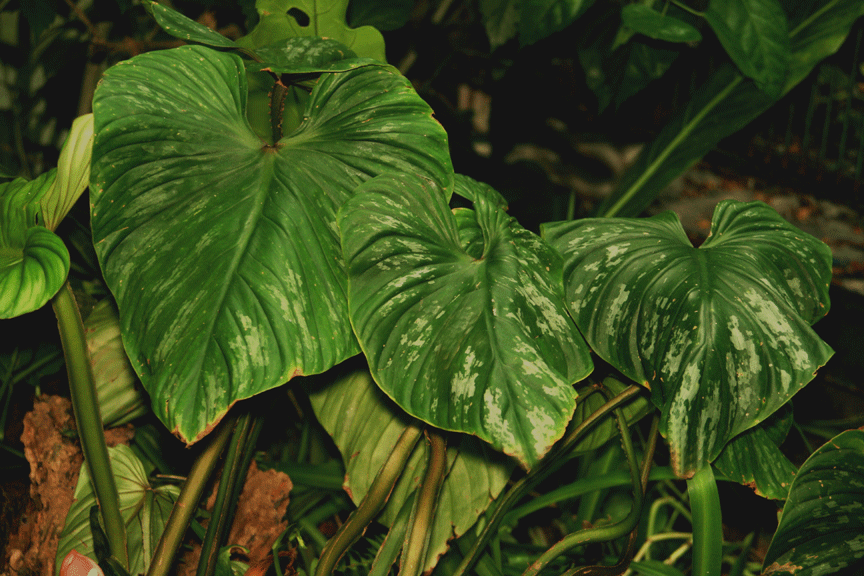
Despite the belief of far too many growers, growing plants is not just about the water content of the soil! The advice to water only once a week and keep the top two inches of the soil dry is not always good advice! Many aroids and other plant species grow in very wet soil!
Instead it is about the fast
flow of water through the soil or the lack thereof that causes a
lack of oxygen, anerobic fermentation and saprophytes that turn
into pathogens. Saprophytes are organisms including fungus or
bacteria that
grow on and draw nourishment from dead or decaying
organic matter that often includes soggy wet soil. The
 pathogens
attack the roots and cause them to rot so all of the advice to "slow
down on the water" is really about how to control the pathogens.
pathogens
attack the roots and cause them to rot so all of the advice to "slow
down on the water" is really about how to control the pathogens.
Fermentation and saprophytes often occur in muddy soil that will not
not allow the roots to breathe but they don't
necessarily occur in water which is why we can cause a plant that is
about to die to grow new roots in clean water.
As a result, it is necessary to use soil mixes that allow the roots
to breathe and will not remain soggy. I've attempted in
many threads to explain the necessity of mixing proper soil for
plants but the advice is often ignored since it requires some "work"
on the part of the plant's keeper. The reason plants rot is not the
amount of water given to the plant! These are rain forest plants and
are literally drowned for months at a time!
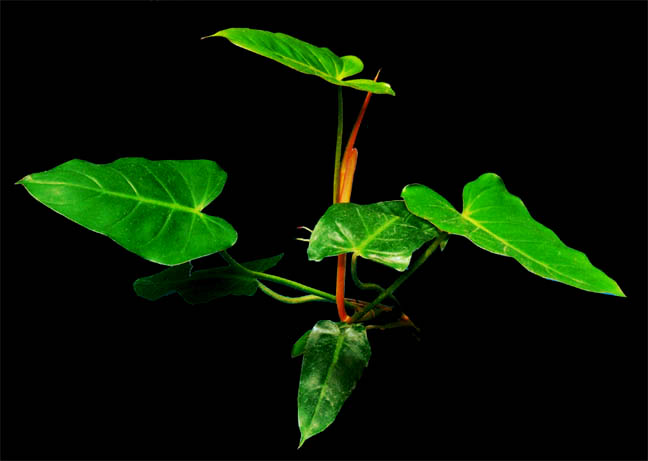 If you could visit a rain forest you would quickly learn the soil is
composed of leaf litter, decaying wood, compost, animal droppings
and the charcoal left behind when a part of the forest burns. If
we'll just listen to Mother Nature we can all make our plants grow
as they do in nature. That is precisely what I attempt to explain
when I recommend mixing soil, not
just buying a bag at the store.
Over time we've arrived at a soil mixture for most of our aroid
species which duplicates the rain forest. We use this mixture on the
advice of the aroid keepers at the Missouri Botanical Garden in St.
Louis. The goal of this mix is to allow the roots to freely find
places to extend and grow without constantly finding wet places
where they will rot. This mix will remain damp but drain quickly and
as
you can see from the photo above will make the plants thrive.
If you could visit a rain forest you would quickly learn the soil is
composed of leaf litter, decaying wood, compost, animal droppings
and the charcoal left behind when a part of the forest burns. If
we'll just listen to Mother Nature we can all make our plants grow
as they do in nature. That is precisely what I attempt to explain
when I recommend mixing soil, not
just buying a bag at the store.
Over time we've arrived at a soil mixture for most of our aroid
species which duplicates the rain forest. We use this mixture on the
advice of the aroid keepers at the Missouri Botanical Garden in St.
Louis. The goal of this mix is to allow the roots to freely find
places to extend and grow without constantly finding wet places
where they will rot. This mix will remain damp but drain quickly and
as
you can see from the photo above will make the plants thrive.
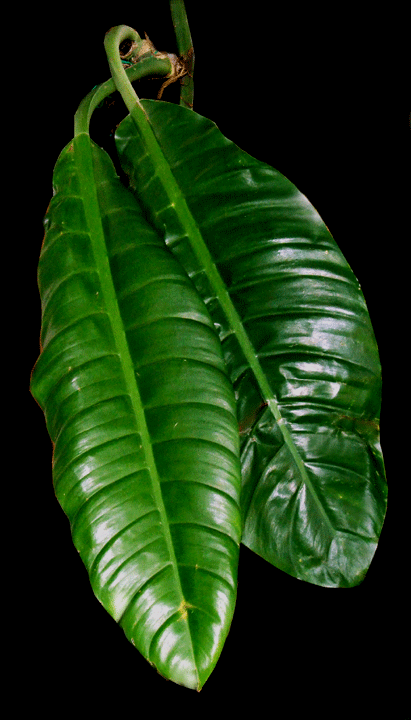
Rather than using a rich, soggy soil and watering only once a week (or less), use a soil that holds moisture well but drains quickly. With the help of botanical garden researchers we've developed a soil mixture for most of our Philodendron sp. that works great. People who visit our artificial rain forest are often amazed at the size of many of our specimens that grow much faster and larger than they often do in a home.
The exact mixture is not critical but we use a soil mixture composed of approximately 30% soil, 20% peat, 40% orchid bark with charcoal , 10% Perlite and some finely cut and shredded sphagnum moss works well. We also make our own compost and add it in place of some of the peat and bark when available. We often add extra hardwood or aquarium charcoal to help purify the soil and sometimes volcanic rock. We often add extra hardwood charcoal to help purify the soil and sometimes volcanic rock The charcoal is used to increase drainage but also to take advantage of the tiny air spaces in the charcoal for growing beneficial microbes. It helps with water retention, as well. If you have some good compost feel free to add it. Small pieces of charcoal can be purchased from any good orchid supply. If you are concerned about your soil remaining wet just add more orchid mix, cypress mulch, Perlite and sphagnum moss.
We grow many different Philodendron species in this basic mixture and some of our specimens have reached their adult or near adult size and regularly produce a spathe and spadix (inflorescence). The goal of our mixture is to cause the water to flow through the soil quickly, remain slightly damp, but never soggy. The roots of our plants attach to the bark just as they do in nature on the side of a tree. Most growers call a mix similar to the one we use a "jungle mix".
 the soil then talk to the experts at Missouri Botanical Garden
since they use a very similar mix for thousands of extremely rare
wild collected type specimens in their herbarium collection that
contains some of the only known specimens of Philodendron
species in the United States!
the soil then talk to the experts at Missouri Botanical Garden
since they use a very similar mix for thousands of extremely rare
wild collected type specimens in their herbarium collection that
contains some of the only known specimens of Philodendron
species in the United States!
Fertilizing Philodendron.
 What about fertilizer?
In nature a Philodendron receives
only natural forms! The epiphytic species can collect
minerals in the rain that comes from the winds blowing
across the Atlantic from Africa but more often they collect
decomposing debris that collects around their roots.
Philodendron often collect dust from major dust
storms in the African plains carried by the high altitude winds to the rain forests of tropical America. Once
that dust settles
in the rain the long dangling roots of the plants does gather a small amount of dissolved
minerals and nutrients. But nothing like home growers are prone to offer!
What about fertilizer?
In nature a Philodendron receives
only natural forms! The epiphytic species can collect
minerals in the rain that comes from the winds blowing
across the Atlantic from Africa but more often they collect
decomposing debris that collects around their roots.
Philodendron often collect dust from major dust
storms in the African plains carried by the high altitude winds to the rain forests of tropical America. Once
that dust settles
in the rain the long dangling roots of the plants does gather a small amount of dissolved
minerals and nutrients. But nothing like home growers are prone to offer!
 nitrogen
it picks up and contains on to the long, pendent roots of other
species." Species, such as the
terrestrial forms are designed to collect falling vegetation. In nature, those species
can often be found with
piles of dead leaves and plant material at and inside
their conical base. That material decays and the result is a
natural fertilizer, especially when
insects are invited to set up home.
nitrogen
it picks up and contains on to the long, pendent roots of other
species." Species, such as the
terrestrial forms are designed to collect falling vegetation. In nature, those species
can often be found with
piles of dead leaves and plant material at and inside
their conical base. That material decays and the result is a
natural fertilizer, especially when
insects are invited to set up home.
 Temperature? All Philodendron species are tropical. That means they just
can't tolerate cold temperatures for extended periods and in most
cases a freeze will kill the plant. Some do not appreciate
the temperature of an air-conditioned home for long periods of time!
As a general rule, don't allow the temperature around your Philodendron
specimens to drop below 12.75C (55 degrees F) if at all possible. It is best to keep
them below 90 degrees F which is
not particularly difficult if you
grow them in some form of shade or filtered light. Some species will tolerate short periods of cold, such as Central
Florida. But most won't survive anywhere outdoors north of
Zone 9. Zone 10 is best! Many
will
simply die if exposed
to a freeze. Since most demonstrate much faster growth when the
temperature is in the 80 to 88 degree range you may find your
specimen will appreciate being allowed to live outdoors during the
spring, summer and portions of the fall.
Temperature? All Philodendron species are tropical. That means they just
can't tolerate cold temperatures for extended periods and in most
cases a freeze will kill the plant. Some do not appreciate
the temperature of an air-conditioned home for long periods of time!
As a general rule, don't allow the temperature around your Philodendron
specimens to drop below 12.75C (55 degrees F) if at all possible. It is best to keep
them below 90 degrees F which is
not particularly difficult if you
grow them in some form of shade or filtered light. Some species will tolerate short periods of cold, such as Central
Florida. But most won't survive anywhere outdoors north of
Zone 9. Zone 10 is best! Many
will
simply die if exposed
to a freeze. Since most demonstrate much faster growth when the
temperature is in the 80 to 88 degree range you may find your
specimen will appreciate being allowed to live outdoors during the
spring, summer and portions of the fall.
Humidity is extremely important! Do everything possible to keep the humidity high around your Philodendron most of the time. These species live in a jungle that can have a humidity level near 100%! If you live in a climate that has a low humidity you'll need to provide a method of giving the aroid more humidity. In our rain forest the humidity is always high (85% or higher) due to the pond in the center of the room and frequent overhead misting! Some growers keep their Philodendron near a swimming pool to allow for a constantly high humidity. Air circulation is equally important since the air is almost always moving in the rain forest.
Proper light for Philodendron species.
 In
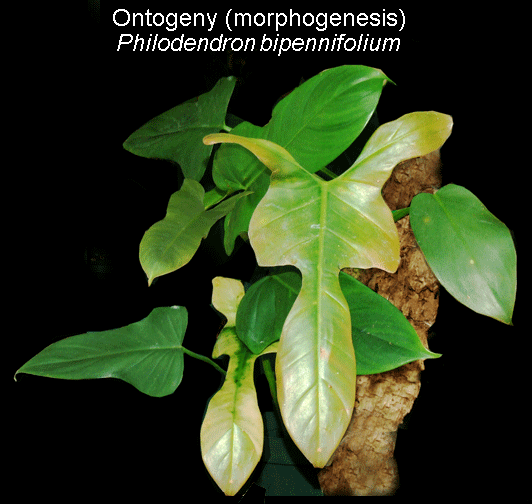
2007 I watched a specimen of Philodendron bipennifolium
sell on eBay for well over $70! P. bipennifolium is a
fairly common plant often called a Fiddle Leaf or Panda Philodendron you can
normally for just a few dollars. So what was unique about
this one? It was the near adult form that is rarely seen in
collections!
As a result, the seller was offering Philodendron
bipennifolium as an "unknown" species from French
Guiana! The shape of the adult is so different once the plant reaches
the fully adult form people were bidding very high amounts in an attempt
to possess a "rare" specimen! But with proper care
and conditions you can
grow one to that size and shape yourself. It just takes
time and something tall to climb! It took 5 years but the
plant to the left is now morphing into an adult. As you can
observe, there are still very juvenile leaf blades on the plant but
other leaves have finally begun to morph.
In
2007 I watched a specimen of Philodendron bipennifolium
sell on eBay for well over $70! P. bipennifolium is a
fairly common plant often called a Fiddle Leaf or Panda Philodendron you can
normally for just a few dollars. So what was unique about
this one? It was the near adult form that is rarely seen in
collections!
As a result, the seller was offering Philodendron
bipennifolium as an "unknown" species from French
Guiana! The shape of the adult is so different once the plant reaches
the fully adult form people were bidding very high amounts in an attempt
to possess a "rare" specimen! But with proper care
and conditions you can
grow one to that size and shape yourself. It just takes
time and something tall to climb! It took 5 years but the
plant to the left is now morphing into an adult. As you can
observe, there are still very juvenile leaf blades on the plant but
other leaves have finally begun to morph.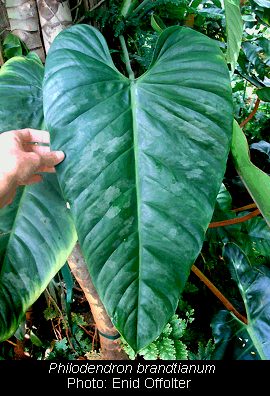 the
top of the wall's face. Philodendron love to
climb this type of wall and often reach their adult size more
rapidly. Once you've provided the
specimen something to climb such as a totem, wood or a wet wall and given it the light level it is trying to
seek you'll be amazed at how it grows and changes shape. Just avoid direct sunlight in most cases
the
top of the wall's face. Philodendron love to
climb this type of wall and often reach their adult size more
rapidly. Once you've provided the
specimen something to climb such as a totem, wood or a wet wall and given it the light level it is trying to
seek you'll be amazed at how it grows and changes shape. Just avoid direct sunlight in most cases
Have you ever noticed your
Philodendron "weeping"? It is not uncommon to see water
dripping from the leaf tips. Although many growers assume the
liquid is a result of dew it would be unlikely to observe dew
forming inside a home on a house plant. Even the
droplets of water seen on grass in morning are frequently caused by
guttation, rather than dew.
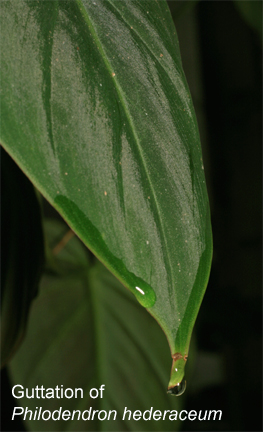 Aroids and other plant species possess glands
known as hydathodes that are capable of producing a clear liquid through a process known as
guttation.
The word guttation is derived from the Latin word gutta "gut-TA" meaning
droplet. Excess moisture in the leaf blade normally
transpires through pores of the leaf blade and is evaporated by heat and
wind. During periods of low temperatures and still air motion the
water just accumulates at the leaf's tip. Although sometimes called "sap" on plant discussion websites
guttation is just the watery liquid that comes out of the plant and is common
especially at night.
Aroids and other plant species possess glands
known as hydathodes that are capable of producing a clear liquid through a process known as
guttation.
The word guttation is derived from the Latin word gutta "gut-TA" meaning
droplet. Excess moisture in the leaf blade normally
transpires through pores of the leaf blade and is evaporated by heat and
wind. During periods of low temperatures and still air motion the
water just accumulates at the leaf's tip. Although sometimes called "sap" on plant discussion websites
guttation is just the watery liquid that comes out of the plant and is common
especially at night.
During the heat of the year the warmth of the sun pulls the water inside
the stem (base of the plant)
through the petiole
(support of the leaf
blade) to the lamina of the leaf so the blade is
filled with
water. Natural evaporation causes the water to be raised upwards. When
evaporation is not "pulling" the water out of the plant as a result of
the lower natural temperatures during fall and winter the water inside
the blade has no place to go and must find a method of escape since the
petiole and stem are already filled. The water just seeks the easiest
route out of the plant and chooses a gland. The weight of the water
builds pressure pushing downward on the petiole toward the stem and
finally builds to a point where the plant is simply forced to release
the liquid through the leaf.
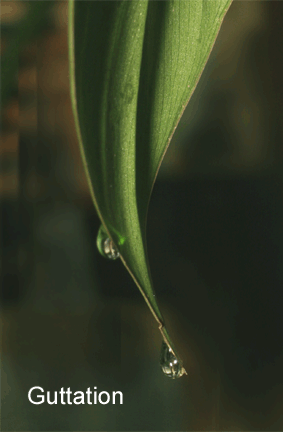 Guttation commonly happens at night when the transpiration rates are
naturally low. It is possible for guttation to occur when the
hydrostatic pressure is insufficient to prevent the flow of water into
the xylem. The xylem is a plant tissue of various cells that is capable
of transporting water and other substances including salts to the
leaves. Guttation frequently occurs in tropical plants when high
humidity inhibits the natural transpiration or the loss of water vapor
inside the plant to the outside air.
Guttation commonly happens at night when the transpiration rates are
naturally low. It is possible for guttation to occur when the
hydrostatic pressure is insufficient to prevent the flow of water into
the xylem. The xylem is a plant tissue of various cells that is capable
of transporting water and other substances including salts to the
leaves. Guttation frequently occurs in tropical plants when high
humidity inhibits the natural transpiration or the loss of water vapor
inside the plant to the outside air.
Guttation often occurs through the hydathodes that are found on the leaf
tips of many Araceae (aroids). A hydathode is a modified stoma which is
normally involved in photosynthesis that must secrete water as
a result of the pressure of the excess water. The hydathodes of Araceae are
commonly localized in the leaf tip but may be found elsewhere on the
leaves.
Philodendron reproduction.
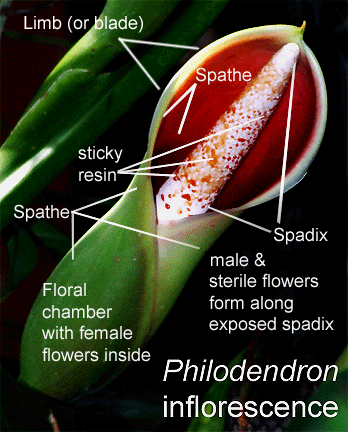 reproductive structure of the plant. Flowers contain
near microscopic sexual parts
including anthers, stamens, and stigmas when the plant is in the
reproductive process.
reproductive structure of the plant. Flowers contain
near microscopic sexual parts
including anthers, stamens, and stigmas when the plant is in the
reproductive process.
A spathe contains none of these sexual characteristics but all can be observed on the true flowers along the spadix. If you explore the inflorescence, there are very tiny flowers but they are found on the spadix at the center of the inflorescence. The inflorescence is sometimes shaped like a tube or hood is made of several parts. The portion that appears to be the "flower" is known as the spathe and inside that is the spadix that somewhat resembles an elongated pine cone. The spadix is a spike on a thickened fleshy axis that can produce tiny flowers. When ready to reproduce, the spadix of a Philodendron produces both male, female and sterile flowers. These are normally separated by the sterile zone. The tiny male flowers produce pollen and the tiny female flowers are designed to be receptive to pollen. However, most are cleverly divided by nature to keep the plant from being self pollinated. The male flowers don't always produce pollen at the same time the female flowers are receptive. Nature's preferred method is to have insects pick up the pollen from one plant and carry it to another plant to keep the species strong.
If you find the
reproduction of a Philodendron of interest please visit this page on
natural and artificial aroid reproduction
Philodendron are not difficult to grow.
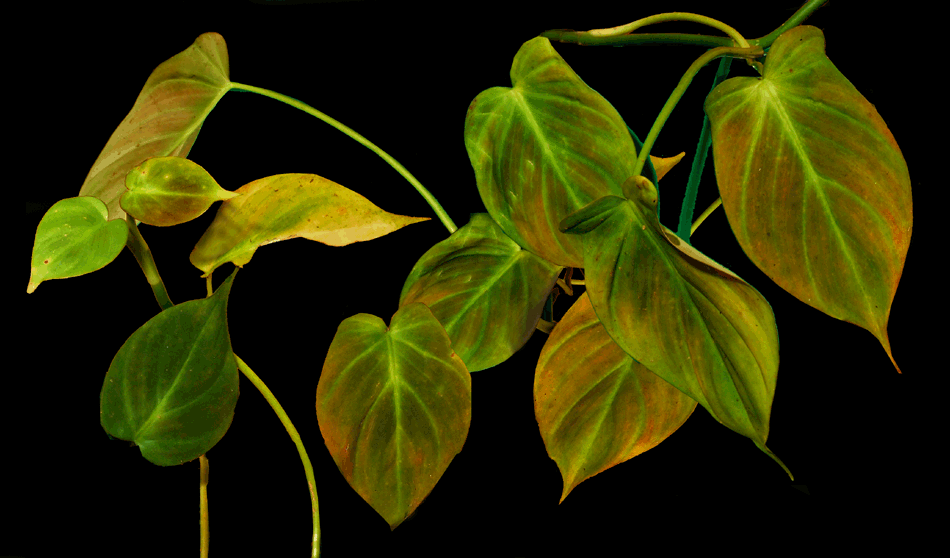 up to the light level they have been seeking. The key is allowing them to climb,
fast draining soil that stays damp (rarely dry), and good light that
is relatively bright. It's just that easy!
up to the light level they have been seeking. The key is allowing them to climb,
fast draining soil that stays damp (rarely dry), and good light that
is relatively bright. It's just that easy!
Although much has been covered in
this short article there is far more to learn! I strongly
recommend each of you consider joining the International Aroid
Society in order to learn even more. Through the IAS
discussion forum Aroid l you can ask questions to many of the
world's top Anthurium experts and be assured of a qualified answer.
You'll also receive an annual copy of the IAS journal Aroideana
which is highly respected in the scientific community as well as
four quarterly newsletters. Annual membership is only
$25.00 per year!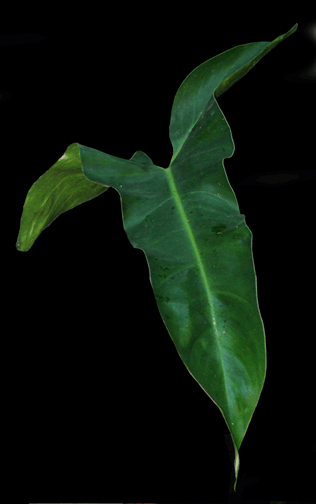
Steve Lucas
Curator, The Exotic Rainforest
Steve@ExoticRainforest.com
S
For even more
information, join the
International Aroid Society:
http://www.exoticrainforest.com/Join%20IAS.html
Click the link below for
information:
Incredible aroid botanical photographs by botanist David Scherberich
http://www.aroidpictures.fr/pictures.html
Concerned about calcium oxalate crystals? Have you been convinced they
are a "deadly poison"?
Specimens may be available
from
Brian's Botanicals
http://www.briansbotanicals.net/
Philodendron
Species we collect
We
frequently add new species to the collection.
Click here to check our Aroids and other genera in the Collection page for the full list.


|
|