
Aroids and other genera in the Collection
Take the Tour Now?
Orchids
The
Exotic Rainforest
Plants in
the Exotic Rainforest Collection
Images on this website are copyright protected. Contact
us before attempting to reuse.
In depth information on how to grow Philodendron species, Click this Link
Within our collection we have many species of Philodendron. If you are seeking other photos, click this link
Philodendron renauxii Reitz

 Philodendron renauxii (ren-WAW-e-eye)
is found exclusively (endemically) in the southern coastal Brazilian state of Santa Catarina (SE-ta
ka-ta-Rin-na) south of
São Paulo. There is also the village of Santa Catarina
in the northeastern portion
of Brazil but these are different locations
many kilometers (miles) apart. The state of Santa Catarina has one of
the highest standards of living in Brazil.
Philodendron renauxii (ren-WAW-e-eye)
is found exclusively (endemically) in the southern coastal Brazilian state of Santa Catarina (SE-ta
ka-ta-Rin-na) south of
São Paulo. There is also the village of Santa Catarina
in the northeastern portion
of Brazil but these are different locations
many kilometers (miles) apart. The state of Santa Catarina has one of
the highest standards of living in Brazil.
Uncommon in North American aroid collections little has been
published regarding this species since it was first published in
the Brazilian scientific publication Sellowia
in 1957.
Philodendron renauxii is found at an elevation of
approximately 350 meters (roughly 1000 feet) above sea level in the forest
region between São Paulo,
which is the capital city of the state of São
Paulo,
and
Florianópolis (nicknamed
Floripa)
which is the capital city of
the state of
Santa Catarina.
Florianópolis
is located mostly on Santa Catarina Island.
a the
richest city of
According
to personal communication with aroid botanist Marcus A. Nadruz Coelho, Diretoria de Pesquisas, Instituto
de
Pesquisas Jardim Botanico do Rio de Janeiro (Rio
de Janeiro Botanical Garden)
in Brazil,
"The specimen that you have has the characteristics of P. renauxii.
The species, so far, is endemic to Santa Catarina (southern Brazil), but I
think it can be found in the state of Paraná located between Santa Catarina
and São Paulo. I believe the distribution of the species is still
poorly known due to lack of collection. It is a species typical of wet
and cold places and here in Brazil the flowers appear from October which is standard
for the genus Philodendron. It is widely used in landscaping because it is
very beautiful."
In a follow up message Marcus
continued, "There are
few records of the species in Brazil so the actual variation in the size of
the leaf is unknown. With the existing collections the size of the leaf is
up to 40 cm in length."
A blade length of 40 cm would equal approximately 16 inches which is roughly
the size of the blades found on our specimen. Despite the fact that
Marcus prefers not to be called "Dr. Nadruz", he holds a PhD in aroid
botany from the Universidade de
São
Paulo and has always been extremely helpful in providing valid scientific
information on Brazilian aroid species.
One of Brazil's unique Philodendron species,
Philodendron renauxii is a
terrestrial
 species which crawls cross the ground rather than
climbing in most cases. Rather than having the cordate leaves
(heart shaped) common to many
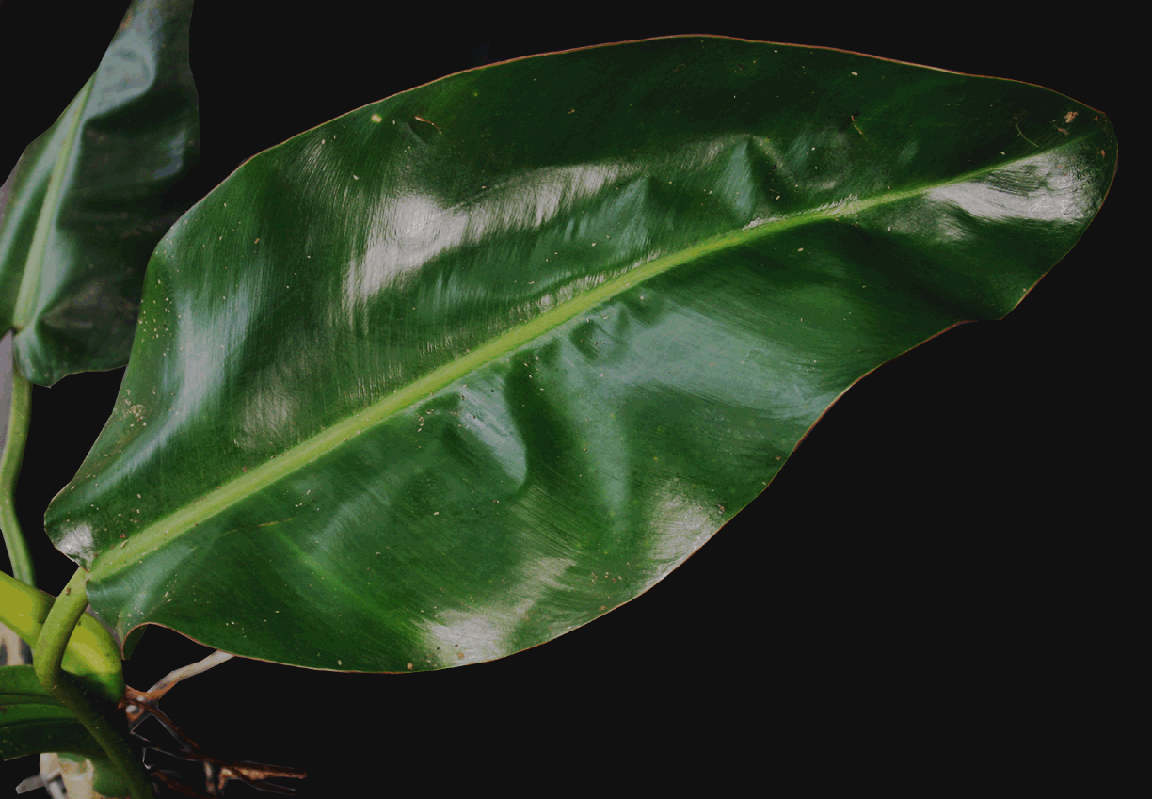
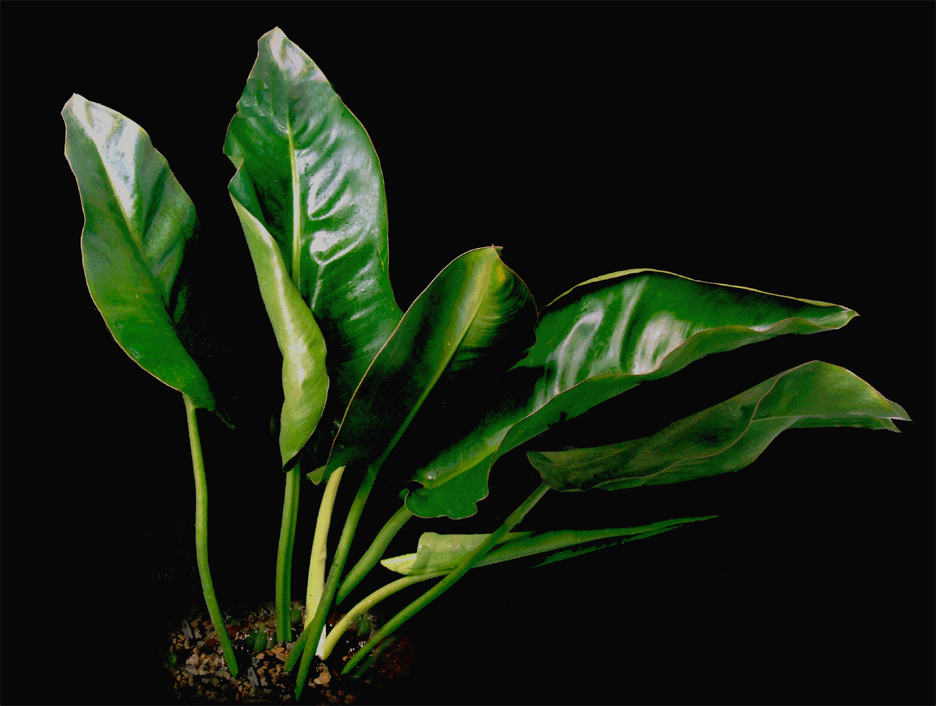
Philodendron species, Philodendron renauxii has leaf blades that are only
partially cordate and instead are bluntly lance shaped while being both elongated and concave with a shape like that
of a curved paddle. The sub-coriaceous (thin leather-like) leaf blades of
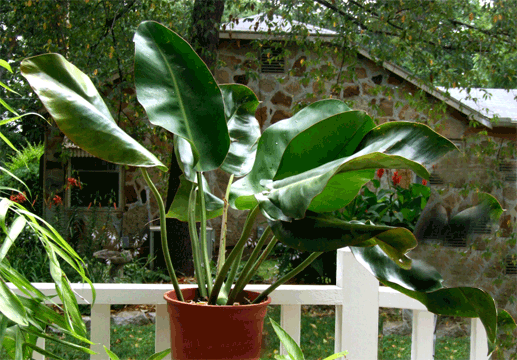
Philodendron renauxii can stand 60 to 120cm in height (2 to 4 feet) above the ground.
In addition the leaves are dark green and are semi-glossy on the
adaxial (upper) blade surface. The blade coloration is somewhat paler
on the abaxial (lower) blade surface as well as matte. One very popular horticultural reference
indicates the leaves are "sickle-shaped"
but that description would imply a scythe shape such as found on the old-world agricultural
tool. That tool which is used for cutting grain is both thin and curved and does not fit the description of the species
Philodendron renauxii.
species which crawls cross the ground rather than
climbing in most cases. Rather than having the cordate leaves
(heart shaped) common to many
Philodendron species, Philodendron renauxii has leaf blades that are only
partially cordate and instead are bluntly lance shaped while being both elongated and concave with a shape like that
of a curved paddle. The sub-coriaceous (thin leather-like) leaf blades of
Philodendron renauxii can stand 60 to 120cm in height (2 to 4 feet) above the ground.
In addition the leaves are dark green and are semi-glossy on the
adaxial (upper) blade surface. The blade coloration is somewhat paler
on the abaxial (lower) blade surface as well as matte. One very popular horticultural reference
indicates the leaves are "sickle-shaped"
but that description would imply a scythe shape such as found on the old-world agricultural
tool. That tool which is used for cutting grain is both thin and curved and does not fit the description of the species
Philodendron renauxii.
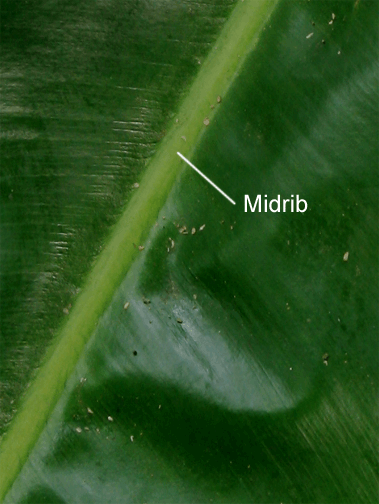
The midrib which is found at the center of each leaf blade (photo, left) is broadly convex-flattened (only slightly raised) and slightly paler in color on the underside. The primary lateral leaf veins are weakly raised and are often obscure on the upper surface while also barely visible on the underside. The minor leaf veins are both fine and only slightly visible on the upper blade surface but are more distinct on the abaxial surface (underside)
 The
petioles which are scientifically the stalks to which the lamina of the leaf
blades are attached
are both obtusely and shallowly sulcate.
Obtuse simply means "bluntly" while in botany sulcate may indicate
either a single channel or canal running down the axis of the petiole.
In some species sulcate can indicate a series of
tiny parallel groves running down the axis. In the case of
Philodendron renauxii the petiole is canaliculate and you can easily
observe a shallow canal running down the upper surface. The purpose of
the canal is to direct rain water which has fallen on the blades toward the stem and roots.
The
petioles which are scientifically the stalks to which the lamina of the leaf
blades are attached
are both obtusely and shallowly sulcate.
Obtuse simply means "bluntly" while in botany sulcate may indicate
either a single channel or canal running down the axis of the petiole.
In some species sulcate can indicate a series of
tiny parallel groves running down the axis. In the case of
Philodendron renauxii the petiole is canaliculate and you can easily
observe a shallow canal running down the upper surface. The purpose of
the canal is to direct rain water which has fallen on the blades toward the stem and roots.
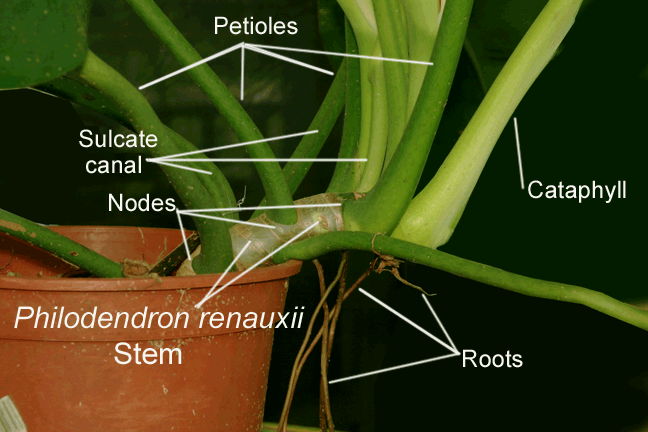
Despite common misconceptions the petiole is not the stem as is often claimed by plant collectors. The petioles are strictly the stalks which connect the leaf blades to the stem at the base of the plant. The petioles grow from nodes found along the stem's length. (see photos right and below left)
The stem of any
Philodendron is the base of the plant (see photo left) and in the case of Philodendron
renauxii typically
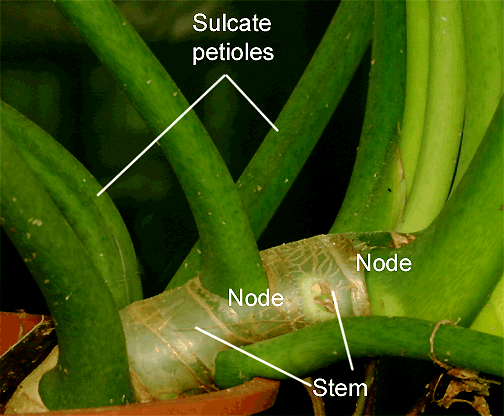 runs across the ground. The stem has nodes at regular
intervals and the petioles as well as the roots grow from those nodes
along the stem's length. The stem segments which separate the nodes
are known as internodes.
runs across the ground. The stem has nodes at regular
intervals and the petioles as well as the roots grow from those nodes
along the stem's length. The stem segments which separate the nodes
are known as internodes.
When a new petiole grows from a
node
it is
surrounded by a cataphyll (photo, right) which is a bract-like modified leaf that surrounds
and protects the new leaf as it develops. A cataphyll is any
foliar organ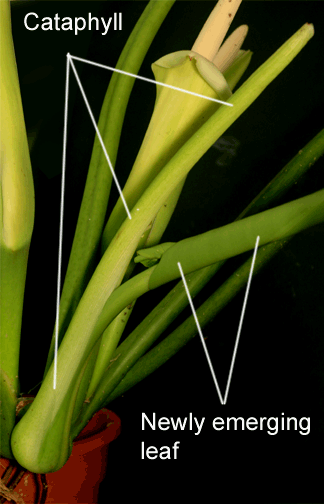 that has no differentiation between the petiole and the blade.
The
cataphylls of Philodendron renauxii
are medium green while weakly glossy and
persist briefly (remain) after the blade opens until they become deciduous
and drop from the plant. The cataphyll is the singular most important
identifying characteristic of an aroid.
that has no differentiation between the petiole and the blade.
The
cataphylls of Philodendron renauxii
are medium green while weakly glossy and
persist briefly (remain) after the blade opens until they become deciduous
and drop from the plant. The cataphyll is the singular most important
identifying characteristic of an aroid.
All Philodendron species are members of the larger plant family known as Araceae, commonly called aroids. An aroid is a plant that reproduces via the production of an inflorescence which in aroids is known to science as a spathe and spadix. The inflorescence is supported by a stalk known as the peduncle which is the internode between the spathe and the last foliage leaf. The spathe is shaped like and a appears to be a hood which opens during the reproductive cycle known to a botanist as anthesis. Most people think the spathe is a "flower" which it is not. The spathe is a modified leaf and at the center of the spathe is the spadix where berries containing seeds will develop provided the female flowers are pollinated. If you explore the spadix with a magnifying glass when it is at sexual anthesis and is ready to be pollinated there are very tiny flowers which are cleverly divided by nature in the genus Philodendron to prevent self pollination. Those species that are divided into zones of flowers with a single sex are known in botany as being "unisexual".
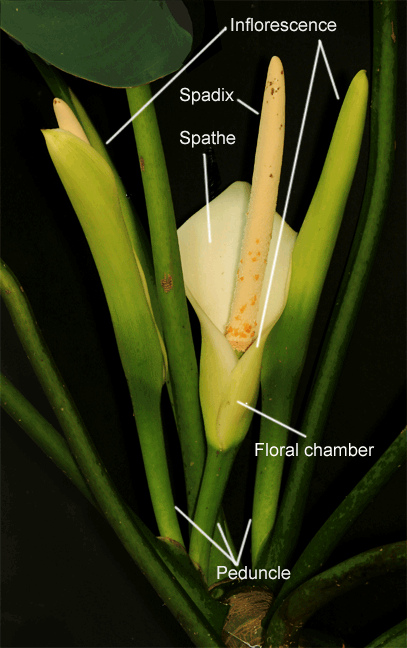 The
tiny female flowers are hidden in their own zone found inside the floral chamber at the base of the
inflorescence and
as a result are often difficult to observe. The sterile male
flowers which produce the pheromone or "perfume" the plant
uses to attract the assigned
species of Cyclocephala beetle to pollinate the female flowers are found in
their own zone just above
the female flowers
and nearer the top of the floral chamber.
At anthesis the temperature of the inflorescence rises dramatically as a
result of a chemical reaction in order
to propel the "perfume" through the rain forest. The beetles can sense the pheromone from as far away as 200 meters (650
feet). The
The
tiny female flowers are hidden in their own zone found inside the floral chamber at the base of the
inflorescence and
as a result are often difficult to observe. The sterile male
flowers which produce the pheromone or "perfume" the plant
uses to attract the assigned
species of Cyclocephala beetle to pollinate the female flowers are found in
their own zone just above
the female flowers
and nearer the top of the floral chamber.
At anthesis the temperature of the inflorescence rises dramatically as a
result of a chemical reaction in order
to propel the "perfume" through the rain forest. The beetles can sense the pheromone from as far away as 200 meters (650
feet). The
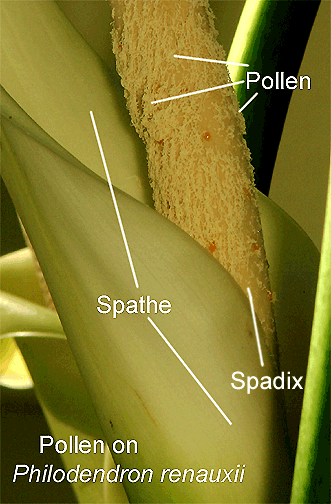 male
flower zone can be found all along the upper spadix and their purpose
is the
production of pollen (photo right).
male
flower zone can be found all along the upper spadix and their purpose
is the
production of pollen (photo right).
When the spathe first opens the female flowers are fertile for only a short period of time which is when the sterile male flowers begin the production of the scent (pheromone). The female flowers complete their anthesis within less than 24 hours and are spent well before the male flowers begin pollen production. The beetles sense the scent and are drawn to the heat since the inflorescence offers them both a source of food as well as warmth during the night. The beetles stop at any plant producing the same pheromone for food and warmth as they fly through the forest. As a result they bring fresh pollen from another plant that is currently at male anthesis in order to pollinate the female flowers which are currently at sexual anthesis.
There are two methods to determine if Philodendron renauxii is at female anthesis. The first is the production of the pheromone which can be sensed by the human nose as well as by the beetle and the second is a "tanline" which becomes visible on the spathe. My friend and aroid expert Leland Miyano explains, "The tanline is formed by the separation of the overlapping edges of the spathe. As the edges begin to move apart and open you will see a tanline of sorts where the overlap was. This region, formerly protected from the sun, is lighter in color than the exposed parts of the spathe."
For a more detailed explanation of aroid pollination click this link
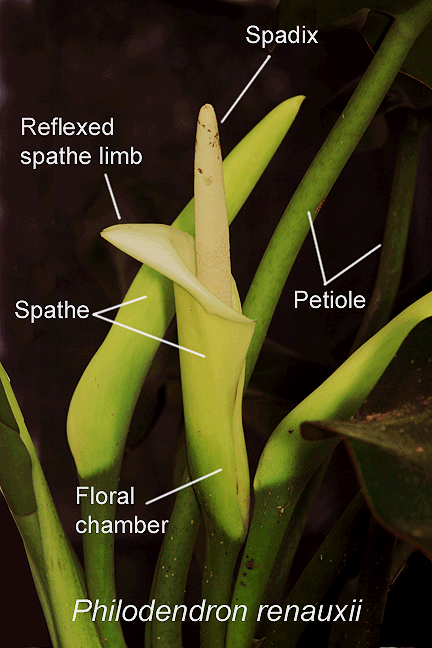 Based on personal observation the spathes
of Philodendron renauxii emerge
green but as they open lighten in color with a greenish white
interior. Once fully open there is deep within the throat of the
spathe a beautiful rose coloration. During
female anthesis the spathe does not necessarily open completely but the
hungry pollinating
beetles are able to force their way through the constriction into the floral
chamber in order to eat the sterile male flowers which are rich in lipids
which
contain proteins. By forcing their way into the floral chamber they
then bring along pollen collected from another specimen and pollinate the female flowers inside
Based on personal observation the spathes
of Philodendron renauxii emerge
green but as they open lighten in color with a greenish white
interior. Once fully open there is deep within the throat of the
spathe a beautiful rose coloration. During
female anthesis the spathe does not necessarily open completely but the
hungry pollinating
beetles are able to force their way through the constriction into the floral
chamber in order to eat the sterile male flowers which are rich in lipids
which
contain proteins. By forcing their way into the floral chamber they
then bring along pollen collected from another specimen and pollinate the female flowers inside
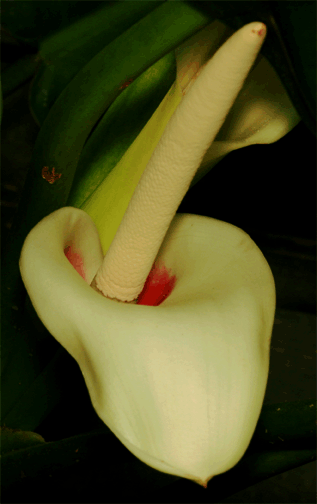 the chamber.
Once female anthesis is complete the limb or blade of the
spathe at the upper edge of the spathe reflexes and turns back. (see
photo, right).
the chamber.
Once female anthesis is complete the limb or blade of the
spathe at the upper edge of the spathe reflexes and turns back. (see
photo, right).
 This is Leland's description of the spathe in 2007,
"My Philodendron renauxii are
blooming now. The immature spathes are green with scattered red dots.
At anthesis, the outside and inside is pure
cream colored. All stages are present now. Introduced ants
and
earwigs are inside the inflorescences. I pulled apart some of the
spathes to see the female zone and it appears that fertilization is
taking place. This is a guess...but something is happening...I do not
know what a fertilized female flower looks like...but swelling from the
immature state is happening. Copious amounts of gelatinous sap are
present on the female zone of the spadix."
This is Leland's description of the spathe in 2007,
"My Philodendron renauxii are
blooming now. The immature spathes are green with scattered red dots.
At anthesis, the outside and inside is pure
cream colored. All stages are present now. Introduced ants
and
earwigs are inside the inflorescences. I pulled apart some of the
spathes to see the female zone and it appears that fertilization is
taking place. This is a guess...but something is happening...I do not
know what a fertilized female flower looks like...but swelling from the
immature state is happening. Copious amounts of gelatinous sap are
present on the female zone of the spadix."
Philodendron species are
known to be highly variable and not every leaf of every specimen
will always appear the same. This link explains in greater
detail the science of natural variation and
morphogenesis within plant species.
Click
here.

If you are seeking information on other rare species, click on "Aroids and other genera in the Collection" at the top and look for the

Want to learn more
about aroids?
Join the
International Aroid Society:
http://www.exoticrainforest.com/Join%20IAS.html