

Aroids and other genera in the Collection
Take the Tour Now?
Orchids
The Exotic Rainforest
Images on this website are copyright protected. Contact us
before attempting to reuse.

 I
often have people do a search on
the internet using the term "Elephant Ear" and as a result end up on one
of my pages. But this website has more than 350 pages! Most of the time they become aggravated because they can't
immediately find the plant they are seeking, and there is a reason.
Which plant do you
want to know about? What genus is that plant found in?
Many of you likely believe the term "Elephant Ear" is a good way to
describe plants with large you want to grow in your yard> Sorry, I don't
like the name and here is the reason why the term "Elephant Ear" is a near
useless common name.
I
often have people do a search on
the internet using the term "Elephant Ear" and as a result end up on one
of my pages. But this website has more than 350 pages! Most of the time they become aggravated because they can't
immediately find the plant they are seeking, and there is a reason.
Which plant do you
want to know about? What genus is that plant found in?
Many of you likely believe the term "Elephant Ear" is a good way to
describe plants with large you want to grow in your yard> Sorry, I don't
like the name and here is the reason why the term "Elephant Ear" is a near
useless common name.
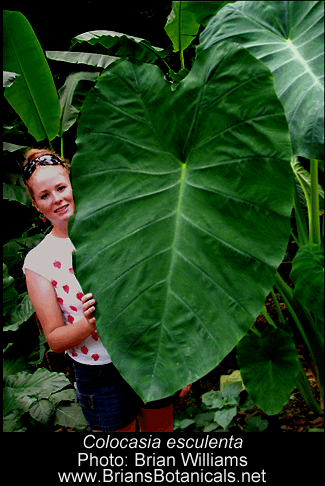
Are you aware there are plant species in quite a few different scientific genera that have managed to garner the common name Elephant Ear"? All are members of the larger plant family known as Araceae or aroids. Elephant ear "plants" can be found in the genera of Alocasia, Xanthosoma, Philodendron, Anthurium, Caladium, Monstera and Colocasia. If you do a search of a scientific database you will learn there are more than 100 genera of aroids with around 3,300 total species. Those seven genera just mentioned contain well over 2,000 of those species! So which one of those 2,000 plus very different plants are you trying to find?
You see, "Elephant Ear" is not a descriptive term nor a good choice as a common name.
If you were to describe your car as a "Chevy" everyone would think you were talking about a Chevrolet. Certainly, that doesn't describe the model, but al least you would be in the correct brand. But if you drive a Mercedes you'd likely be unhappy if someone called it a "Chevy". The term "Elephant Ear" is the same and doesn't even connect the plant you are seeking to a genus!
I know, you are probably seeking
a plant with big leaves. OK, which one? There are Anthurium
as well as Alocasia
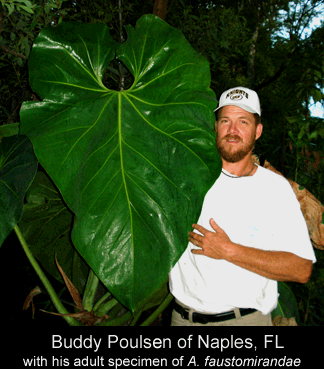 species with leaves up to 12 feet
(almost 4 meters) long! There are species in the genera Philodendron and
Xanthosoma with leaves up to 6 feet
(nearly 2 meters) in length but also species that are quite small.
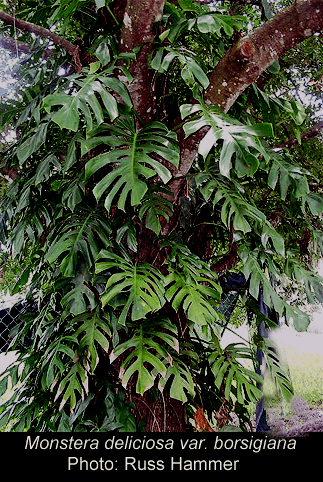
There are species in the genus Colocasia and Monstera
with leaves that approach 4 feet (1.2 meters) along with species
that are very little. And there are plants in the genus Caladium with
moderately large and others with very tiny leaves. You see, the size of the leaf has nothing to do with
the genus. So just saying "Elephant Ear" means nothing.
Regrettably, nursery sales people use it all the time and despite
attempts to get them to stop, the name will persist forever!
species with leaves up to 12 feet
(almost 4 meters) long! There are species in the genera Philodendron and
Xanthosoma with leaves up to 6 feet
(nearly 2 meters) in length but also species that are quite small.
There are species in the genus Colocasia and Monstera
with leaves that approach 4 feet (1.2 meters) along with species
that are very little. And there are plants in the genus Caladium with
moderately large and others with very tiny leaves. You see, the size of the leaf has nothing to do with
the genus. So just saying "Elephant Ear" means nothing.
Regrettably, nursery sales people use it all the time and despite
attempts to get them to stop, the name will persist forever!
 So if you are looking for
something to grow that resembles the general shape of an elephant's
ear, perhaps you'll find it in our list of Alocasia,
Xanthosoma, Philodendron, Anthurium, Monstera, Caladium or Colocasia
species.
So if you are looking for
something to grow that resembles the general shape of an elephant's
ear, perhaps you'll find it in our list of Alocasia,
Xanthosoma, Philodendron, Anthurium, Monstera, Caladium or Colocasia
species. The only species that qualify as having elephant ears also has four legs and a trunk! As a name for plants, "Elephant Ear" really has no descriptive value.
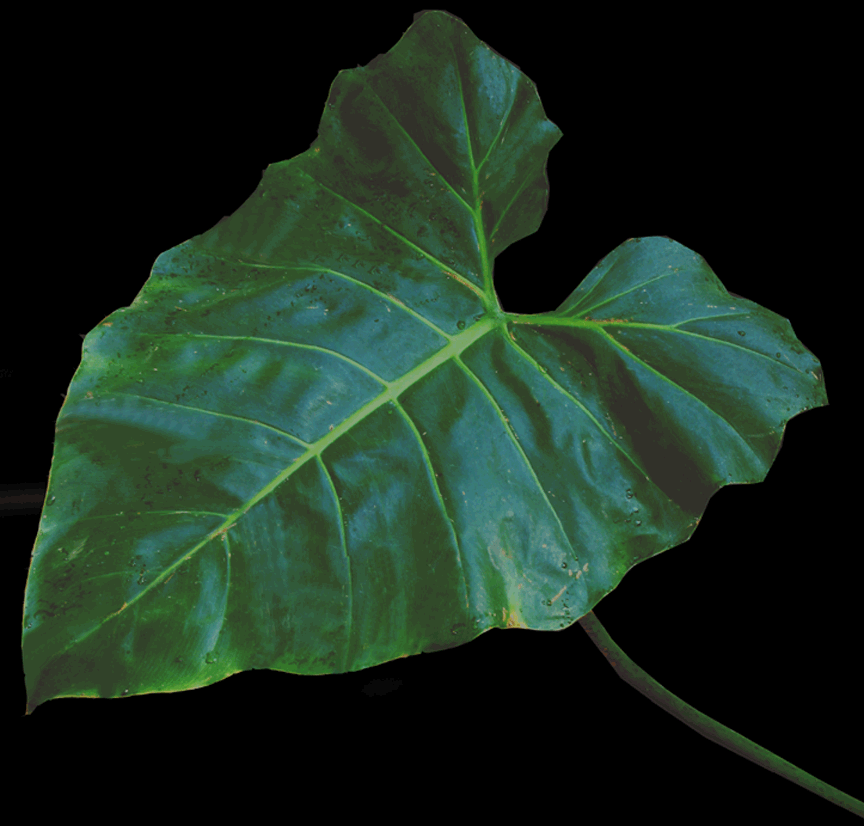
Here are related pages with more detailed plant descriptions and photos that just might be what you are seeking:
I hope you find the one you want!
Join the
International Aroid Society:
http://www.exoticrainforest.com/Join%20IAS.html