Aroids and other genera in the Collection
Take the Tour Now?
Orchids
The
Exotic Rainforest
Plants in
the Exotic Rainforest Collection
Images on this website are copyright protected. Contact us before
attempting to reuse.
Cercestis mirabilis
(N.E. Br.) Bogner

Cercestis mirabilis (N.E. Br.) Bogner
Synonyms:
Cercestis mirabilis is a member
of the larger plant family Araceae and members of this family are commonly known as aroids.
The scientific name Cercestis in common Latin is
pronounced "ser-SES-tes"
while mirabilis is pronounced "mir-AB-ilis".
The
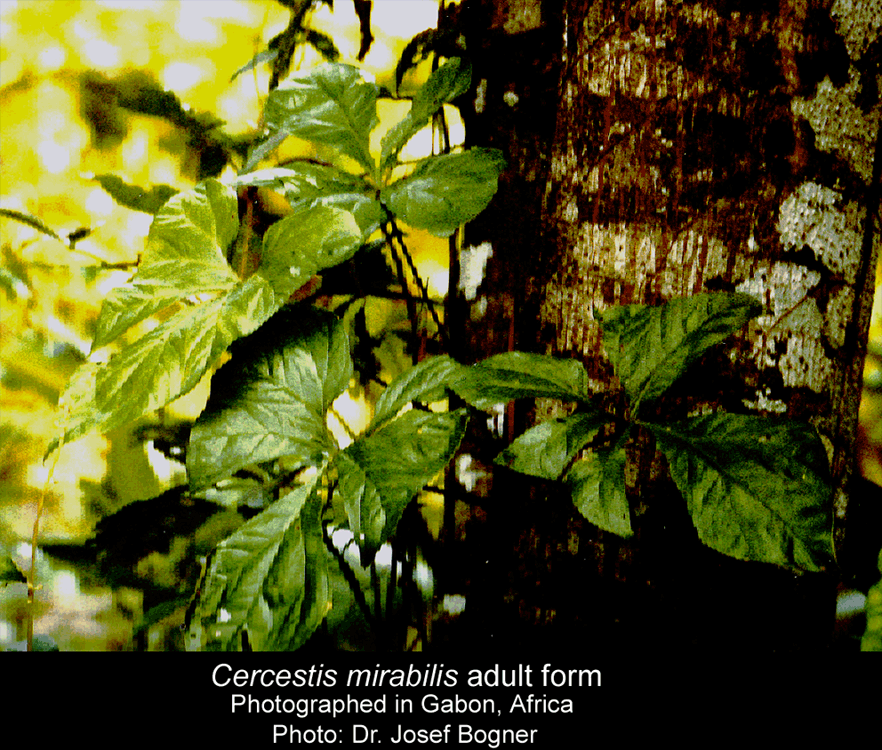
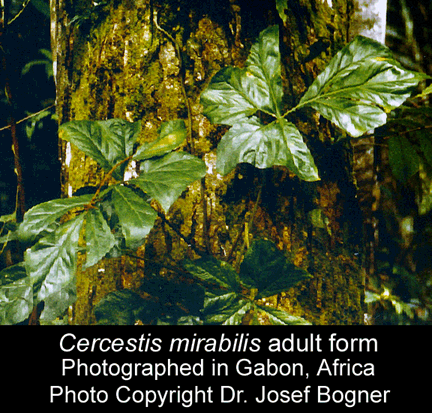
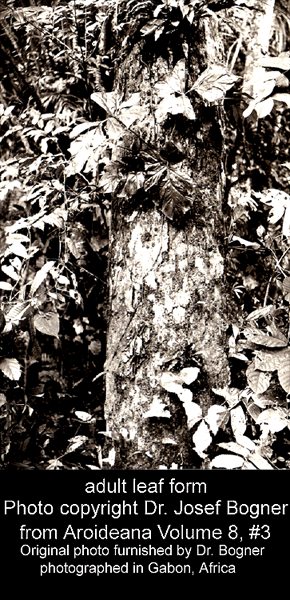
adult leaf blades of the genus Cercestis have holes or
divisions that may be open from the midrib to the leaf
margin (edge) and appear somewhat like some
of the members of the more commonly collected subfamily Monsteroideae (Rhaphidophora,
Epipremnum, etc.) often found in Asia. The
juvenile leaves of both known Rhektophyllum species do not posses
these holes and are both entire and
variable in their forms. The adult blades of Cercestis mirabilis
divide to the midrib and take on rather odd shapes as can be seen in
Josef's photos.
The blades of Rhektophyllum
species range from from ovate (oval) to
cordate-hastate (heart to spear shaped with the basal lobes pointing
outward at right angles). The basal lobes are the two uppermost lobes on
any leaf.
All the known species of the genus Cercestis have ovate
lanceolate (oval and lance shaped)cordate (heart shaped), sagittate
(arrow shaped), hastate (spear shaped) or trilobate (triple lobed) leaf
blades in the adult stages.
It is important to understand there are no adult leaf blades seen on this
page other than those seen in Dr. Bogner's photographs.
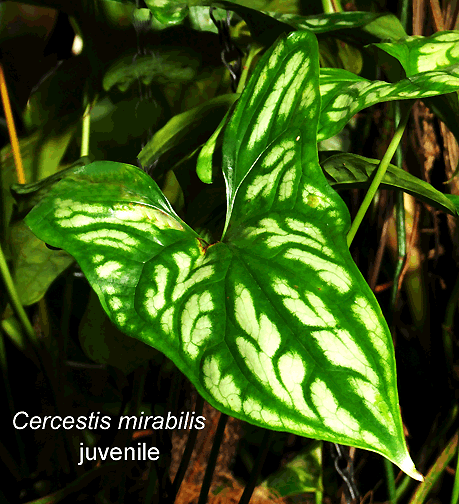
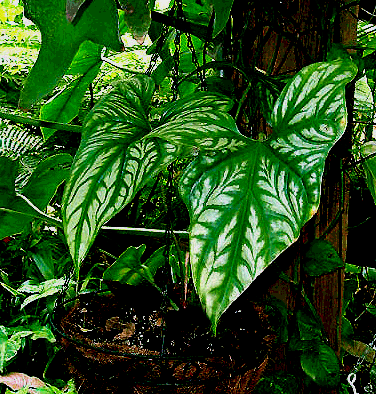
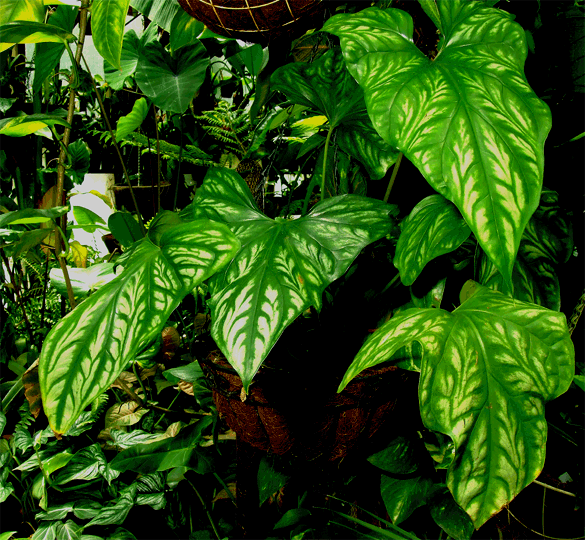
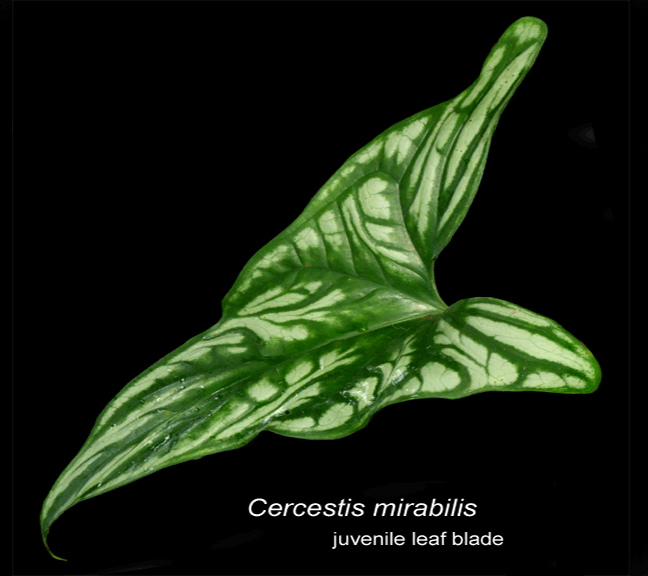
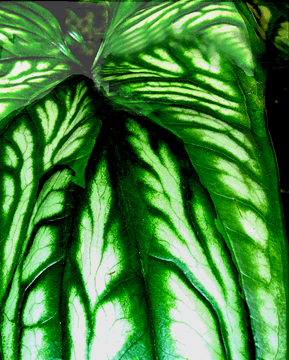
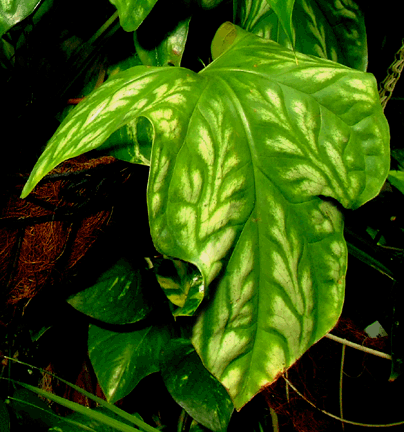
The white areas (maculate) of a juvenile Cercestis mirabilis
are puffed and raised above the darker green areas. The plant
appears to have been placed in an embossing machine and stamped which
is why it sometimes called the African Embossed Aroid. You can both see and feel the raised
areas. Even more amazing
is the juvenile blades of Cercestis mirabilis appear to have another plant
carefully painted on it's leaves since the youngest leaves are both dark
green and variegated with patterns found between the
primary veins resembling a fern's fronds.
Our original specimen was acquired as a trade from Windy Aubrey
in Hawaii.
The African Embossed
Aroid
Nephthytis picturata N.E.Br.,
Rhektophyllum congense De Wild. & T.Durand
Rhektophyllum mirabile N.E.Br.
Cercestis mirabilis can be confused with
Cercestis camerunensis (Ntépé)
Bogner
which occurs from Nigeria to Gabon
 The
species was published to science in 1985 in the International Aroid
Society journal Aroideana, volume 8, #3, pages 73 to 79. Found
in the tropical west African rain forests of Gabon, Uganda, Cameroon,
Equatorial Guinea, Zaire, Benin, Nigeria, and Angola,
Internet sites sometimes claim Cercestis mirabilis is
also found in Kenya but no
scientific evidence to support that claim
can be found.
The
species was published to science in 1985 in the International Aroid
Society journal Aroideana, volume 8, #3, pages 73 to 79. Found
in the tropical west African rain forests of Gabon, Uganda, Cameroon,
Equatorial Guinea, Zaire, Benin, Nigeria, and Angola,
Internet sites sometimes claim Cercestis mirabilis is
also found in Kenya but no
scientific evidence to support that claim
can be found.
Cercestis mirabilis was formerly known scientifically by a variety
of
scientific names including
Nephthytis picturata,
Rhektophyllum congense, and Rhektophyllum mirabile
but all those are now synonyms of the accepted species
name Cercestis mirabilis. A synonym is a previously
published name applied to a species that has already been published and
is correct as to genus placement. In this case the species was
incorrectly placed twice in the wrong genera so the originally published
names became invalid.
Originally
placed in the genus Rhektophyllum that genus is no longer scientifically
applicable to this species.
The genus
Rhektophyllum has been distinguished from the genus Cercestis
since the later has
perforated leaf blades in the adult
 leaf forms. Please be aware
most of the
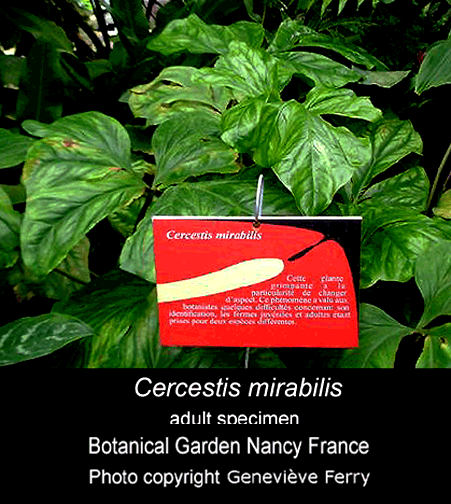
color photos on this page are all of juvenile to sub-adult specimens
with the exception of Dr. Josef Bogner's black and white and color photos which were
taken in Gabon, Africa. Some were originally printed in the International Aroid Society journal Aroideana.
None of the color photos other than Dr. Bogner's show the perforations and or slits since they
don't develop until the plant begins to produce mature blades.
At the bottom of this page you will find a series of photos showing the
progression of the morphogenesis of this species from juvenile to adult.
leaf forms. Please be aware
most of the
color photos on this page are all of juvenile to sub-adult specimens
with the exception of Dr. Josef Bogner's black and white and color photos which were
taken in Gabon, Africa. Some were originally printed in the International Aroid Society journal Aroideana.
None of the color photos other than Dr. Bogner's show the perforations and or slits since they
don't develop until the plant begins to produce mature blades.
At the bottom of this page you will find a series of photos showing the
progression of the morphogenesis of this species from juvenile to adult.
While working on the genera Rhektophyllum
in 1973 German aroid botanist Dr. Josef Bogner found it necessary to move the species from
the genus Rhektophyllum N.E. Br. to the genus
Cercestis Schott.
The change was required due to specific
characteristics of the species which did not fit the originally
published description
of the genus Rhektophyllum.
 The population of the species in the wild is quite dense
in regions where it is common. Cercestis mirabilis is frequently observed creeping up tree
trunks and has been found climbing in the African
rain forest to a height of 7 to 15 meters (20 to 50 feet). The epiphytic
(epi-FIT-ic) tree climbing species has long roots which hang to the
ground from branches high on the host tree. Cercestis mirabilis
also grows
in soil and the wild the species is known as being hemiepiphytic. A
hemiepiphyte (hemi-EPI-fit) is a plant that begins life as a seed
dropped on the soil which proceeds to climb any neighboring tree
The population of the species in the wild is quite dense
in regions where it is common. Cercestis mirabilis is frequently observed creeping up tree
trunks and has been found climbing in the African
rain forest to a height of 7 to 15 meters (20 to 50 feet). The epiphytic
(epi-FIT-ic) tree climbing species has long roots which hang to the
ground from branches high on the host tree. Cercestis mirabilis
also grows
in soil and the wild the species is known as being hemiepiphytic. A
hemiepiphyte (hemi-EPI-fit) is a plant that begins life as a seed
dropped on the soil which proceeds to climb any neighboring tree
 Like almost all aroids
as a specimen matures it morphs into a plant with a totally different
color and shape! The colors begin to slightly turn yellowish and
the attractive pattern fades as the
speciemen
ages. The pattern on the leaves is known as being maculate which
simply means "blemished". Eventually the pattern fades
significantly as the blades become
substantially larger and less attractive.
Like almost all aroids
as a specimen matures it morphs into a plant with a totally different
color and shape! The colors begin to slightly turn yellowish and
the attractive pattern fades as the
speciemen
ages. The pattern on the leaves is known as being maculate which
simply means "blemished". Eventually the pattern fades
significantly as the blades become
substantially larger and less attractive.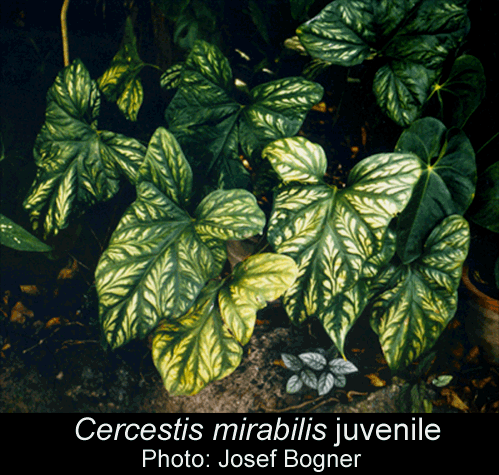 The
leaves of Cercestis mirabilis are glabrous which indicates they
are smooth and lack any hairs or bristles. In young plants or
shoots the leaf blades are not perforated but as the blades enter the
adult growth stage the perforations begin to form.
The
leaves of Cercestis mirabilis are glabrous which indicates they
are smooth and lack any hairs or bristles. In young plants or
shoots the leaf blades are not perforated but as the blades enter the
adult growth stage the perforations begin to form.
In adult plants the leaves are semi-glossy and possess
the slit-like
perforations which
 are located between the primary leaf
veins on each
side of the midrib. Adult leaves
are solely green and possess none of
the variegation collectors have come to expect in this species. Older blades always
split into segments. The adult blades of Cercestis mirabilis are subcoriaceous to coriaceous and
can range in length up to 1.2 meters (47 inches) long by 1 meter (39
inches) wide.
Coriaceous indicates the blades are leather-like while sub-coriaceous
indicates just less than leathery to the touch.
are located between the primary leaf
veins on each
side of the midrib. Adult leaves
are solely green and possess none of
the variegation collectors have come to expect in this species. Older blades always
split into segments. The adult blades of Cercestis mirabilis are subcoriaceous to coriaceous and
can range in length up to 1.2 meters (47 inches) long by 1 meter (39
inches) wide.
Coriaceous indicates the blades are leather-like while sub-coriaceous
indicates just less than leathery to the touch.
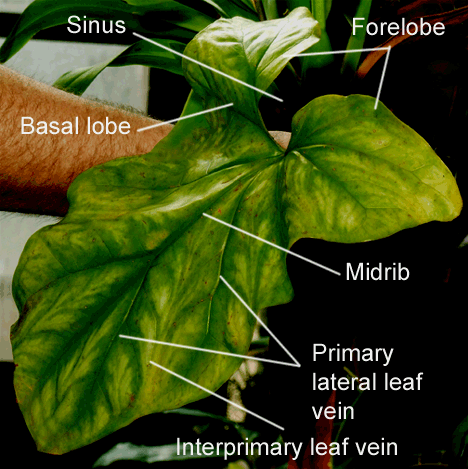
In adult leaves of C. mirabilis the forelobe at the top of the blade is ovate or
oblong-ovate while the basal lobes are broadly rhombic-ovate (oval with
somewhat the shape of a parallelogram) or even somewhat hatchet shaped.
The forelobes may also be obtuse (possessing rounded or blunt tips) with a broad sinus
found between the the two lobes.
Within
aroids and other plant species the veins on a leaf have specific names.
The prominent veins on
Cercestis mirabilis are the midrib, basal
ribs, primary
lateral leaf veins and interprimary or secondary veins. The minor veins
are known as the tertiary veins. (see photo below, right)
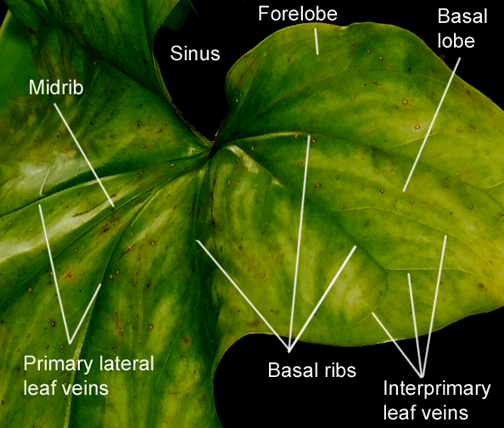 Cercestis mirabilis
possesses 3 to 4 primary
lateral veins on each side of the midrib which is the rigid central
support vein that runs from the top to the bottom of each leaf. The
primaries are relatively rigid. At the top of the blade can be observed
basal veins sometimes called the basal nerve with 2 to 4
branches. The
veins are only slightly sunken on the upper surface (adaxial blade surface) but on the lower surface (abaxial
surface) are
paler in color. The major veins are very distinct as well as
raised on the blade's underside while the secondary (interprimary) veins
are raised but still less distinctive.
Cercestis mirabilis
possesses 3 to 4 primary
lateral veins on each side of the midrib which is the rigid central
support vein that runs from the top to the bottom of each leaf. The
primaries are relatively rigid. At the top of the blade can be observed
basal veins sometimes called the basal nerve with 2 to 4
branches. The
veins are only slightly sunken on the upper surface (adaxial blade surface) but on the lower surface (abaxial
surface) are
paler in color. The major veins are very distinct as well as
raised on the blade's underside while the secondary (interprimary) veins
are raised but still less distinctive.
Despite the tendency of the majority of collectors to call the support
for each leaf blade a "stem" scientifically the stalks that support the
leaves are correctly known as petioles. A petiole connects the
leaf
lamina of any blade to the stem which is at the base of the plant. The
stem is the central axis and support for the plant and supplies water
and nutrients to all parts of the plant as it is collected by the
roots.
A major purpose of the stem is to store water during periods of dry
weather. The stem is not the primary support for any leaf.
Please read this link for a more detailed
explanation.
The
petioles of Cercestis mirabilis may grow to as long as .23 meters
(.75 feet) to up to
1.37 meters
(4.5 feet) long in an
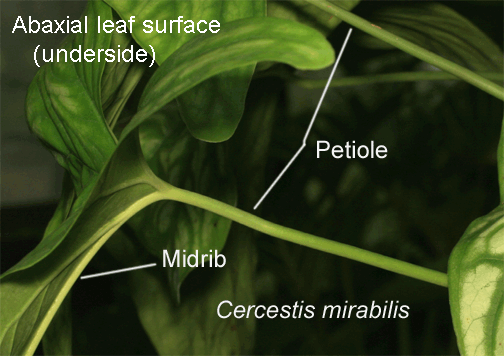 adult plant. The petioles are terete (round) and are
grooved at the base when the plant is in the adult stage.
adult plant. The petioles are terete (round) and are
grooved at the base when the plant is in the adult stage.
Along the stem can be found internodes which are the segments
found between two nodes. The petioles which support the leaf blades as
well as the roots grow from these nodes. In the case of Cercestis
mirabilis the internodes are short leaving the nodes closely spaced
together. The stem of a fully adult plant may grow to 2.54 cm (one inch) in
thickness while producing very adhesive roots from the nodes. The
roots clasp
any supporting tree. The nodes are typically well rooted.The stem may produce leafless
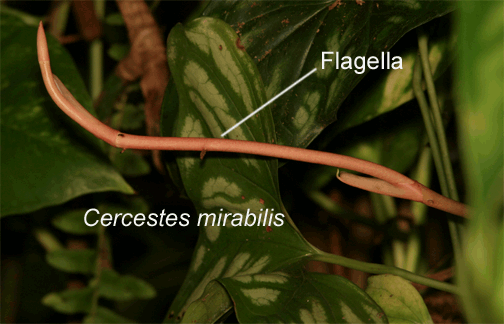
runners in order for the plant to reproduce asexually. Although most collectors
will be tempted to call the
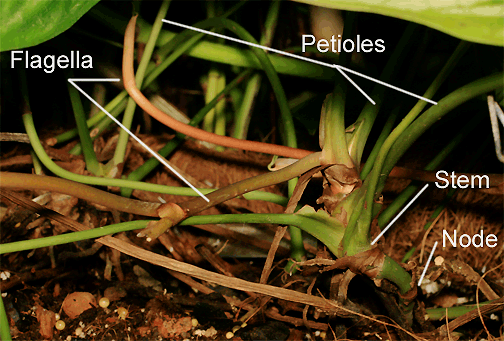 runners "stolons" they are correctly known
to science as flagellas. The flagellas can grow quite long and
periodically produce new juvenile plants as they come in contact with soil. If you cut the small plants from the flagella too
soon they will not survive. They must begin to develop their own root
system before being removed. Several of our small
plants have found the soil on their own and are now beginning to develop as new
specimens capable of surviving on their own.
runners "stolons" they are correctly known
to science as flagellas. The flagellas can grow quite long and
periodically produce new juvenile plants as they come in contact with soil. If you cut the small plants from the flagella too
soon they will not survive. They must begin to develop their own root
system before being removed. Several of our small
plants have found the soil on their own and are now beginning to develop as new
specimens capable of surviving on their own.
Cercestis species are members of the larger plant family Araceae
(uh-RAY-see ee) commonly known as aroids. An aroid is characterized by
the growth of an inflorescence which is the sexual reproductive organ of
the plant. We regret we have never observed the inflorescence of
this species and know of no source for a photograph.
The major parts of an inflorescence are the spathe and
spadix. If you have ever seen a "Peace lily" you've seen an inflorescence.
That species which is a member of the aroid genus Spathiphyllum
produces inflorescences on a regular
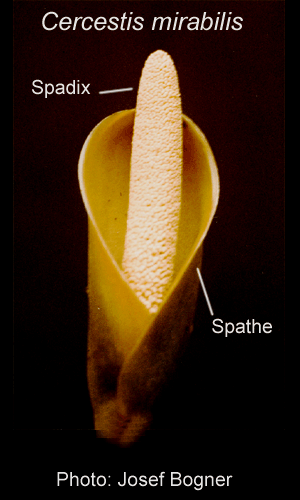 basis but despite everyone calling
the spathes "flowers" they aren't flowers at all. Instead a spathe is
more like a "flower holder".
When an aroid is referred to as "flowering" the reference is to the very
small flowers which are produced along the spadix and has nothing to do
with the spathe itself. Despite the spathe being called a "flower" on
many websites it is not a flower. The only connection between the spathe
and
the flowers on the spadix is both spathe and true flowers are produced when the plant is
sexually active. The spathe is simply a modified leaf which forms in
the shape of a hood. The spadix is located at the center of the spathe
and is a spike on a thickened fleshy axis.
basis but despite everyone calling
the spathes "flowers" they aren't flowers at all. Instead a spathe is
more like a "flower holder".
When an aroid is referred to as "flowering" the reference is to the very
small flowers which are produced along the spadix and has nothing to do
with the spathe itself. Despite the spathe being called a "flower" on
many websites it is not a flower. The only connection between the spathe
and
the flowers on the spadix is both spathe and true flowers are produced when the plant is
sexually active. The spathe is simply a modified leaf which forms in
the shape of a hood. The spadix is located at the center of the spathe
and is a spike on a thickened fleshy axis.
Flowers contain near
microscopic sexual parts including anthers, stamens, and stigmas during
the reproductive process and a spathe contains none of these sexual
characteristics. The inflorescence contains the tiny reproductive organs
of the plant and once the inflorescence enters sexual anthesis the
spadix produces tiny flowers which can be observed with a good
magnifying glass. Those flowers include male, sterile male and female
flowers. Once an insect collects the pollen produced by the male flowers
from another plant of the same species and brings it to a second plant
the female flowers may be pollinated.
The inflorescence of
Cercestis mirabilis grows from the stem on a
stalk-like support known as the peduncles. There are often two to four
inflorescences produced together when the plant is preparing
for sexual
reproduction during sexual
anthesis. The spathe is normally just over 10
cm (4 inches) long and is green to pale yellow in color. The spadix is
stout as well as shorter than the spathe. The spadix grows between
2.55 and 5 cm (1 to 2 inches) long and grows to 1.25 cm
 (.5 inches) in thickness. The male portion of spadix
where the male flowers grow is a creamy yellow while the female portions are pinkish. Once the inflorescence is pollinated by an appropriate insect the
berries produced will be pink-red to red in color and contain the seeds
of the species. You can read about pollination in aroid species here.
(.5 inches) in thickness. The male portion of spadix
where the male flowers grow is a creamy yellow while the female portions are pinkish. Once the inflorescence is pollinated by an appropriate insect the
berries produced will be pink-red to red in color and contain the seeds
of the species. You can read about pollination in aroid species here.
Natural pollination in aroid species.
Botanists have theorized the method used by C. mirabilis' to fool animals
that might otherwise eat it for
lunch is to make them believe they are
about to eat something distasteful. That "painted" plant resembles a
fern and ferns are frequently left uneaten. The scientific theory is the
plant protects itself by mimicking a plant that is less appealing to
grazing animals.
 We give the plant subdued light with approximately 60% shade along with frequent
watering and high
humidity maintained above 85%
at all times.
During the summer we keep it damp but in the winter allow it to slightly dry.
We have plant in a mixture of
good potting soil, peat, Perlite, orchid bark. finely sliced sphagnum
moss and cedar mulch with a good helping of
crushed volcanic rock. This mixture drains quickly while holding
enough moisture in the soil. The mix we use is based on the
mixture used by many of the world's top botanical gardens.
We give the plant subdued light with approximately 60% shade along with frequent
watering and high
humidity maintained above 85%
at all times.
During the summer we keep it damp but in the winter allow it to slightly dry.
We have plant in a mixture of
good potting soil, peat, Perlite, orchid bark. finely sliced sphagnum
moss and cedar mulch with a good helping of
crushed volcanic rock. This mixture drains quickly while holding
enough moisture in the soil. The mix we use is based on the
mixture used by many of the world's top botanical gardens.
Cercestis mirabilis is a slow grower and
the species is widely variable.
The natural variation within Cercestis mirabilis can be observed by
reviewing all the photos on this page but is even more apparent when a
fully adult blade is available. Variation within aroid species is very
common and this link provides a non-technical explanation of both variation
and morphogenesis (ontogeny) within aroid and other plant species.
Natural variation
Aroid Pollination!
As it occurs in nature and by any horticulturist
Join the International Aroid Society:
http://www.exoticrainforest.com/Join%20IAS.html
All Photographs not otherwise credited
© 2007, 2008, 2009 Steve Lucas, The Exotic Rainforest