
Aroids and other genera in the Collection
Take the Tour Now?
Orchids
The
Exotic Rainforest
Plants in
the Exotic Rainforest Collection
The images on this website are copyright protected. Please contact us before any reuse.
In depth information on
how to grow Philodendron
species, Click this Link
Within our collection we have many species of Philodendron. If you are seeking other photos, click this link:
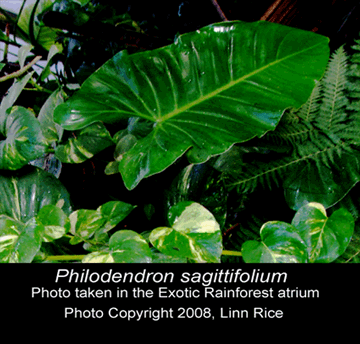
Philodendron sagittifolium
Liebm.
Synonyms:
Philodendron tanyphyllum,
Philodendron
sanguineum,
Philodendron
lancigerum, Philodendron tuxtlanum,
Philodendron daemonum,
Philodendron ghiesbrechtii
This page is the photographic
documentation of the development of a spathe and spadix of
Philodendron sagittifolium during anthesis (reproduction).
All photographs were
taken in June, 2008.
It is important you read the link just below before
reading the information on this page. If you do not have a basic
 understanding
of the pollination
of aroid species you will not be able to adequately comprehend all of the information
in this article. If you have already read this link, please
continue.
understanding
of the pollination
of aroid species you will not be able to adequately comprehend all of the information
in this article. If you have already read this link, please
continue.
READ THIS LINK FIRST
The leaves of
Philodendron sagittifolium can grow quite large and the inflorescences
stand erect.
The plant is capable of producing one or more inflorescences per axil.
I have previously described the "axil" as a plant
 structure but the
correct explanation of the term "axil" comes from Dr. Tom Croat, "The
“axil” is not really a plant structure but quite simply the axis of the
stem and petiole. Inflorescences emerge from a bud in the axis of the
petiole."
structure but the
correct explanation of the term "axil" comes from Dr. Tom Croat, "The
“axil” is not really a plant structure but quite simply the axis of the
stem and petiole. Inflorescences emerge from a bud in the axis of the
petiole."
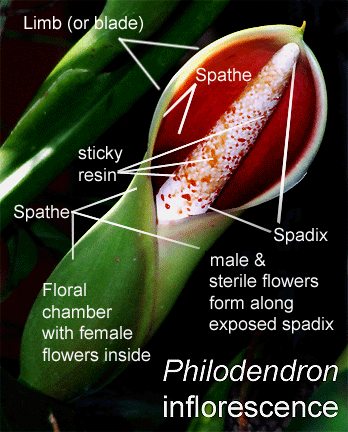
We have physically observed up to 5 inflorescences at the same time on our specimen. However, the color and shape of the spathe may be variable and may not match the photos on this page exactly. A spathe is not a flower, but instead is simply a modified leaf used for reproduction. The flowers, both male and female, develop on the spadix at the center of the inflorescence. Reproduction is explained by Julius Boos in the above link.
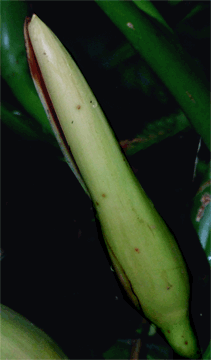
The peduncle, which is the plant structure that supports the spathe, normally measures 4 to 5cm long (1.5 to 2 inches). The spathe is somewhat flattened and green, but is often tinged with red on the inside. The spathe usually measures 8 to 22cm (3.4 to 8.6 inches) in length. The spathe below is on the larger end of that scale. But since the spathe can be somewhat variable the interior is sometimes not the color shown. We have observed the spathe to be narrow at the center but that does not always occur as can be seen in the photo on the main page of this website for this species. We have observed small spathes that are almost totally tubular.
 Philodendron sagittifolium can produce an inflorescence almost any
time of the year, but normally after the beginning of
the dry season and
continuing throughout most of the rainy season. We typically see the
spathe and spadix in our
artificial rain forest in May and June of each year. In
nature, there is a slight shift based on geography when the "flowering"
begins about one month earlier in Mexico and Guatemala (late winter)
but less frequently in September and October. Inflorescence production
continues longer in Panama and is seen in February through September and
has rarely been observed in December. Once pollinated, the fruits take approximately two
months to mature. However, in our atrium, we do not have any natural
pollinators (beetles) present to service this species so we have never observed
the development of fruit.
Philodendron sagittifolium can produce an inflorescence almost any
time of the year, but normally after the beginning of
the dry season and
continuing throughout most of the rainy season. We typically see the
spathe and spadix in our
artificial rain forest in May and June of each year. In
nature, there is a slight shift based on geography when the "flowering"
begins about one month earlier in Mexico and Guatemala (late winter)
but less frequently in September and October. Inflorescence production
continues longer in Panama and is seen in February through September and
has rarely been observed in December. Once pollinated, the fruits take approximately two
months to mature. However, in our atrium, we do not have any natural
pollinators (beetles) present to service this species so we have never observed
the development of fruit.
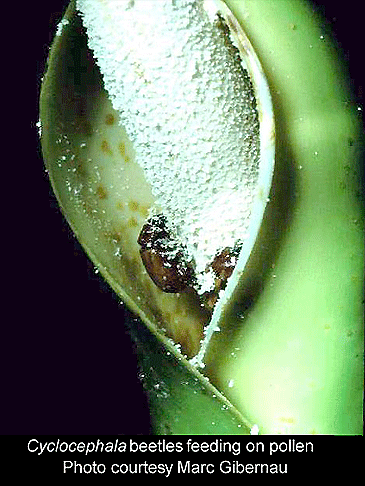
Pollination in nature is done by a species of Scarab beetle. The beetles remain inside the spathe only long enough to pollinate the female flowers, eat some of the pollen, find shelter from the cool rain forest night, and breed.
French researcher Dr. Marc Gibernau from the University Paul Sabatier in Toulouse, France has studied aroid pollination since 1998. Marc added this explanation, "one reason for the beetles to leave the inflorescence which is a great place to stay is that the spathes close and force the beetles up along the spadix. Once above the male zone they will eat some of the pollen. If they don't go up they can finish by crashing the spathe against the spadix, I observed it once in French Guiana. So the plants "decide" when the pollinators arrive and depart." The Cyclocephala beetles in Marc's photo can be seen near the bottom of a Philodendron spadix as they eat the pollen.
 In both early May and in early June of 2008 we had groups of spathes
develop on each of two axils. The photos here of a single specimen developed on our Philodendron
sagittifolium in June and then entered anthesis. This time I
was determined to track that inflorescence photographically and as a
result stayed up almost continually for some 36 hours plus. This
is the photographic record of the opening and closing of that spathe
over a 2 day period. Some of the information is simply my personal
observations but other material (which is credited )was provided by
aroid botanist Dr. Tom Croat of Missouri Botanical Garden who is
America's top aroid botanist. Additional material was
taken from his published journals. A great deal of the information
and explanation was provided by aroid expert Julius Boos with input by
Marc Gibernau and Leland Miyano.
In both early May and in early June of 2008 we had groups of spathes
develop on each of two axils. The photos here of a single specimen developed on our Philodendron
sagittifolium in June and then entered anthesis. This time I
was determined to track that inflorescence photographically and as a
result stayed up almost continually for some 36 hours plus. This
is the photographic record of the opening and closing of that spathe
over a 2 day period. Some of the information is simply my personal
observations but other material (which is credited )was provided by
aroid botanist Dr. Tom Croat of Missouri Botanical Garden who is
America's top aroid botanist. Additional material was
taken from his published journals. A great deal of the information
and explanation was provided by aroid expert Julius Boos with input by
Marc Gibernau and Leland Miyano.
A note of explanation:
 Day one
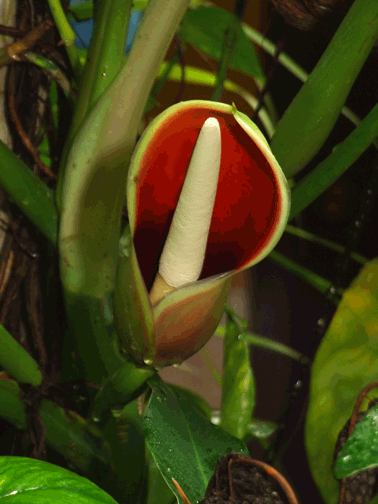
The spathe of Philodendron sagittifolium was first noticed in the early morning hours and was not fully open. The event began well before we made the first observation. There is a second spathe directly behind this one, another to the left, and two above. All will eventually opened in progression and all are on the same axil a total of 5. The spathe measures 21cm (8.25 inches). This photo were taken in the late afternoon on day one of the event.
Approximately 9:00PM
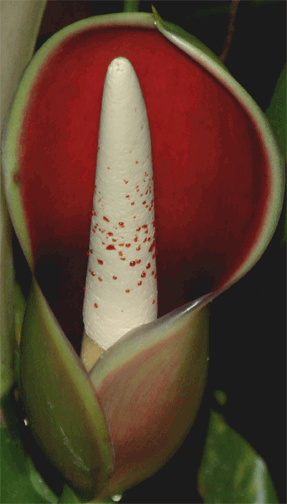 There
is a slight smell of mint to the pheromone produced by the spadix.
The pheromone is a fragrance used by insect pollinators as a "guide"
to find the spathe in the darkness of the rain forest. If you are unfamiliar
with the pollination in aroids
READ THIS LINK before continuing.
Otherwise, you will not understand the progress of these
photographs. The red dots were not there this afternoon, but
are clearly visible now. Dr. Croat explains below.
There
is a slight smell of mint to the pheromone produced by the spadix.
The pheromone is a fragrance used by insect pollinators as a "guide"
to find the spathe in the darkness of the rain forest. If you are unfamiliar
with the pollination in aroids
READ THIS LINK before continuing.
Otherwise, you will not understand the progress of these
photographs. The red dots were not there this afternoon, but
are clearly visible now. Dr. Croat explains below.
French aroid pollination researcher
Marc Gibernau provided these additional comments: "I
found it surprising the resin is produced a few hours after the
spathe
opening (you wrote 9 PM) it is supposed to be about 24 hours later.
As you
can't have miss the opening of the spathe on the night before, I
suspect
that the cycle is a bit accelerated in this species or under
cultivation
conditions. So apparently no pollen is shed by your
Philodendron."
Midnight
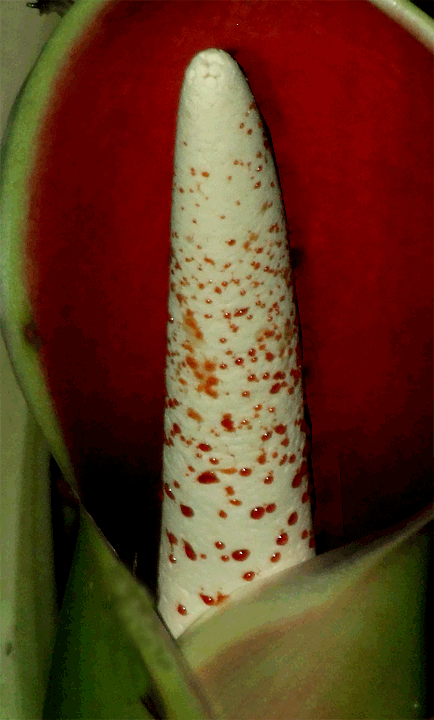 Aroid
botanist Dr. Tom Croat explains the red dots which is a naturally
produced resin:
"The resin gets on the beetles and makes them sticky so that when
they leave they can carry away the pollen which otherwise won’t
stick to their bodies."
Aroid
botanist Dr. Tom Croat explains the red dots which is a naturally
produced resin:
"The resin gets on the beetles and makes them sticky so that when
they leave they can carry away the pollen which otherwise won’t
stick to their bodies."
Aroid expert Julius Boos added these notes:
"Once
more I tout Deni Bown`s fantastic book which we all should own and
read!---Aroids, Plants of the Arum Family. She fully
explains the purpose of this resin which is produced on the spadix,
and seems unique to the genus Philodendron. She report on this
resin on pg. 215, and goes on lower down on the page to discuss the
nectaries which occur on many aroids on the surface of the spathe,
or on the peduncles, bases of some species leaves, etc. and, as Dr.
Croat explained, act as ant attractants when they produce a sweet
liquid. I have observed this on Urospatha, as in Florida we have a
very small red ant which is slow and almost invisible, but which
stings like hell, and can really spoil your day. They used to love
this nectar produced by these very special glands on my Urospathas,
and I have been stung by them many times when I did not take note of
their presence on a bloom!
Thanks for your indulgence.
Day two
1:30AM
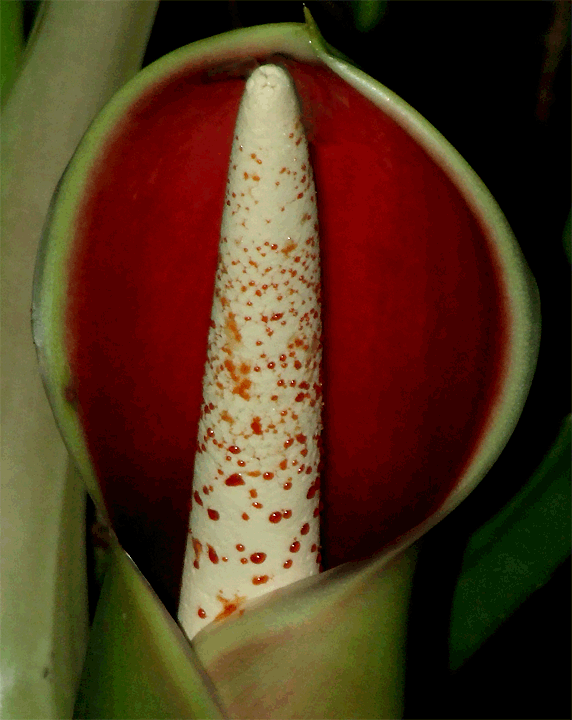 No
significant change but an added note on pollen production which I
had been asked to attempt to observe and photograph. Normally
during the evening the plant in a wild setting would produce copious
amounts of pollen which would "string" downward. The exact
timing of that pollen production depends of several factors.
Each evening I did my best to check the photographs for any sign of
pollen but never was able to observe any. Julius Boos provides
a possible reason,
"Let`s keep
in mind that some Philodendrons will not or do not produce pollen in
cultivation The famous Philodendron spiritus sancti being one
of those species. My opinion on a ''why'' is that conditions in
the green house are just not right. At least not to the plants
that need to enable it to produce the usually very obvious and
copious amounts of pollen seen in other Philodendron which seem to
''like'' their growing conditions. Recently I saw many
Philodendron xanadu blooming in beds at a large commercial property,
blooms were at many stages, some fully open (the tops of the
spathes, that is). Others produced pollen like crazy, and
still some were closed with only the tip of the spadix visible and
the spathe closed tightly around it. Ron Weeks reported that his
plants (possibly in a greenhouse) bloomed, but never opened
''correctly'' or produced any pollen."
No
significant change but an added note on pollen production which I
had been asked to attempt to observe and photograph. Normally
during the evening the plant in a wild setting would produce copious
amounts of pollen which would "string" downward. The exact
timing of that pollen production depends of several factors.
Each evening I did my best to check the photographs for any sign of
pollen but never was able to observe any. Julius Boos provides
a possible reason,
"Let`s keep
in mind that some Philodendrons will not or do not produce pollen in
cultivation The famous Philodendron spiritus sancti being one
of those species. My opinion on a ''why'' is that conditions in
the green house are just not right. At least not to the plants
that need to enable it to produce the usually very obvious and
copious amounts of pollen seen in other Philodendron which seem to
''like'' their growing conditions. Recently I saw many
Philodendron xanadu blooming in beds at a large commercial property,
blooms were at many stages, some fully open (the tops of the
spathes, that is). Others produced pollen like crazy, and
still some were closed with only the tip of the spadix visible and
the spathe closed tightly around it. Ron Weeks reported that his
plants (possibly in a greenhouse) bloomed, but never opened
''correctly'' or produced any pollen."
Although we do
everything possible in the Exotic Rainforest atrium to provide "rain
forest" conditions including high humidity, multiple overhead
watering twice daily, and as perfect slightly filtered light as is
possible, it appears the plant still knows it is not in its natural
conditions.
6:30AM
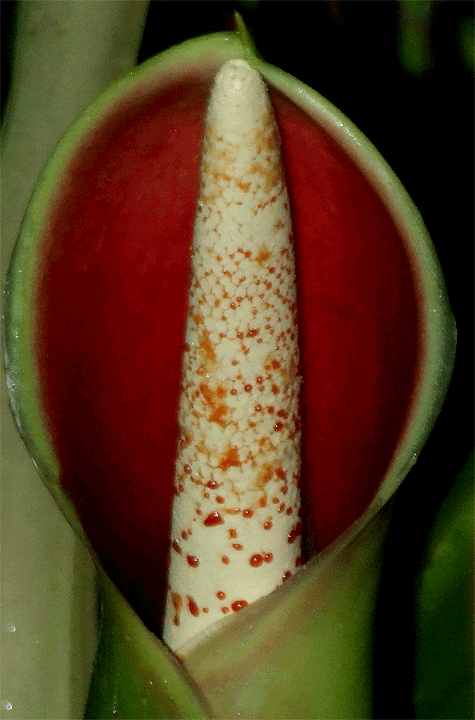 The
pheromone is not apparent early in the morning and no heat from
thermogenesis can be detected. For an explanation of
thermogenesis and the heat it produces, read the link provided above.
The
pheromone is not apparent early in the morning and no heat from
thermogenesis can be detected. For an explanation of
thermogenesis and the heat it produces, read the link provided above.
.
11:50AM
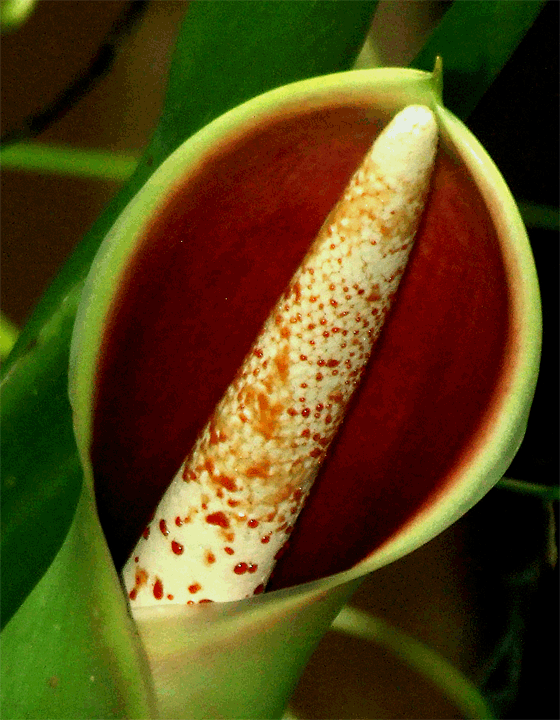 The
spathe has rotated close to 20 degrees to the left. Although no
female flowers have ever been present in any photograph, they are
there! The explanation as to why we cannot see them is found later
on this page. It is not strongly evident but the pheromone has
begun to return as has the heat of thermogenesis The scent has
changed somewhat and the mint smell is no longer apparent. All that is
now noticed is a musky smell. Both my wife and oldest daughter
could easily detect both the heat and the pheromone. To detect
the heat all that was necessary was to hold a flattened palm in
front of the spathe without touching any part of the inflorescence.
The
spathe has rotated close to 20 degrees to the left. Although no
female flowers have ever been present in any photograph, they are
there! The explanation as to why we cannot see them is found later
on this page. It is not strongly evident but the pheromone has
begun to return as has the heat of thermogenesis The scent has
changed somewhat and the mint smell is no longer apparent. All that is
now noticed is a musky smell. Both my wife and oldest daughter
could easily detect both the heat and the pheromone. To detect
the heat all that was necessary was to hold a flattened palm in
front of the spathe without touching any part of the inflorescence.
French aroid pollination researcher and expert
Marc Gibernau has stated the spathe and spadix lie at an angle of
approximately 45 degrees to the vertical for a purpose. The
angle is more effective for the heat of thermogenesis to be
dissipated along with the spadices' pheromones into the air of the
rain forest night. Notice what occurs in the next
photograph.
6:30PM
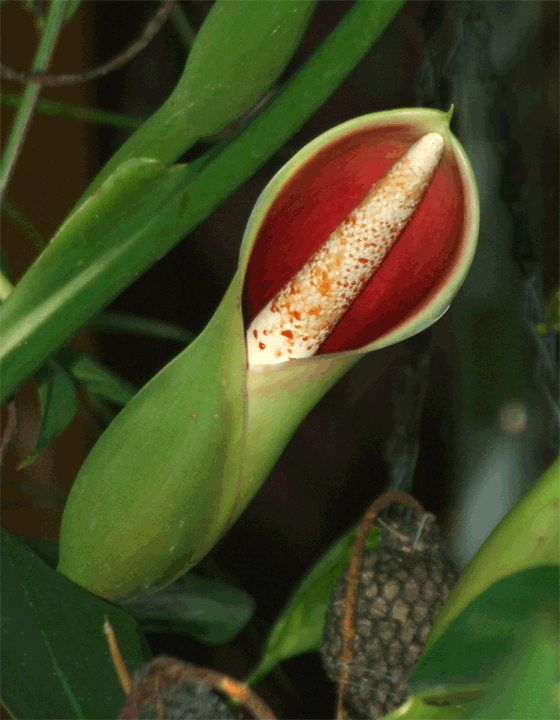 The
spathe has now rotated to a 45 degree angle on the axil in
to increase the effects of thermogenesis. It also
appears to be slightly closing. I have read in some material the
spathe actually closes around the beetles and they do the work of
pollination inside the closed tube. However, Julius offers a better
explanation below.
The pheromone is now
only slight and no heat from thermogenesis can be felt on the hand.
The scent is of a slight musk combined with a small amount of mint.
Again, no female flowers can be observed but the explanation
follows.
The
spathe has now rotated to a 45 degree angle on the axil in
to increase the effects of thermogenesis. It also
appears to be slightly closing. I have read in some material the
spathe actually closes around the beetles and they do the work of
pollination inside the closed tube. However, Julius offers a better
explanation below.
The pheromone is now
only slight and no heat from thermogenesis can be felt on the hand.
The scent is of a slight musk combined with a small amount of mint.
Again, no female flowers can be observed but the explanation
follows.
From Dr. Tom Croat,
"the receptivity of the female flowers is short once the spathe
is open. They are protogynous, of course, like most Araceae but
also promptly timed to be receptive only at anthesis on the first
night of flowering. This prevents self pollination."
In botany protogynous
relates to a flower in which the stigma is receptive prior to the
pollen being shed from the anthers of the same flower.
And from Julius Boos:
The
blooming/anthesis cycle of this species lasts 2 days. The lower
portion (the tube) of the spathe never opens in this species,
probably in the entire genus. I do not believe that this
spathe could trap the Scarab beetle pollinators even if it wanted to
as they are strong animals. I once collected about a dozen of them
from a bloom in the jungle of E. Ecuador, and was unable to ''hold
on'' to them for long as they would burrow (painfully, I may add!)
between my fingers and out of my tightly closed fist.
You could take notes and observe if the constriction around the
spadix opens, then closes and then opens again when the next bloom
goes through its cycle, measurements taken at the ''waist'' and
visual observations would tell you if this is happening. Read
pg. 59 of Deni`s book. Her details esplain a lot about this event there.
I do not believe the beetles need to be 'trapped' by this closing,
they could and would escape at any time if they wanted to, but why
would they?? Warmth, food (they will eat the sterile flowers as a
snack) and lots of partners and sex in a secure ''room'' are being
provided, so why would they even
 want to leave? Perhaps the closing
of the spathe at the constriction may retain the heat in the lower
portion of the spathe tube for the beetles. When the warmth stops
at the end of the cycle, and the food is used up, they just crawl
out picking up pollen on their now resin-covered legs and
bodies and fly off to the next available ''ready'' bloom.
want to leave? Perhaps the closing
of the spathe at the constriction may retain the heat in the lower
portion of the spathe tube for the beetles. When the warmth stops
at the end of the cycle, and the food is used up, they just crawl
out picking up pollen on their now resin-covered legs and
bodies and fly off to the next available ''ready'' bloom.
By the way, I believe that some sting less bees collect this resin
and use it in the construction of their combs/cells and in
waterproofing of their nests.
Native Indians in
South America collect it from their nests and use it to make their
blow guns both air and watertight."
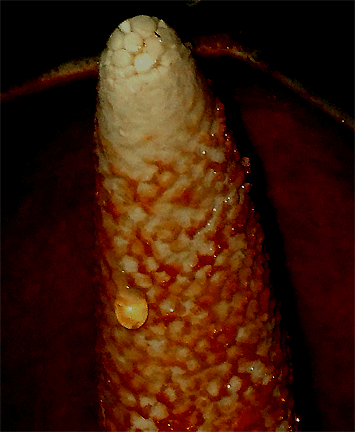
This is a totally different spadix photographed more than one week later. "Pollen" appears to be seen beginning to develop near the apex (top). Please read our note below regarding the consistency of this "pollen".
The spathe has been sliced away in the photo (right) to allow exposure of the interior.
As you are
 about to see and read the spathe will soon close around the
spadix blocking all view of the interior. The photo to the right was taken at
approximately 6:30PM on the second day of the event. Dr. Croat commented,
"When
the pollen emerges usually there is no doubt. It comes out like toothpaste from
a tube that has been stepped on but in slender threads."
It appears the spathe is just beginning to
develop "pollen" but we were never certain it was pollen we were seeing.
The "pollen" appears to be dampened. In a personal meeting in his office in late June
Dr. Croat indicated
the "pollen" in my photographs appeared to be old but the photos were taken just after the spathe
opened and as the pollen at least "appeared" to be produced. I have no
explanation other than humidity and moisture for the effect seen in the
photograph but am not totally convinced I was ever photographing pollen.
about to see and read the spathe will soon close around the
spadix blocking all view of the interior. The photo to the right was taken at
approximately 6:30PM on the second day of the event. Dr. Croat commented,
"When
the pollen emerges usually there is no doubt. It comes out like toothpaste from
a tube that has been stepped on but in slender threads."
It appears the spathe is just beginning to
develop "pollen" but we were never certain it was pollen we were seeing.
The "pollen" appears to be dampened. In a personal meeting in his office in late June
Dr. Croat indicated
the "pollen" in my photographs appeared to be old but the photos were taken just after the spathe
opened and as the pollen at least "appeared" to be produced. I have no
explanation other than humidity and moisture for the effect seen in the
photograph but am not totally convinced I was ever photographing pollen.
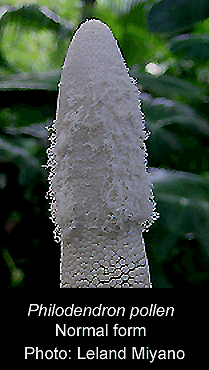
If this is "pollen", the consistency on the spadix at
right may
have been altered as a result of the perpetual high humidity and twice daily
overhead misting in our atrium. Our atrium is often watered twice
each day to simulate a natural rain forest. Normal Philodendron
pollen (photo left) is much "fluffier" and not as compacted as is seen in this and
other
photographs below. We are attempting to verify if the pollen for this
species should normally be this compressed and "thick". Julius
comments, "I
don`t see the typical pollen 'threads' which are rope like on other Philodendron
sps. Aside from the watering, which may have washed the pollen threads
away or at least diluted or thinned them, I do see what looks like a paste-like
substance where pollen should be seen."
 2:00AM
following morning, all within a 48 hour period
2:00AM
following morning, all within a 48 hour period
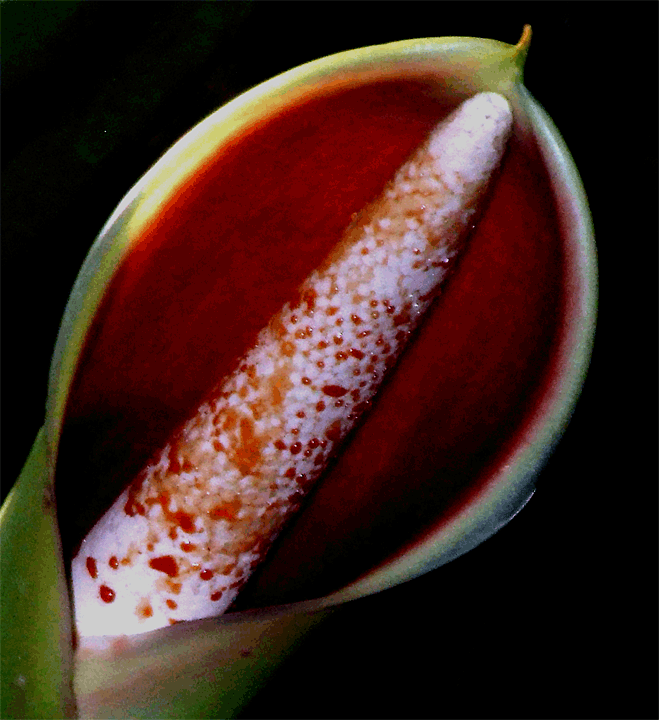
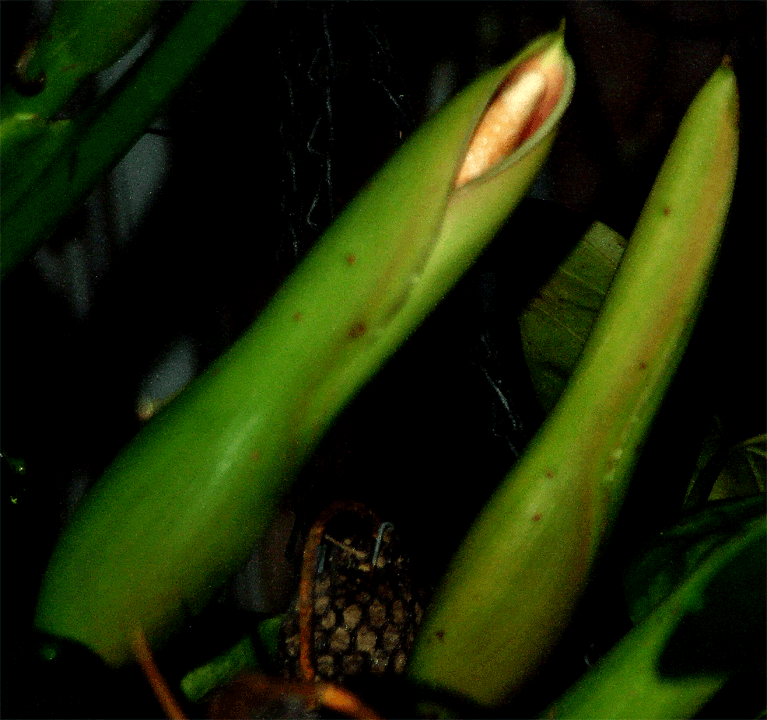
By 2:00AM the following morning the event is almost
complete. The spathe is again almost closed hiding all the
activity going on inside the now almost sealed spathe and spadix.
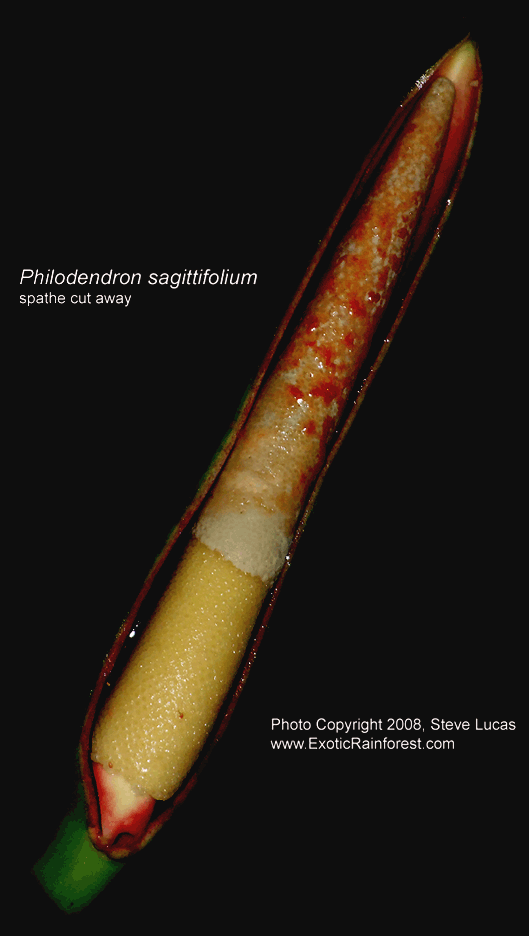
The photograph of the "pollel" is of a second spadix with the spathe cut away, not the one in the original photographs seen on this page. The spathe lamina began to wrap so tightly around the spadix the outer layers had to be cut away to reveal the interior. The event could not have been observed or photographed without the removal of the shielding spathe lamina which was blocking the event inside the spathe from view.
So now we know "where" the male flowers were all along, but where were the female flowers?
So where are the female flowers?
This is
Julius Boos' excellent explanation of what I could not originally see.
Read this carefully. It explains a great deal of what I was missing!
I've added the photo of the spathe cut away so you can examine it as you
read. This second photo has been purposely left enlarged.
The first shows the zone of female flowers which is hidden beneath a
portion of the lower spathe.
"Steve`s excellent photo is of a typical bisexual aroid spadix, in
this case the species is Philodendron sagittifolium.
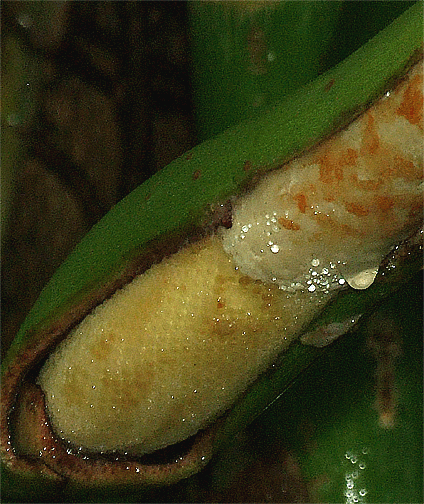 The lower yellowish section is the zone of female flowers, they were
hidden within the globular lower portion or chamber tube of the spathe,
and would have been seen to be wet and ''sticky'' earlier on when female
anthesis was in progress. They will dry and turn brown shortly. It is
not really visible, but just above this female zone is a shorter zone of
sterile male flowers, they are thought to be the source of the scent
production. This shorter zone is the point at which the spathe is
constricted and so closely ''embraces'' the spadix.
The lower yellowish section is the zone of female flowers, they were
hidden within the globular lower portion or chamber tube of the spathe,
and would have been seen to be wet and ''sticky'' earlier on when female
anthesis was in progress. They will dry and turn brown shortly. It is
not really visible, but just above this female zone is a shorter zone of
sterile male flowers, they are thought to be the source of the scent
production. This shorter zone is the point at which the spathe is
constricted and so closely ''embraces'' the spadix.
Above this is the
resin covered and stained male section of flowers extending upwards to
the tip of the spadix. In this case the spadix is said to be fertile to
the tip, but in some Philodendrons and in some other bisexual aroids
there is a sterile area of male flowers near the tip (or apex) also thought to be
involved in scent production. At male anthesis the fertile portion would
be seen to be covered in pollen extruded by the male flowers, this
pollen under natural conditions in the jungle would adhere to the
emerging beetles glued to their shiny surfaces by the resin seen as a
reddish stain on this portion of the spadix.
I hope that this is of help in understanding the pollination mechanism
of some aroids.
Thanks for sharing with all of us, Steve. Good Growing,"
Marc Gibernau added,
"The sterile zone just above the female zone is constituted of sterile flowers rich in lipids which are normally eaten by the beetles. I don't think that they produce any scent (but I'm not 100% sure). I would more suspect the male flowers produced the odor. If you have more inflos coming up you can verify this point by wrapping plastic bags around the 2 zones and smell them after a while, but don't wait too long because during the heating period they will fill with water because of the exaggerated evaporation."
My sincere thanks to Dr. Croat, Julius Boos, Marc Gibernau, and Leland Miyano. This message came from Dr. Croat after briefly reviewing this page: "I read your piece on the flowering behavior of Philodendron sagittifolium and can find no fault with it."
If you failed to read the link below much
of the information found on this page will be of little value!
Pollination of aroids as it occurs
in nature.
Want to learn more
about aroids?
Join the
International Aroid Society:
http://www.exoticrainforest.com/Join%20IAS.html\
Back To Aroids and other genera in the Collection