
Aroids and other genera in the Collection
Take the Tour Now?
Orchids
The
Exotic Rainforest
Plants in
the Exotic Rainforest Collection
Images on this website are copyright protected. Contact us before attempting to reuse.
In depth information on how to grow Philodendron species, Click this Link
Within our collection we have many species of Philodendron.
If you are seeking other photos,
click this link
Philodendron linnaei
Kunth
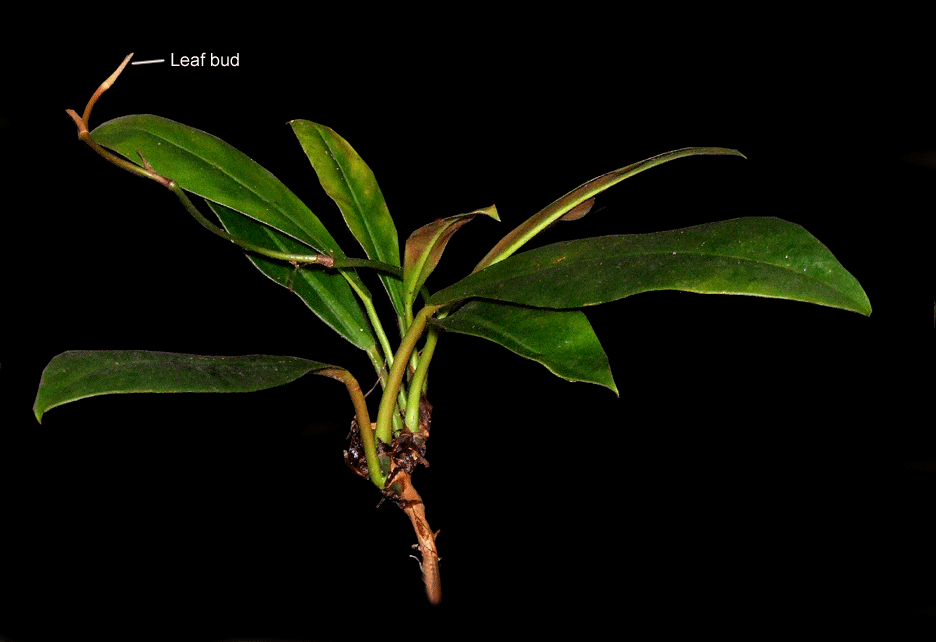
Philodendron linnaei
Kunth
Synonyms:
Philodendron decurrens K. Krause,
Philodendron nobile W. Bull,
Philodendron notabile hort. ex W. Bull
May be confused with
Philodendron
insigne
Click here to see
Philodendron insigne
A
member of the larger herb family known as Araceae (aroids)
Philodendron linnaei
grows in the rain forests of Bolivia, Brazil, Colombia, Ecuador,
French Guiana, Suriname, Guyana, and Peru. P. linnaei
grows as either an appressed
 epiphytic climber (growing close to the host)
or hemiepiphytic species growing on either the sides or branches of
a host tree. An epiphyte (ep-a-FIT) is defined as a plant that grows upon another
plant as the result of a seed from the fruit of the species'
inflorescence being
placed on a branch of that tree in the droppings of a bird or other
rain forest animal. Despite a commonly held belief that all
plants must have soil to grow, epiphyte (ep-a-FIT)s (including many aroid
species) may never have their roots come
in contact with soil. Hemiepiphytes differ slightly since they
may grow from a seed dropped on the ground and then climb the host
or grow downwards from the host until their roots reach the soil.
Philodendron linnaei grows naturally in light shade and is considered a
"birds nest form", or "trash basket"
plant, since the leaves collect falling debris which the plant uses as a means of
storing moisture.
epiphytic climber (growing close to the host)
or hemiepiphytic species growing on either the sides or branches of
a host tree. An epiphyte (ep-a-FIT) is defined as a plant that grows upon another
plant as the result of a seed from the fruit of the species'
inflorescence being
placed on a branch of that tree in the droppings of a bird or other
rain forest animal. Despite a commonly held belief that all
plants must have soil to grow, epiphyte (ep-a-FIT)s (including many aroid
species) may never have their roots come
in contact with soil. Hemiepiphytes differ slightly since they
may grow from a seed dropped on the ground and then climb the host
or grow downwards from the host until their roots reach the soil.
Philodendron linnaei grows naturally in light shade and is considered a
"birds nest form", or "trash basket"
plant, since the leaves collect falling debris which the plant uses as a means of
storing moisture.
My good friend Dutch naturalist Joep Moonen (pronounced yupe) who lives in French Guiana in the northwestern corner of South America wrote in a personal email, "Philodendron linnaei is not endemic to French Guiana. They occur in Venezuela, the three Guianas and Amapà, north Brazil (Amazonia & surrounding states). I found them as far south as in the State of Bahia." The term "endemic" indicates a species that is exclusively found in a narrow range.
Aroid botanist Dr. Thomas
B. Croat Ph.D., P.A. Schulze Curator of Botany at the Missouri
Botanical Garden in St. Louis, MO published a synopsis of the
characteristics of Philodendron linnaei
in volume 9 of Aroideana, the official journal of the International
Aroid Society in 1986. In his article Dr. Croat indicates
"Philodendron linnaei is widespread in the northern Amazon Basin
(albeit poorly collected), ranging from Venezuela to the Guianas (at
least Suriname & French Guiana), Brazil (Para, Bahia, Amazonas
states) and Peru"
In Peru, Philodendron linnaei has been observed in the
vicinity of Iquitos and is normally found at elevations of less than
200 meters (665 feet). The species has also been
 collected at
elevations up to 800 meters (2,625 feet) near the border with
Brazil. In
Venezuela, Philodendron linnaei has been
collected from Monagas and Delta Amacuro to the state of Amazonas in
Brazil. Dr. Croat continues in his
description,
"It is most
easily confused with Philodendron insigne which has a similar
habit,
short petioles and similar long-pedunculate inflorescences with
reddish
spathe tubes."
The peduncle is
the stalk that
supports an inflorescence (see photo, below left).
collected at
elevations up to 800 meters (2,625 feet) near the border with
Brazil. In
Venezuela, Philodendron linnaei has been
collected from Monagas and Delta Amacuro to the state of Amazonas in
Brazil. Dr. Croat continues in his
description,
"It is most
easily confused with Philodendron insigne which has a similar
habit,
short petioles and similar long-pedunculate inflorescences with
reddish
spathe tubes."
The peduncle is
the stalk that
supports an inflorescence (see photo, below left).
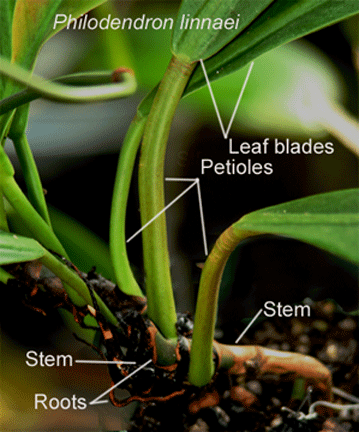
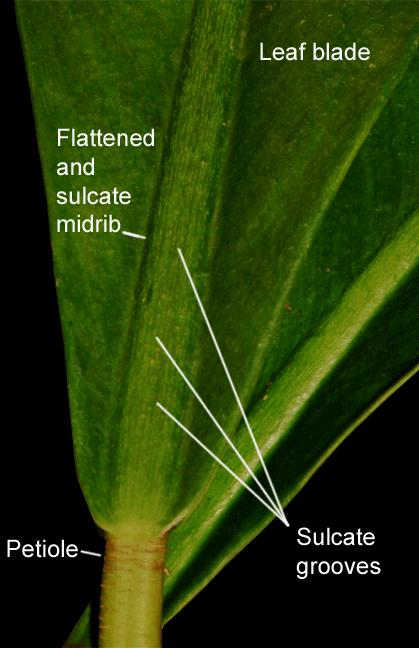
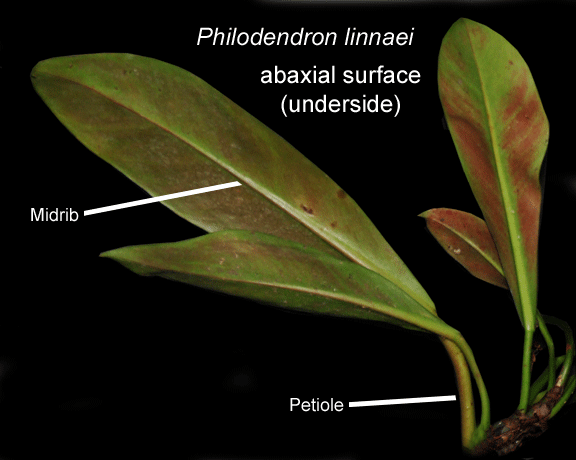
The petioles of an aroid are a stalk that supports each leaf blade while connecting the blade to the stem at the base of the plant. (see photo below, left for an illustration). Despite common misconception, the petiole is not the "stem". The petioles grow from the nodes on the stem and are the connection between the blade and the stem which is the base of the plant. The petioles of Philodendron linnaei are subterete (just less than round) in shape as well as obtusely (bluntly) flattened adaxially (on the upper surface). The petioles are shallowly sulcate as well as medium green in color. Sulcate may indicate either a single channel running down the axis of the petiole or a series of tiny parallel groves running down the axis. (note shallow grove (channel) on face of petiole, photo left, below).
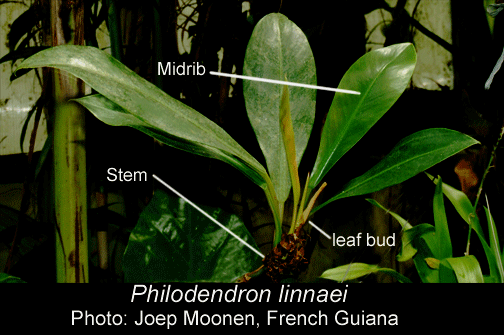
 The
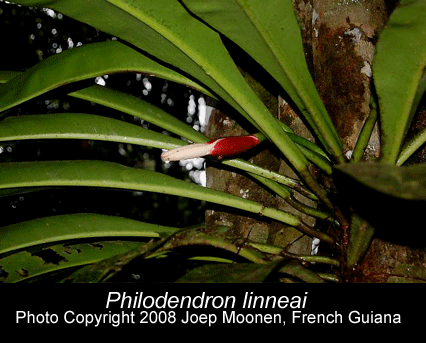
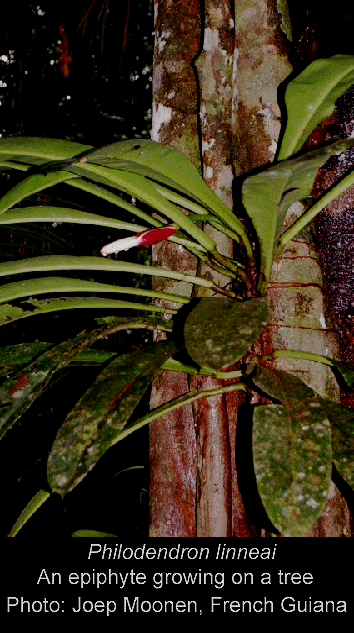
leaves of Philodendron linnaei grow in rosettes similar in
shape to the arrangement of the petals of a rose (see photos, top of
page). The
blades are moderately
coriaceous (slightly leathery to the touch) and semi-glossy in
sheen. The blades may be slightly bicolorous (dual
colored) with a series of rosettes joined by inter-connecting
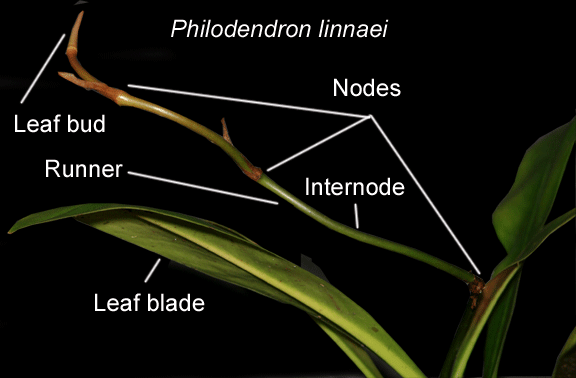
branches. The parent plant produces runners or
stolens which run across the host tree's
branches to then produce additional leaf
buds which may become plants. You can
see a runner in the top photo on this
page as well as the
photo (left, below).
Aroid expert Leland Miyano explains further,
"Philodendron
linnaei in it's rosette forming stage has very short
internodes, but it occasionally grows runners, usually but not
always, near the apical meristem. The running stage has very long
internodes. This is a very peculiar habit where there are two very
distinct modes of growth. After these runners locate a suitable area
they
wish to settle in the rosette form of growth resumes. These
new rosettes can be rooted and cut off or they can be removed and rooted on their own. The short internodes can be less than half and
inch and on the runners the internodes can exceed a foot. In the
runner stage, there can be isolated leaves at the nodes, or these
may be leafless. The long runners can also be rooted at the nodes
and these will eventually form rosettes.
The
leaves of Philodendron linnaei grow in rosettes similar in
shape to the arrangement of the petals of a rose (see photos, top of
page). The
blades are moderately
coriaceous (slightly leathery to the touch) and semi-glossy in
sheen. The blades may be slightly bicolorous (dual
colored) with a series of rosettes joined by inter-connecting
branches. The parent plant produces runners or
stolens which run across the host tree's
branches to then produce additional leaf
buds which may become plants. You can
see a runner in the top photo on this
page as well as the
photo (left, below).
Aroid expert Leland Miyano explains further,
"Philodendron
linnaei in it's rosette forming stage has very short
internodes, but it occasionally grows runners, usually but not
always, near the apical meristem. The running stage has very long
internodes. This is a very peculiar habit where there are two very
distinct modes of growth. After these runners locate a suitable area
they
wish to settle in the rosette form of growth resumes. These
new rosettes can be rooted and cut off or they can be removed and rooted on their own. The short internodes can be less than half and
inch and on the runners the internodes can exceed a foot. In the
runner stage, there can be isolated leaves at the nodes, or these
may be leafless. The long runners can also be rooted at the nodes
and these will eventually form rosettes.
 It is a very easy plant to
grow in cultivation in all it's stages."
It is a very easy plant to
grow in cultivation in all it's stages."
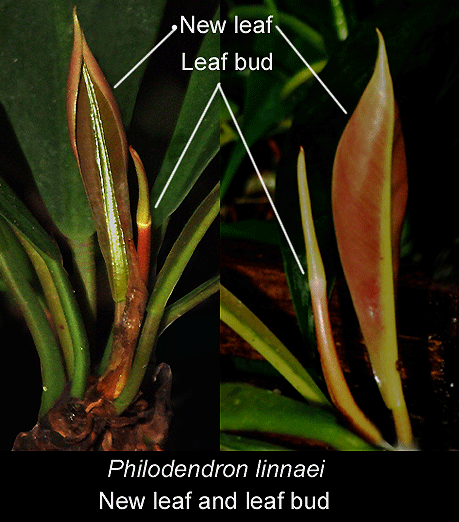
The undersides of the leaf blades (abaxial surface) are tinged in red (photo right, below). Newly emerging leaves develop from a modified leaf known as the cataphyll (not shown). The cataphylls of Philodendron linnaei are green and persisting (remaining) intact on the plant once dried. If the leaf blade is examined closely the midrib at the center of each blade is broadly flattened as well as convex in shape while more narrowly rounded and paler on the underside which is known botanically as the abaxial surface. The midrib is narrowly sulcate nearest the base. The minor leaf veins are only slightly distinct.
Along the stem can be
found nodes from which the petioles that support the leaves grow.
The stem segments between two nodes are known as an internode.
The
internodes of Philodendron linnaei are short on the plant
and medium green
 in color but may be longer on a plant's runner.
All Philodendron
species are aroids. An aroid is a plant that reproduces by producing an
inflorescence known to
science as a spathe and
spadix. Many growers believe the spathe is a
"flower" which is incorrect. The spathe is simply a
modified leaf
appearing to be
a hood
whose purpose is to
protect the spadix at the
center. Both the inside and the outside of the
spathe of
Philodendron linnaei
are normally violet, purple/red, or
red. Philodendron linnaei
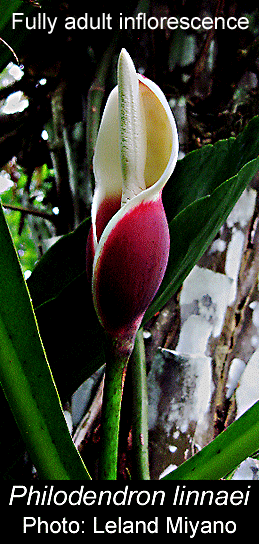
can be recognized by a long inflorescence
which is red-maroon to purple on the outside
of the spathe tube and red on the inside.
(see photo, below left). The inflorescence may also grow in an unusual fashion which is
pendent (downward) as can be seen in Joep's photos.
Once ready to be pollinated tiny true
flowers (female, male and sterile) can be found on the spadix at the center of
the inflorescence once the plant reaches
sexual anthesis. Anthesis
within
Philodendron
species is normally a two day process with
the female flowers being produced in the late
afternoon or evening on day
one while the male flowers are produced on
 day two. Nature stages the flower
development in an effort to prevent self
pollination thus keeping the species strong.
The
female flowers are not easily seen since
they are produced inside the floral chamber
at the bottom of the spathe. You can
see the floral chamber in the photo left
(above) at
the point where the spathe crosses over to
encircle the spadix.
After
female anthesis is completed the spadix produces
the male
flowers which produce pollen as well as
sterile male flowers. The sterile male flowers
produce a pheromone (perfume) that is used
by the plant to attract insect pollinators
and are also eaten by those insects since they
are rich in lipids (protein). If the female flowers are pollinated by an
appropriate insect, normally a beetle
found within the genus
Cyclocephala , they will
in time produce white berries containing seeds. The
spadix of Philodendron linnaei
is reddish changing to white.
day two. Nature stages the flower
development in an effort to prevent self
pollination thus keeping the species strong.
The
female flowers are not easily seen since
they are produced inside the floral chamber
at the bottom of the spathe. You can
see the floral chamber in the photo left
(above) at
the point where the spathe crosses over to
encircle the spadix.
After
female anthesis is completed the spadix produces
the male
flowers which produce pollen as well as
sterile male flowers. The sterile male flowers
produce a pheromone (perfume) that is used
by the plant to attract insect pollinators
and are also eaten by those insects since they
are rich in lipids (protein). If the female flowers are pollinated by an
appropriate insect, normally a beetle
found within the genus
Cyclocephala , they will
in time produce white berries containing seeds. The
spadix of Philodendron linnaei
is reddish changing to white.
 Monkeys, birds and
other rain forest animals often eat the berries which contain
the seeds of aroid species and distribute those seeds onto the
branches of trees in their droppings. This process is
how epiphytic plants find their way into the canopy of the rain
forest. An epiphyte is a plant that grows upon
another plant. Since Philodendron linnaei is an
epiphyte, the species grows on the trunks and limbs
of trees (see Joep Moonen's photo at the top of this page), and as a
result, specimens do not normally have their roots in soil.
To better understand how an aroid reproduces
please read:
Natural pollination in aroids
Monkeys, birds and
other rain forest animals often eat the berries which contain
the seeds of aroid species and distribute those seeds onto the
branches of trees in their droppings. This process is
how epiphytic plants find their way into the canopy of the rain
forest. An epiphyte is a plant that grows upon
another plant. Since Philodendron linnaei is an
epiphyte, the species grows on the trunks and limbs
of trees (see Joep Moonen's photo at the top of this page), and as a
result, specimens do not normally have their roots in soil.
To better understand how an aroid reproduces
please read:
Natural pollination in aroids
A rain forest species, Philodendron linnaei requires
regular and abundant moisture but should not be allowed to
become
water logged. We have repotted our specimen in a mixture of
50% orchid potting media, 20% peat, 15% good soil, with a balance of
Perlite™. The species should do well in a hanging orchid basket with
the roots packed in high quality sphagnum moss.
Philodendron linnaei is likely to prosper if not kept in wet
soil but instead in a well drained soil
 mixture or very fast
draining orchid basket.
mixture or very fast
draining orchid basket.
When I found this aroid in the summer of 2005 the seller was offering the
plant as "Philodendron longiloba" but no such name exists on any major
botanical database. I find it regrettable when sellers appear to
simply make up a name that sounds scientific if they don't know the
correct botanical name of the specimen they wish to sell. Bad
aroid names commonly circulate via the internet as a result.
Any botanical name can easily be verified on one of several
scientific websites including TROPICOS (a service of the
Missouri Botanical Garden)
http://www.tropicos.org/
or the International Plant Names Index
http://www.ipni.org/index.html
(a service
of the Royal Botanic Garden Kew in London. Many aroid
species can also be verified on the International Aroid Society
website
http://www.aroid.org/
Philodendron species are known to be
highly variable and not every leaf of every specimen
will always
appear the same. This link explains in greater detail natural
variation and morphogenesis, also known in science as ontogeny.
At least two natural variations of the species Philodendron
linnaei are known to science. Morphing is very commonly
seen
 in Philodendron species.
Click here.
in Philodendron species.
Click here.
The photos of wild Philodendron linnaei specimens on this
page are from the collection of my friend aroid expert Joep Moonen in French Guiana. If you
would
 enjoy spending time in a rain forest filled with exotic
creatures and extremely rare plant species while being introduced to
that jungle by an expert guide who is fluent in many languages, Joep
escorts visitors almost daily into the rain forest of northeast
South America. He and his family own an eco-tour village in French
Guiana known as the Emerald Jungle Village. His website can be found
at:
http://home.planet.nl/~gumamaus/
enjoy spending time in a rain forest filled with exotic
creatures and extremely rare plant species while being introduced to
that jungle by an expert guide who is fluent in many languages, Joep
escorts visitors almost daily into the rain forest of northeast
South America. He and his family own an eco-tour village in French
Guiana known as the Emerald Jungle Village. His website can be found
at:
http://home.planet.nl/~gumamaus/
For eco-tour information and an Emerald Jungle Village brochure
contact Joep at EmeraldJungleVillage@wandoo.fr
My thanks to my friend and mentor aroid botanist Dr. Thomas B. Croat Ph.D., P.A. Schulze Curator of Botany at the Missouri Botanical Garden in St. Louis, MO, for his assistance with some of the technical data in this article as well as to my friends Joep Moonen and aroid expert Leland Miyano for the use of their photography. All technical data was taken from the published field notes of Dr. Croat. Our specimen was a gift from aroid grower Enid Offolter of Natural Selections Exotics in Fort Lauderdale, FL.
Join the International Aroid Society: http://www.exoticrainforest.com/Join%20IAS.html
Looking for a specimen? Contact
http:///

