
Aroids and other genera in the Collection
Take the Tour Now?
Orchids
The
Exotic Rainforest
Plants in
the Exotic Rainforest Collection
The images on this website are copyright protected. Please contact us before any reuse.
Within our collection we have many species of Anthurium.
If you are seeking other photos,
click this link:
Anthurium radicans x dressleri
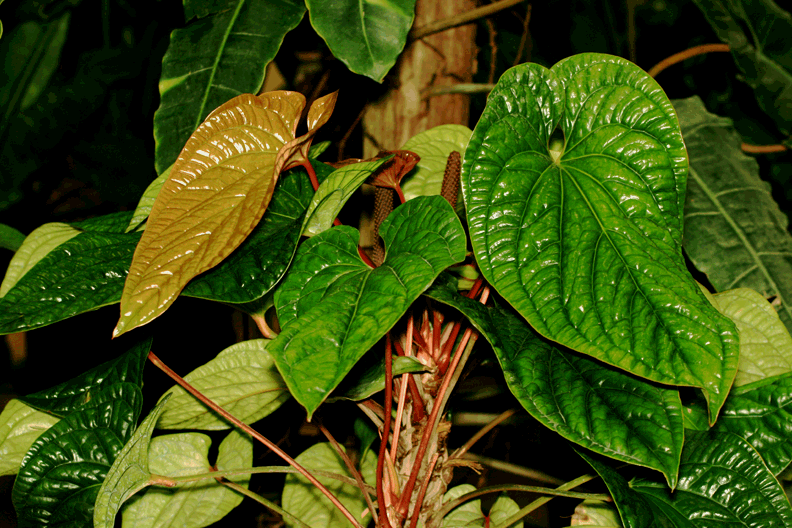
Anthurium radicans x
dressleri
An Anthurium Hybrid
We used to be regular visitors at Fairchild Tropical Botanic Garden in Miami. If you've never been, make it a point. It's worth a trip to Miami all by itself, especially in September when they host the International Aroid Society aroid show. There is another botanic garden only a few hundred miles to the northwest you should also visit, Marie Selby Botanical Gardens in Tampa because you are likely to see the Anthurium hybrid cross shown on this page.
 My
favorite exhibits aroids including Anthurium and Philodendron
species, orchids, bromeliads and large tropical atrium
filled with rare plants, especially the Anthurium displays. Against the back wall and adjacent to the indoor pool, was an
Anthurium I was tempted more than once to "borrow". Never tried, so don't
panic! The plant had no identification tag but once the plant in my photo
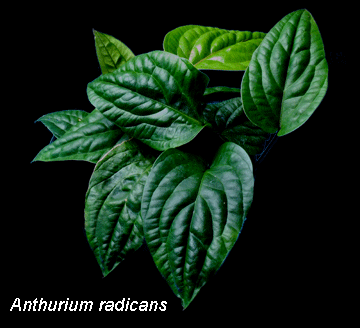
became available I was almost certain that plant was Anthurium
radicans. The leaves were
large, crinkled, ruffled, rippled, quilted, stiff, textured and
almost any other word commonly used to describe a really exotic Anthurium
(to a botanist that leaf form is known as bullate).
Several exquisite Anthurium sp. appeared to have been melded together
to create a truly wonderful plant. But try as I could, I could never locate
one just like it to bring home until one day on eBay I discovered what
appeared to be the plant at Fairchild and it was $10!
My
favorite exhibits aroids including Anthurium and Philodendron
species, orchids, bromeliads and large tropical atrium
filled with rare plants, especially the Anthurium displays. Against the back wall and adjacent to the indoor pool, was an
Anthurium I was tempted more than once to "borrow". Never tried, so don't
panic! The plant had no identification tag but once the plant in my photo
became available I was almost certain that plant was Anthurium
radicans. The leaves were
large, crinkled, ruffled, rippled, quilted, stiff, textured and
almost any other word commonly used to describe a really exotic Anthurium
(to a botanist that leaf form is known as bullate).
Several exquisite Anthurium sp. appeared to have been melded together
to create a truly wonderful plant. But try as I could, I could never locate
one just like it to bring home until one day on eBay I discovered what
appeared to be the plant at Fairchild and it was $10!
Some research indicated the plant on eBay was a tissue culture and had
been "cloned". Technically the cloning process
 is
known as a tissue cultured and is commonly done by a company in Central Florida.
Botanical expert Harry E. Luther, Director, Mulford B. Foster
Bromeliad Identification Center and Curator of Living Collections at
Marie Selby Botanical Gardens in Tampa, FL sent an email in September,
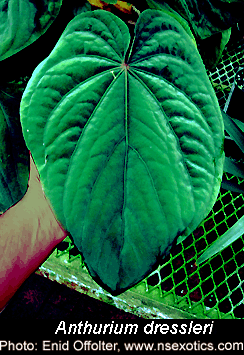
2007 letting me know the hybrid of Anthurium radicans x A.
dressleri was hybridized at Selby in the late 1970s by botanist Mike Madison.
I later learned he and Mike Bush used the finicky A. dressleri for several
hybrids. According to Harry, for several decades the
Anthurium radicans x
dressleri
hybrid was truly a rare
plant. Once tissue culture began to be widely used the hybrid
became available from many plant dealers.
The original hybridized specimens are still growing at Selby.
is
known as a tissue cultured and is commonly done by a company in Central Florida.
Botanical expert Harry E. Luther, Director, Mulford B. Foster
Bromeliad Identification Center and Curator of Living Collections at
Marie Selby Botanical Gardens in Tampa, FL sent an email in September,
2007 letting me know the hybrid of Anthurium radicans x A.
dressleri was hybridized at Selby in the late 1970s by botanist Mike Madison.
I later learned he and Mike Bush used the finicky A. dressleri for several
hybrids. According to Harry, for several decades the
Anthurium radicans x
dressleri
hybrid was truly a rare
plant. Once tissue culture began to be widely used the hybrid
became available from many plant dealers.
The original hybridized specimens are still growing at Selby.
is
known as a tissue cultured and is commonly done by a company in Central Florida.
Botanical expert Harry E. Luther, Director, Mulford B. Foster
Bromeliad Identification Center and Curator of Living Collections at
Marie Selby Botanical Gardens in Tampa, FL sent an email in September,
2007 letting me know the hybrid of Anthurium radicans x A.
dressleri was hybridized at Selby in the late 1970s by botanist Mike Madison.
I later learned he and Mike Bush used the finicky A. dressleri for several
hybrids. According to Harry, for several decades the
Anthurium radicans x
dressleri
hybrid was truly a rare
plant. Once tissue culture began to be widely used the hybrid
became available from many plant dealers.
The original hybridized specimens are still growing at Selby.
The
hybrid combination still sometimes offered on eBay, Anthurium radicans crossed
with Anthurium dressleri, contains some of the best traits of
both of those parent plants. The hybrid variety of Anthurium radicans x A. dressleri has proven
to be a sterile plant and will not produce
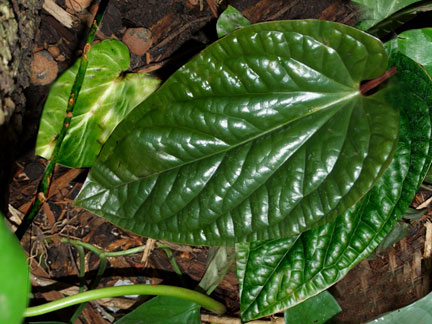 seeds. The cross
is easily grown as a cutting from the original plant. You can
also locate information regarding Anthurium radicans, the
species, on this website.
seeds. The cross
is easily grown as a cutting from the original plant. You can
also locate information regarding Anthurium radicans, the
species, on this website.
seeds. The cross
is easily grown as a cutting from the original plant. You can
also locate information regarding Anthurium radicans, the
species, on this website.
Growing information on Anthurium species can be
read here.
Anthurium hybrids are
known to be highly variable and not every leaf of every specimen will
always appear the same. This link explains in greater detail the
scientific principle of natural variation and morphogenesis.
Click here.
As it would turn out, they plant at Fairchild was wasn't the exotic Anthurium I had craved so long but was very similar. The plant at Fairchild turned out to be Anthurium luxurians and is even more exquisite.
Join the
International Aroid Society:
http://www.exoticrainforest.com/Join%20IAS.html
