
Aroids and other genera in the Collection
Take the Tour Now?
Orchids
The
Exotic Rainforest
Plants in
the Exotic Rainforest Collection
The images on this website are copyright protected. Please contact us before any reuse.
Detailed information on Growing Anthurium Species
Click this Link
Looking for a specimen? Contact
http:///

Within our collection we have many species of Anthurium. If you are seeking other photos, click this link:
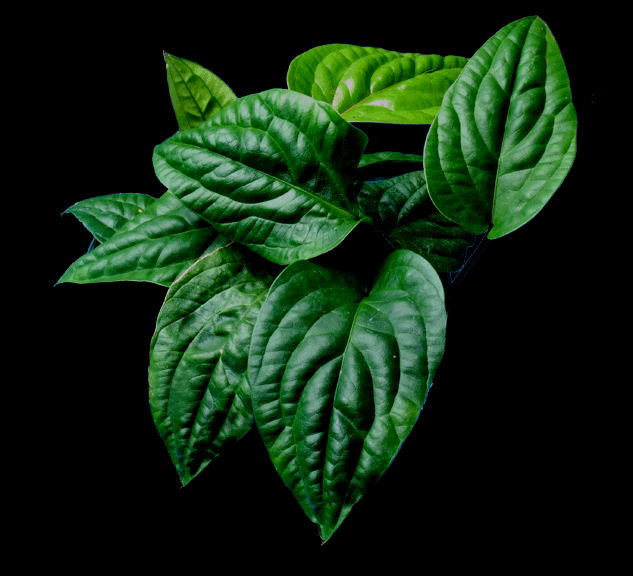
Anthurium radicans
K. Koch & A. Haage
Sometimes known as Anthurium malyi
 A small creeping aroid from Southeastern Brazil and parts of Ecuador,
Anthurium radicans is the only member of section
Chamaerepium.
Described to science in 1854, many non-scientific sources state Anthurium radicans is only
found in Brazil. However, Dr. Tom Croat of the Missouri Botanical Garden
has collected the species in the vicinity of Serrania de Cutucu in
Ecuador. Anthurium radicans is noted as one of the smallest
creeping Anthurium species with both cordate and bullate leaf blades. A
cordate blade is one that is heart shaped and bullate leaves are ones that
appear blistered or puckered. Collectors often call the leaves of such
species "quilted". The largest blade on our specimen measures
approximately 14cm (5.5 inches).
A small creeping aroid from Southeastern Brazil and parts of Ecuador,
Anthurium radicans is the only member of section
Chamaerepium.
Described to science in 1854, many non-scientific sources state Anthurium radicans is only
found in Brazil. However, Dr. Tom Croat of the Missouri Botanical Garden
has collected the species in the vicinity of Serrania de Cutucu in
Ecuador. Anthurium radicans is noted as one of the smallest
creeping Anthurium species with both cordate and bullate leaf blades. A
cordate blade is one that is heart shaped and bullate leaves are ones that
appear blistered or puckered. Collectors often call the leaves of such
species "quilted". The largest blade on our specimen measures
approximately 14cm (5.5 inches).
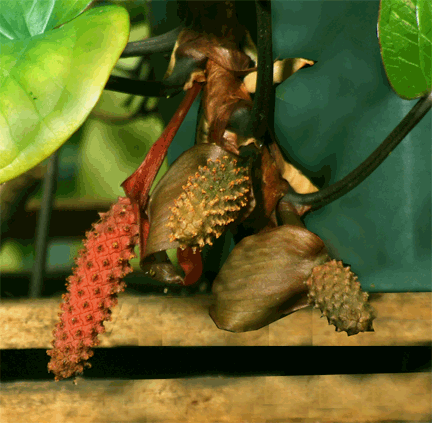
Anthurium differ from Philodendron species since all Anthurium produce perfect flowers containing both male and female organs while Philodendron produce imperfect flowers containing only a single sex. When an Anthurium is "in flower" the reference is to the tiny flowers containing both male and female sexual parts that grow on the spadix at the center of the inflorescence. To help prevent self pollination nature has designed the female flowers to be receptive before the male portion of the flower produce their pollen so in most cases an insect must bring pollen from another plant. The spathe surrounding the spadix is not a flower but is instead a modified leaf.
Anthurium species are known to be highly variable and not every leaf of every specimen will always appear the same. This link explains in greater detail the scientific principle of natural variation and morphogenesis. Click here.
Easy to grow, Anthurium radicans is often
found in collections and is now being used by hybridizers as a parent
species for several hybrid Anthurium varieties. The hybrid varieties
are often sterile and will not reproduce via seeds.
Click here to see Anthurium radicans x Anthurium
dresserii.
Sometimes tinged reddish purple, the leaf blades are coriaceous
(leathery). The peduncle which supports the inflorescence of Anthurium
radicans is short. The
inflorescence is purple with a pale maroon spathe tinged with green.
Since the species prefers to creep give the plant a large pot of very
loose well draining soil. We prefer to mix orchid bark and Perlite™
into the soil mixture.
Aroid Pollination!
As
it occurs in nature and by any horticulturist
Join the
International Aroid Society:
http://www.exoticrainforest.com/Join%20IAS.html
Need more information on Anthurium species?
Click this link.