
Aroids and other genera in the Collection
Take the Tour Now?
Orchids
The
Exotic Rainforest
Plants in
the Exotic Rainforest Collection
The images on this website are copyright protected. Please contact us before any reuse.
Detailed information on Growing Anthurium Species
Click this Link
The Exotic Rainforest is a private botanical garden.
Within our collection we have many species of Anthurium.
If you are seeking other photos,
click this link:
Anthurium
moonenii
Croat
& Conçalves

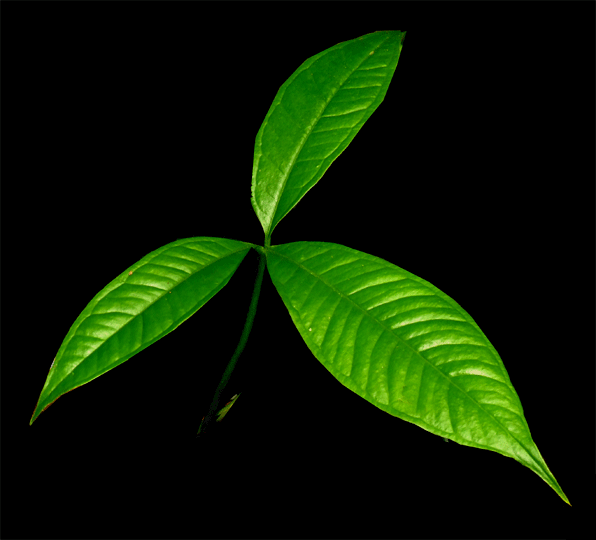
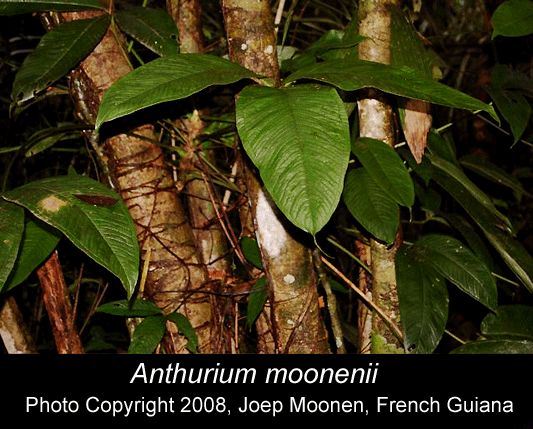 One of the rarest
specimens in the Exotic Rainforest collection our specimen
of Anthurium
moonenii was a gift from Joep Moonen (pronounced yupe), a Dutch naturalist
and rain forest explorer living in French Guiana. The aroid was exported legally
with
documents from French Guiana along with three other rare
specimens specifically for our collection. The specimen
shown at the top of this page is a juvenile.
One of the rarest
specimens in the Exotic Rainforest collection our specimen
of Anthurium
moonenii was a gift from Joep Moonen (pronounced yupe), a Dutch naturalist
and rain forest explorer living in French Guiana. The aroid was exported legally
with
documents from French Guiana along with three other rare
specimens specifically for our collection. The specimen
shown at the top of this page is a juvenile.
An epiphytic Anthurium species found growing on trees, the exquisite tri-lobed Anthurium was named in honor of Joep. The species is capable of growing with only a single leaf blade as can be seen in Joep's photo below right. However, at the very top of that photo you can see a tri-lobed specimen.
Anthurium moonenii was first discovered by the rain forest expert in the north eastern portion of French Guiana. He was fortunate to locate the original specimen in 1991 and brought it to the attention of Dr. Tom Croat of the Missouri Botanical Garden in St. Louis. Dr. Croat did all the original botanical work on the species verifying it was a previously unknown and unpublished Anthurium species. When it was published Dr. Croat honored Joep by granting the Anthurium Joep's last name.
In the most recent
botanical literature available you will find Anthurium moonenii
is known only from the north eastern portion of French
Guiana and the outlying portion of the central part of Amazonas
State in Brazil south of the Rio
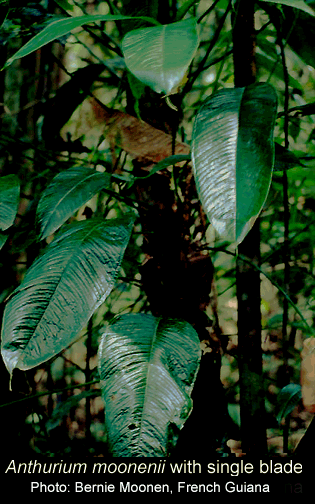 Solimoes. Mono
lobed (single lobed) specimens have been located in one particular area near
the Mataroni River where other rare specimens such as
non-scientifically offical
Philodendron 'joepii' have been located. Enid Offolter of
Natural Selections Exotics in Fort Lauderdale provided this
information regarding the mono lobed form, "Tom
Croat and Julius Boos saw it when they were here last and Tom
had been unaware of a single lobed form (stays single lobed,
even when mature). The tri lobe sometimes puts out single
lobes when juvenile."
Solimoes. Mono
lobed (single lobed) specimens have been located in one particular area near
the Mataroni River where other rare specimens such as
non-scientifically offical
Philodendron 'joepii' have been located. Enid Offolter of
Natural Selections Exotics in Fort Lauderdale provided this
information regarding the mono lobed form, "Tom
Croat and Julius Boos saw it when they were here last and Tom
had been unaware of a single lobed form (stays single lobed,
even when mature). The tri lobe sometimes puts out single
lobes when juvenile."
Joep provided these measurements of a specimen growing in his personal collection: "Central lobe is 65 cm long (25.5 inches) and 21.5 cm (8.5 inches) at the widest. The biggest of the two side lobes is 52 cm (20.5 inches) long and 18.5 cm (7.25 inches) at the widest point. The petiole is 58 cm (22.75 inches) long and 1 cm (3/8ths inch) in diameter."
 Anthurium moonenii
was for some time considered to be exclusively found in
French Guiana. However, Dr. Eduardo Conçalves, Brazil's most
prominent aroid botanist, has since found Anthurium moonenii in
Amazonas State in northern Brazil.
Anthurium species are
known to be highly variable and not every leaf of every specimen
will always appear the same. This link explains in
non-technical language natural variation and
morphogenesis (ontogeny).
Anthurium moonenii
was for some time considered to be exclusively found in
French Guiana. However, Dr. Eduardo Conçalves, Brazil's most
prominent aroid botanist, has since found Anthurium moonenii in
Amazonas State in northern Brazil.
Anthurium species are
known to be highly variable and not every leaf of every specimen
will always appear the same. This link explains in
non-technical language natural variation and
morphogenesis (ontogeny).
Click
here.
Joep indicates the plants in his personal collection grow under natural conditions with no fertilizer at all. They only receive the natural rain water of the area, but that would be substantial. Joep has the advantage of living in the rain forest! We have the specimen planted in very loose soil and keep the soil mixture damp at all times. The humidity level in the Exotic Rainforest atrium is always around 85% or higher as a result of an automatic over head misting system.
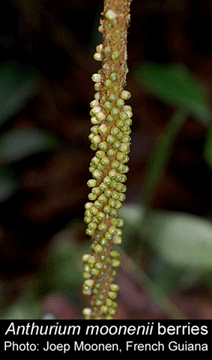
An aroid, all Anthurium species reproduce via the production an inflorescence. The stalk that supports the entire inflorescence is the peduncle and the spathe produced on the inflorescence is not a flower. When an Anthurium is "in flower" the reference is to the tiny flowers containing both male and female sexual parts that grow on the spadix at the center of the inflorescence. Unlike plants in the genus Philodendron which contain imperfect flowers having only a single sex Anthurium possess perfect flowers containing both sexes. To help prevent self pollination nature has designed the female flowers to be receptive before the male portion of the flower produce their pollen so in most cases an insect must bring pollen from another plant.
For more information on the sexual reproduction of any aroid click on the aroid pollination link below.
If you enjoy spending time in a rain forest filled with exotic creatures and extremely rare exotic plant species Joep Moonen also enjoys introducing people like you to the rain forests of northeast South America. The Emerald Jungle Village website can be found at: http://home.planet.nl/~gumamaus/
For rain forest eco-tour information and a brochure contact Joep Moonen (pronounced yupe) directly at EmeraldJungleVillage@wanadoo.fr
Join the
International Aroid Society:
http://www.exoticrainforest.com/Join%20IAS.html
Looking for a specimen? Contact
http:///

Aroid Pollination!
As
it occurs in nature and by any horticulturist
Need more information on Anthurium species? Click this link.
