
Aroids and other genera in the Collection
Take the Tour Now?
Orchids
The
Exotic Rainforest
Plants in
the Exotic Rainforest Collection
The images on this website are copyright protected. Please contact us before any reuse.
Detailed information on Growing Anthurium Species
Click this Link
The Exotic Rainforest is a private botanical garden.
Within our collection we have many species of Anthurium.
If you are seeking other photos,
click this link:
Formerly known as Anthurium splendidum (a different species)

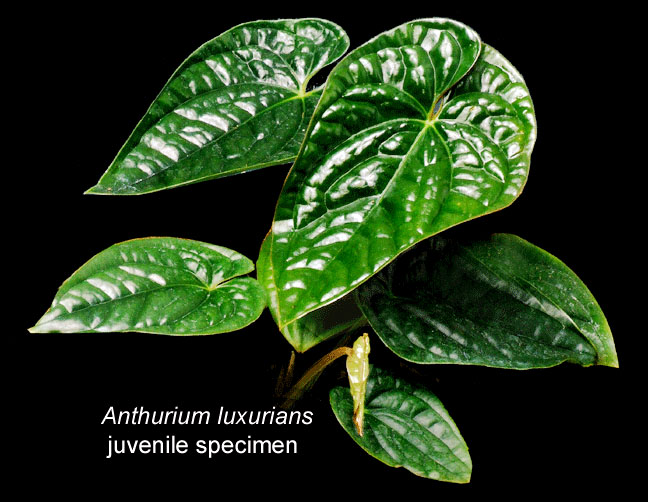
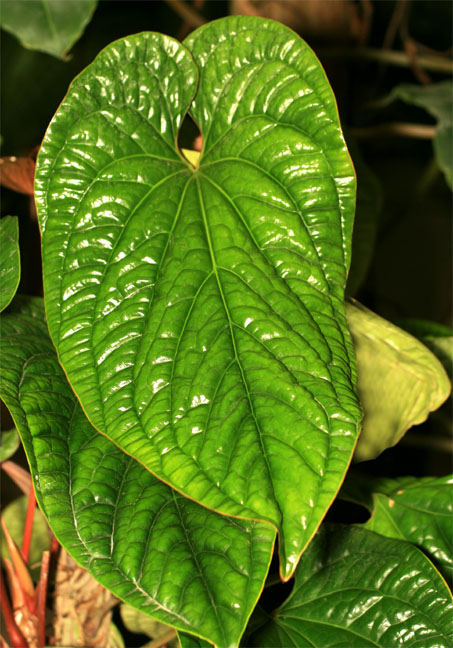 According to information published by botanist Dr. Tom
Croat of the Missouri Botanical Garden this plant is a native of
Colombia but the exact location in nature is still a mystery. Dr. Croat
published an article regarding Anthurium luxurians, formerly
known as Anthurium splendidum, in the International Aroid
Society's publication Aroideana, volume 28, in 2005*. The true
Anthurium splendidum is an entirely different and delicate
plant found in much cooler mountain climates than Anthurium
luxurians.
According to information published by botanist Dr. Tom
Croat of the Missouri Botanical Garden this plant is a native of
Colombia but the exact location in nature is still a mystery. Dr. Croat
published an article regarding Anthurium luxurians, formerly
known as Anthurium splendidum, in the International Aroid
Society's publication Aroideana, volume 28, in 2005*. The true
Anthurium splendidum is an entirely different and delicate
plant found in much cooler mountain climates than Anthurium
luxurians.
A. luxurians is a truly rare Anthurium with thick coriaceous (leathery) leaves and short stems (at least it was rare before it began to be cloned) which at one time was quite difficult to locate and very expensive. Today you can buy a tissue cultured specimen relatively cheaply. I believe the plant still deserves the "rare" plant icon due to its rarity in nature. The leaves, which can grow large, are unusual in that they a created much like the facets of a cut diamond. Each "facet" reflects the light in a way unlike any other plant I have personally observed. In cultivation they are reported to grow up to 2 feet (60cm) long and 20 inches (50cm) wide. The plant's spadix produces red to purple-red seed berries. Anthurium species are known to be highly variable and not every leaf of every specimen will always appear the same. This link explains in greater detail the scientific principle of natural variation and morphogenesis. Click here.
Although many growers assume the spathe that appears when an aroid produces an inflorescence is a flower, instead the spathe is only a modified leaf. An aroid, all Anthurium species reproduce via the production an inflorescence. The stalk that supports the entire inflorescence is the peduncle. When an Anthurium is "in flower" the reference is to the tiny flowers containing both male and female sexual parts that grow on the spadix at the center of the inflorescence. Unlike plants in the genus Philodendron which contain imperfect flowers having only a single sex Anthurium possess perfect flowers containing both sexes. To help prevent self pollination nature has designed the female flowers to be receptive before the male portion of the flower produce their pollen so in most cases an insect must bring pollen from another plant. See the link below for more information on the sexual reproduction of any aroid.
Our specimen of Anthurium luxurians is still relatively small with leaves approaching 8 inches (20cm). We grow it in subdued light in a hanging basket to help protect it from insect predation. Although the leaves are thick and leathery, when young they are subject to damage from insects. We use a very well draining soil mixture of potting soil, extra peat, a large helping of orchid potting mix and Perlite™. The mix holds moisture but does not remain soggy. Collectors who possess a fully grown specimen often prize the plant and protect it from any and all dangers.
Aroid Pollination!
As
it occurs in nature and by any horticulturist

http://www.aroid.org/
To join the International Aroid Society: http://www.exoticrainforest.com/Join%20IAS.html