
Aroids and other genera in the Collection
Take the Tour Now?
Orchids
The
Exotic Rainforest
Plants in
the Exotic Rainforest Collection
The images on this website are copyright protected. Please contact us before any reuse.
Detailed information on Growing Anthurium Species
Click this Link
Looking for a specimen? Contact
http:///

Within our collection we have many species of Anthurium. If you are seeking other photos, click this link:
A hybrid
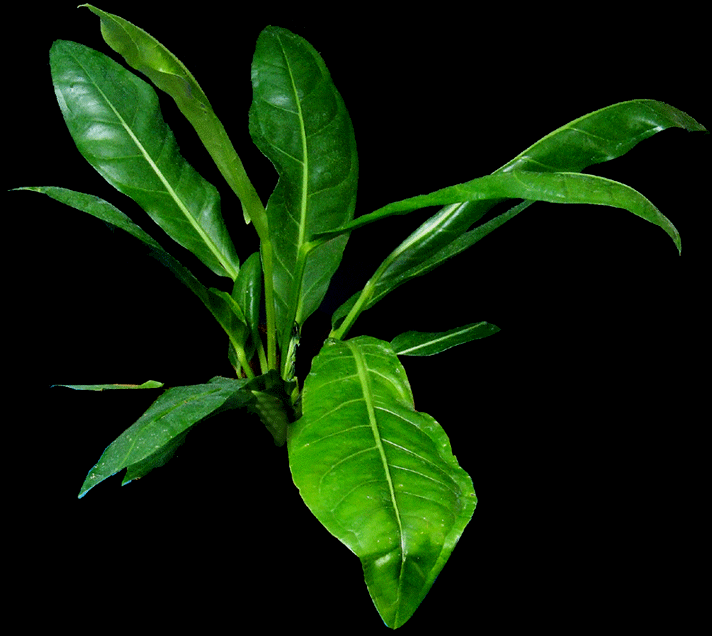
I received this plant accidentally as a very small seedling in the summer of 2005. I was trying to a specific species of Anthurium and Anthurium Marie showed up in error. After doing what reading I could locate I elected to keep the tiny plant and see what would develop. In one year what developed was an interesting Anthurium with long narrow leaf blades up to 20 inches (50cm) in length. Two years later the longest leaf including the petiole (stem) was 70 cm (28 inches) in total length. By spring of 2008 the leaves had grown to well over one meter (36 inches) and were still growing. The photo above was taken in 2006 and I haven't photographed the specimen since which is now hanging from the ceiling of the atrium. As soon as possible, I will photograph the plant again.
 There is little information available about this hybrid
other than it originated at Ree Gardens in Miami, FL and was
hybridized by Steve and Marie Nocks. Denis Rotolante of Silver
Krome Gardens South of Miami, FL explain and about the hybrid in
answer to a question on the fourm Aroid l,
"Anthurium x Marie is a tissue
cultured hybrid Pachyneurium group aAthurium. It took Steve Nock a
long time to breed an Anthurium with leaves as dark maroon as Marie
named after Steve's beautiful wife Marie. It probably has a
lot of mismatched chromasomes and a bit of aneuploidy thrown in and
it does a lot of strange things in growth of branching too much,
making mis-shapen spathes and double spadices and in some cases just
totally warped growth. We've grown out 1000's of liners oof
Marie and your plant is not that unusual. keep it is the brightest
light possible to keep the beautiful maroon coloring in the leaves."
There is little information available about this hybrid
other than it originated at Ree Gardens in Miami, FL and was
hybridized by Steve and Marie Nocks. Denis Rotolante of Silver
Krome Gardens South of Miami, FL explain and about the hybrid in
answer to a question on the fourm Aroid l,
"Anthurium x Marie is a tissue
cultured hybrid Pachyneurium group aAthurium. It took Steve Nock a
long time to breed an Anthurium with leaves as dark maroon as Marie
named after Steve's beautiful wife Marie. It probably has a
lot of mismatched chromasomes and a bit of aneuploidy thrown in and
it does a lot of strange things in growth of branching too much,
making mis-shapen spathes and double spadices and in some cases just
totally warped growth. We've grown out 1000's of liners oof
Marie and your plant is not that unusual. keep it is the brightest
light possible to keep the beautiful maroon coloring in the leaves."
To be known as Anthurium 'Marie' with the name in single quotes the plant would have to be a registered cultivar and no such registration appears to exist on the database of the International Aroid Society. www.Aroid.org As a hybrid the name Anthurium x Marie would be more correct.
An aroid, all Anthurium species reproduce via the production an inflorescence. The stalk that supports the entire inflorescence is the peduncle and the spathe is not a flower. When an Anthurium is "in flower" the reference is to the tiny flowers containing both male and female sexual parts that grow on the spadix at the center of the inflorescence. Unlike plants in the genus Philodendron which contain imperfect flowers having only a single sex Anthurium possess perfect flowers containing both sexes. To help prevent self pollination nature has designed the female flowers to be receptive before the male portion of the flower produce their pollen so in most cases an insect must bring pollen from another plant.
The hybrid has two interesting features. If grown in very
bright light (which
 we have used up in the atrium due to all the
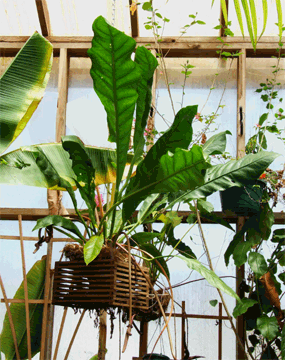
large plants) the leaves will turn dark purple-maroon, almost black. Our specimen
receives approximately 30% shade and as a result is all
green. Growing in a rosette form, and thus appearing to be a bird's
nest form Anthurium, several growers have reported the plant
is capable of producing weird inflorescences with the spadices
reported to appear as strange deformed animals and hand gestures.
The specimen is readily available
due to the
production of the plant as a tissue culture (cloned) plant.
we have used up in the atrium due to all the
large plants) the leaves will turn dark purple-maroon, almost black. Our specimen
receives approximately 30% shade and as a result is all
green. Growing in a rosette form, and thus appearing to be a bird's
nest form Anthurium, several growers have reported the plant
is capable of producing weird inflorescences with the spadices
reported to appear as strange deformed animals and hand gestures.
The specimen is readily available
due to the
production of the plant as a tissue culture (cloned) plant.
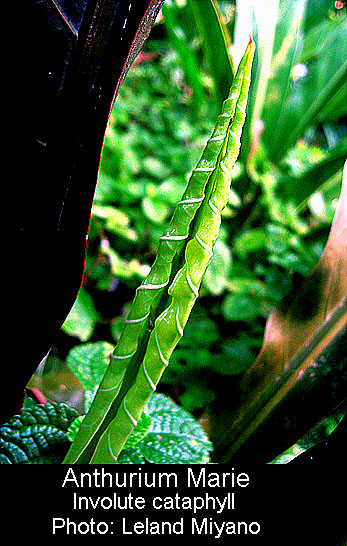
Almost all birds nest form Anthurium are all members of Anthurium section Pachyneurium. In addition to the form of the leaves which spread in a circular fashion around the stem plants in this section can be recognized in part by the form in which their newly emerging leaves. Section Pachyneurium Anthurium all possess involute vernation which is a type of leaf folding in bud as they emerge from the cataphyll with both margins (edges) on opposing sides of the leaf blade are rolled separately forming two inward facing tubes that meet at the midrib of the leaf. (photo, left)
We grow the specimen in a hanging orchid basket with no soil since Anthurium Marie grows very quickly. Anthurium specimens, especially hybrids, are known to be highly variable and not every leaf of every specimen will always appear the same. This link explains in greater detail the scientific principle of natural variation and morphogenesis. Click here.
Aroid Pollination!
As
it occurs in nature and by any horticulturist
Join the International Aroid Society: http://www.exoticrainforest.com/Join%20IAS.html
Need more information on Anthurium species? Click this link.